
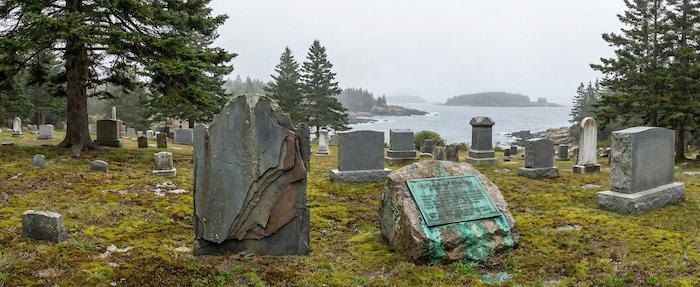
Grave Care on the Working Waterfront
South Portland is more than just a coast; it's an industrial harbor. We deal with heavy salt air from Casco Bay and oily soot from the terminals. This combination creates a tough, sticky grime on the headstones in Calvary and Highland Memorial.
The soil here is sandy. It moves fast during heavy rains. We see flat markers washed over with mud and upright monuments tipping as the sand erodes from under them. Families searching for headstone cleaning services near me call us to dig out buried markers and strip off the heavy oxidation that turns bronze plaques green. We stabilize the shifting sand and seal the metal against the salt air.
Sinking in Sandy Loam
The ground in South Portland is sandy. Sand shifts. It doesn't lock together. A heavy rainstorm washes the support right out from under the stone.
Flat markers sink. The turf takes over, and you can't even find the marker anymore. Upright stones tip as the corner washes out. We lift the stone and pack the void with crushed stone. The angular rock locks together and creates a drain field. It stops the sand from washing away, keeping the marker flush with the ground.
Bronze "Green Spot" Corrosion
Highland Memorial and Brooklawn have thousands of bronze markers. The salt air destroys the factory clear coat.
Once the seal breaks, chlorides attack the copper. The metal turns a chalky, poisonous green. This isn't just a stain; it's the metal dissolving. We strip the failed lacquer and the corrosion. We polish the bronze back to its original shine. Then we apply a marine-grade coating to block the salt.
Coastal Lichen Growth
The humidity here is constant. Lichen thrives in it. It forms hard, crusty patches on granite—usually orange or grey.
This growth digs roots into the stone pores. It traps salt and moisture against the rock. Scraping it damages the finish. We use a biological cleaner. It kills the lichen at the root. The growth dries up and releases its grip. The next heavy rain washes the dead debris away.
Industrial Soot and Oil
Being near the oil tanks and the port means there is residue in the air. We find an oily film on many older stones in Forest City Cemetery.
This oil traps dirt and pollen. It turns into a black paste that smears if you try to wash it. We use a degreasing poultice. It pulls the oil out of the stone pores chemically. We rinse it away, leaving the stone clean and free of streaks.
Salt Spalling
Salt water soaks into the pores. When it dries, the salt crystals expand inside the rock.
That internal pressure pops the face of the stone right off. We call this spalling. We can't fix the missing pieces. We stop the process by drawing the remaining salt out with a poultice. This saves the rest of the inscription from blowing apart.
Frost Heave in Wet Sand
Sand drains well, but if the water table is high, it freezes hard. The frost pushes the stones up and out of level.
A tilted stone is dangerous. It can fall and break. We dig out the heaved foundation. We install a deep gravel pad that sits below the frost line. This disconnects the stone from the moving ground so it stays straight through the winter.
Service Costs in South Portland
Restoring oxidized bronze takes specialized stripping agents and sealers. Digging out a sunken marker is labor-intensive. We inspect the site to see what materials we need before giving you a quote.
- Bronze Restoration: Stripping and sealing corroded markers.
- Leveling: Lifting markers lost in the shifting sand.
- Industrial Cleaning: Degreasing oily soot from the port.
- Salt Extraction: Drawing salts out to stop spalling.