Rondout Valley Hydrostatic Saturation
The geography creates a funnel. Rondout Creek meets the Hudson River. This intersection generates a localized fog bank. The air is always wet.
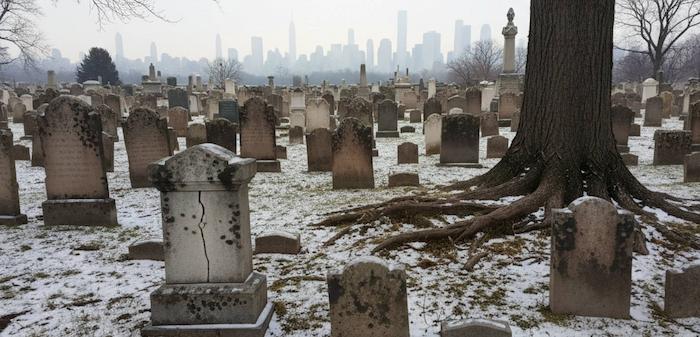
Granite markers act like sponges. They absorb this atmospheric moisture into their capillary network. Winter hits hard here. That trapped liquid turns to ice. It expands 9% instantly. This generates internal pressure exceeding 2,500 PSI. The rock cannot stretch. It fractures. The surface shears off in sharp, jagged flakes (spalling).
Searching for headstone cleaning services near me often leads to pressure washing ads. In this valley climate, high pressure is destructive. It forces more moisture past the stone's natural defense. If a freeze follows, the stone explodes from the inside. We use specialized grave site cleaning services. We utilize low-pressure chemical rinsing and hydrophobic sealers. We keep water out of the pores.
Bluestone Bedding Plane Delamination
Kingston is the "Bluestone City." This local stone is sedimentary. It forms in horizontal sheets (bedding planes). It is not a solid block like granite.
Water enters the void between these sheets. Ice acts as a wedge. It forces the layers apart. This is "Delamination." The surface flakes off. Touching the stone causes it to crumble. Standard cleaning destroys these markers. We use ethyl silicate consolidants. These liquid binders soak into the crumbling stone. They harden inside the matrix. They glue the layers back together chemically.
Cement & Brick Kiln Carbon Crusts
Kingston burned coal for massive cement and brick production. The exhaust was heavy. It contained sulfur and carbon. This soot settled on the monuments. It bonded to the surface.
On marble, this pollution triggers a chemical reaction. Sulfur mixes with rain. It converts the calcium surface into a black gypsum crust. This is not dirt. It is dead stone holding carbon soot. Scrubbing this crust destroys the inscription details. We use ammonium carbonate poultices. These pastes dissolve the chemical bond. We rinse the black scab away without abrasion.
Clay-Rich Glacial Till Heave
The soil here is Glacial Till. It is dense clay. It is non-porous. Water pools around the foundation.
Winter freezes this water into an "ice lens." This lens exerts upward hydraulic force. It lifts the stone. Spring thaw turns the clay to mud. The stone drops unevenly. The monument tilts. Adding topsoil is a cosmetic waste; the physics of the soil have not changed. For permanent tombstone repair and restoration, we stabilize the sub-grade. We excavate below the frost line. We install a friction pile of angular gravel. This drains the water and locks the foundation in place.
Riparian Bio-Films
The Old Dutch Churchyard is shaded. It is humid. The stone never dries. This environment feeds Gloeocapsa magma (black algae).
Lichen roots penetrate the mineral structure. They excrete oxalic acid. This acid digests the stone surface. It eats the polish off granite. It dissolves the binder in marble. We use professional cleaning stone gravestones chemistry. We apply a quaternary ammonium biocide. It soaks into the pores to kill the organism. The growth falls off. The biocide stays behind to stop regrowth.