Great South Bay Saline Mist
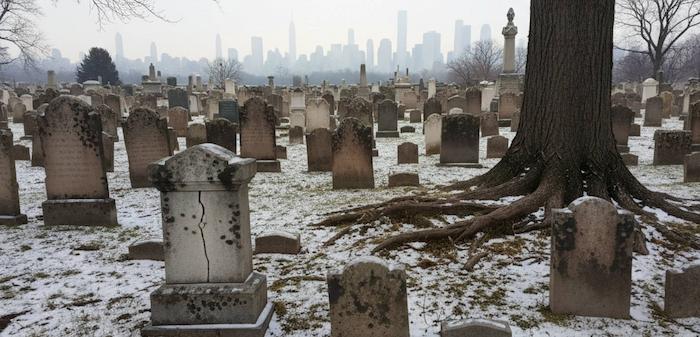
Lindenhurst sits directly on the Great South Bay. The air is thick with saline aerosols. This salt mist settles on the monuments in Breslau and the Wellwood Avenue cemeteries. Rainwater drives these chlorides deep into the granite pores.
The water evaporates. The salt stays behind. It crystallizes inside the stone matrix. These crystals grow larger over time. They exert internal pressure exceeding 4,000 PSI (Haloclasty). This force blasts the face of the stone off in small craters. The polish is destroyed.
Searching for headstone cleaning services near me often leads to pressure washing ads. On the South Shore, this is dangerous. High-pressure water drives the surface salt deeper into the core. It accelerates the destruction. We use specialized grave site cleaning services. We use chemical poultices to draw the chlorides out. We apply breathable consolidants to lock new salt out.
Outwash Plain Sand Washout
The geology is Glacial Outwash. It is not loam. It is a deep bed of loose silica and gravel. It drains fast. However, it lacks cohesion. It creates a "fluid soil" effect during heavy rain.
Heavy storms create "hydraulic scour." Water rushing through the ground carries the sand away. It washes out from under the concrete footer. The foundation loses contact with the sub-grade. The monument sinks or tilts. Adding topsoil is useless; the sand swallows it. For permanent tombstone repair and restoration, we stabilize the sub-grade. We excavate the sinking side. We install a friction pile of angular gravel. This locks into the loose sand and prevents washout.
Chloride-Induced "Bronze Disease"
Many markers in the nearby Pinelawn and National Cemeteries are bronze. The coastal air attacks the copper alloy. Salt air triggers a chemical attack. Chlorides eat the copper. They generate microscopic pockets of hydrochloric acid.
This creates "Bronze Disease." It appears as a powdery green corrosion. Unlike a stable patina, this rot eats the metal. The bronze pits and dissolves. We use specialized corrosion inhibitors. We clean the active chlorides off the surface. We coat the metal with micro-crystalline wax. This creates a barrier against the salt air.
Rising Damp & Efflorescence
The water table is high here. The sub-grade stays wet. Monuments act like wicks. They pull groundwater up through the base. This fluid is loaded with soil nitrates.
The liquid evaporates at the surface. The solids cannot. They deposit as a hard, white crust (Efflorescence). This crust is hard. Scrubbing it often scratches the polish. We use chelating agents to soften this crust. They unlock the mineral bond so we can rinse it away. Finally, we inject a pore-blocking sealer into the base. This breaks the capillary suction. We use professional cleaning stone gravestones chemistry.
Ferrous Pin Failure ("Rust Jacking")
Historic monuments in Breslau Cemetery often use iron pins to connect the base and the die. Salt air penetrates the joint compound. The iron rusts. Rust takes up 600% more space than steel.
This expansion acts like a hydraulic wedge. It splits the granite block from the center out. Rust stains on the base are the first warning. We disassemble the monument. We drill out the corroded iron. We replace it with stainless steel or epoxy dowels. This eliminates the mechanical stress.