Snow Load Saturation & Hydraulic Shock
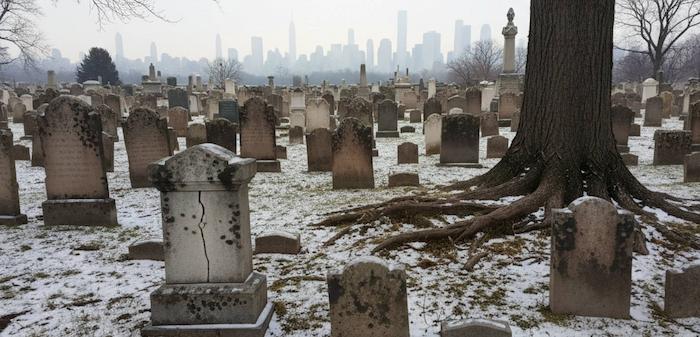
Syracuse winters destroy stone through total saturation. The city holds the Golden Snowball for a reason. Massive snow piles bury monuments for months. This wet blanket prevents evaporation. It forces meltwater into the capillary pore system of granite until the stone is 100% saturated.
When a polar vortex hits, that internal water freezes instantly. It expands 9% in volume. This creates internal hydrostatic pressure exceeding 2,500 PSI. The rock matrix ruptures. The polished face shears off in jagged flakes (spalling).
Searching for headstone cleaning services near me often leads to power washing ads. In Onondaga County, this is negligence. High-pressure water drives moisture past the stone's natural defense line. If a freeze follows, the stone explodes from the inside. We use specialized grave site cleaning services. We utilize low-pressure chemical rinsing and hydrophobic sealers. We lock water out of the pores.
Saline Aerosol Corrosion (Road Salt)
Syracuse uses heavy road salt. Traffic generates saline mist. This aerosol drifts into cemeteries like Woodlawn and St. Mary’s. The salt water soaks into the stone and dries.
The salt recrystallizes inside the pores (sub-florescence). Growing salt crystals exert more pressure than ice. They blast the granite face off from the inside. You see this as a white, dusty crumbling surface. Scrubbing accelerates the loss. We use chemical poultices to draw the salt out. We apply sacrificial coatings to trap future salt before it enters the stone.
Clay Soil Frost Heave
Local soil is heavy clay and glacial till. It retains water. It does not drain. The frost line digs down 42 inches here. When this wet clay freezes, it expands vertically.
This hydraulic force lifts the concrete footer (Frost Heave). In spring, the ice lenses melt. The soil turns to liquid mud. The monument drops back down, but it rarely settles flat. It leans or twists. Adding topsoil is a cosmetic waste; it washes away. For permanent tombstone repair and restoration, we stabilize the sub-grade. We excavate below the frost line. We install a friction pile of angular gravel. This breaks the capillary action and drains water away from the foundation.
Sub-Snowpack Acid Etching
Snow cover creates a dark, humid chamber against the stone face. Sunlight is blocked for months. This environment supports the rapid colonization of snow mold and lichen.
Lichen attaches by penetrating the mineral matrix with rhizoids. It produces oxalic acid as a metabolic byproduct. This digests the calcium in marble and etches the polish on granite. When the snow melts, the surface is rough and pitted. We use professional cleaning stone gravestones chemistry. We apply a quaternary ammonium biocide. It soaks deep into the pores to terminate the biological structure. The growth releases its grip naturally. The biocide remains to block regrowth.
Sedimentary Layer Delamination
Historic plots in Oakwood often use Sandstone or Limestone. These are sedimentary rocks. They consist of horizontal bedding planes.
Moisture penetrates these seams. Freeze-thaw cycles drive the layers apart. The stone peels like wet cardboard (delamination). Touching it causes disintegration. Standard cleaning destroys these markers. We use ethyl silicate consolidants. These liquid binders saturate the crumbling stone. They harden inside the matrix, re-adhering the layers. This chemically freezes the deterioration.