Scrubbing Cement Dust and Fixing Sinkholes in Allentown
The Lehigh Valley has a hard industrial history that is still stuck to the headstones. For a long time, this area produced most of the cement for the country. That kiln dust didn't just disappear. It settled on the cemeteries like Fairview and Greenwood. When it rained, that dust turned into a thin layer of concrete right on the face of the monuments.
We also fight the ground itself. The soil here sits on limestone that gives way without warning. We spend a lot of time digging up markers that have sunk halfway to China because the earth just dropped out from under them. Families searching for headstone cleaning services near me call us to chip off that hardened cement crust and to pull their family markers out of the sinking mud.
The Cement Dust Crust
You see this on the older granite and marble stones. It looks like a gray, rough skin. It isn't just dirt; it is cured cement binder that bonded to the stone years ago. It fills in the dates and names so they look flat.
If you scrape it, you scratch the polish. If you power wash it, nothing happens. We use a specialized acid-free softener that breaks down the cement binder. It turns the hard gray shell into a sludge that we can rinse away. It is slow work because we have to dissolve the concrete without eating into the actual stone underneath.
Delaminating Slate Markers
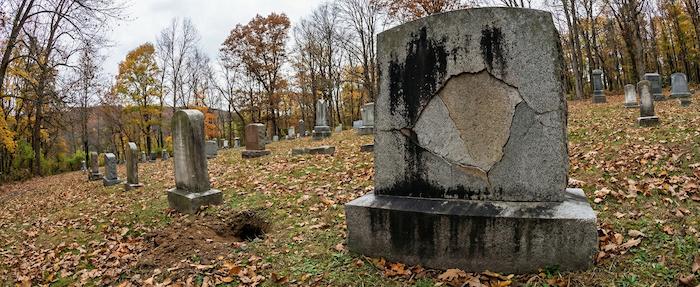
There is a lot of slate in Pennsylvania cemeteries. It looks nice when it's new, but water is its enemy. Rain gets into the thin layers of the stone. In winter, that water freezes and pushes the layers apart. The stone starts to open up like the pages of a wet book.
We see faces of headstones that are peeling off completely. We can't glue the stone back together once it separates. But we can clean out the debris and dirt trapped between the layers. We apply a breathable cap to the top edge to stop more water from getting in. This slows down the splitting so the marker lasts longer.
Sinkholes and Settling Soil
The ground in Allentown is full of soft spots. The earth opens up and swallows the stones. We find flat markers standing straight up on their ends or completely gone because the bottom fell out of the grave.
Adding a little topsoil doesn't fix this. The hole will just open up again. We dig the marker out and excavate the unstable dirt. We fill the void with a wide base of compacted, crushed stone that bridges the soft spots. We have to build a new foundation that floats above the shifting ground so the marker stays level.
Red Lichen and Algae
The summers here get humid and sticky. That moisture fuels biological growth. We see a lot of stubborn red lichen and black algae on the sandstone markers in West End Cemetery.
This stuff digs in deep. If you pull it off dry, you take sand grains with it. We soak the stone in a biocide. It kills the organism down to the root system. The color fades, and the dead plant matter washes off with a gentle spray. It keeps the stone clean for years because we killed the spores.
Industrial Sulphur Blackening
The steel mills in Bethlehem weren't far away. The wind carried sulfur and ash across the valley for decades. It created a black gypsum crust on the white marble stones that looks like tar.
That black shell holds water against the marble. It makes the stone soft and crumbly. We apply a thick paste to suck the grime out. It sits for a few days, lifting the stain so we can wash it away. When we peel the paste off, the black goop comes with it.
Mower Damage Repair
Maintenance crews work fast to keep the grass down. They hit the corners of the base stones and run over flat markers. We see chipped granite and black rubber streaks everywhere.
We wipe the tire tracks off with a specialty cleaner. If the mower knocked a chunk off the edge, it’s gone. We grind the sharp spot down. It looks better and stops the blade from hitting it again.
Service Costs in Allentown
Melting off a layer of old cement takes time. Fixing a slate marker that is splitting apart takes delicate hand work. We need to inspect the damage and the material before we give you a price.
- Cement Removal: Dissolving hardened kiln dust buildup.
- Slate Preservation: Cleaning and capping splitting stones.
- Leveling: Fixing markers affected by sinkholes.
- Black Crust Removal: Cleaning industrial soot stains.