
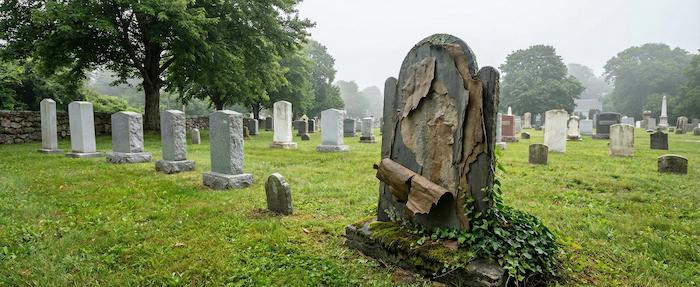
Cleaning Salt Haze and Leveling Sinking Stones in South Kingstown
South Kingstown is a mix of swamp, sand, and salt water. Working in cemeteries like Riverside or the small historical plots in Matunuck means dealing with the ocean air. The salt mist settles on everything. It dulls the polish on granite and eats away at the old marble.
The ground is also tricky here. It’s sandy ("sugar sand") or swampy. Stones don't stay put. They shift, lean, and sink. Families searching for headstone cleaning services near me call us to get that cloudy salt film off their family monuments and to lift markers that are disappearing into the soft ground.
Salt Haze on Polished Granite
If you visit a plot near the coast, you notice the polished stone looks cloudy. That is salt. The ocean mist coats the stone, dries up, and leaves a white crust behind.
Wiping it doesn't help; it just smears the salt around like grease. If you leave it, it burns the shine off the granite. We use a wash that breaks down the salt crust. Then we flush the stone with fresh water until every bit of salt is gone so the haze doesn't return.
Sinking in "Sugar Sand"
Wakefield and Peacedale are built on sand. It shifts every time it rains. Heavy monuments vibrate from the traffic or settle from their own weight. We see headstones that have sunk six inches deep, covering the family name.
When we level a stone here, we can't just put dirt back in the hole. The sand will just wash out again. We dig out a wider footprint and pack it with crushed stone that locks together. This creates a "raft" for the monument so it floats on top of the sand instead of sinking into it.
Peeling Slate (Delamination)
In the older plots, we see a lot of slate. Slate is made of layers. The damp coastal winters cause water to get between those layers and freeze. The ice pops the layers apart. The stone starts to look like a book that has been left in the rain—it peels open.
We clean these by hand—gently. If the stone is flaking apart, we use a stone epoxy to glue the layers back down. This stops water from getting inside and popping the stone open next winter.
Bright Orange Lichen
There is a bright orange lichen that grows near the water. It loves the salt. It looks colorful, but it is eating the stone. It produces an acid that digests the rock to hold on.
We don't scrape this dry. It pulls the stone surface with it. We soak it with a cleaner that kills the lichen and softens the bond. Once it turns mushy, we wash it away. It often leaves a "shadow" or a light spot where it used to be because it actually ate the surface of the stone, but at least the damage stops there.
Service Costs in South Kingstown
Sand jobs cost more because we have to haul in extra gravel to stop the sinking. Slate repair is slow work—one wrong move and the stone snaps. I need to walk the plot to give you a real price.
- Salt Removal: Washing off cloudy ocean film.
- Leveling: Stabilizing monuments in shifting sandy soil.
- Slate Repair: Gentle cleaning for peeling/flaking markers.
- Lichen Treatment: Removing stubborn coastal growth.


