
Cleaning Prairie Dust and Stabilizing Monuments in Brookings
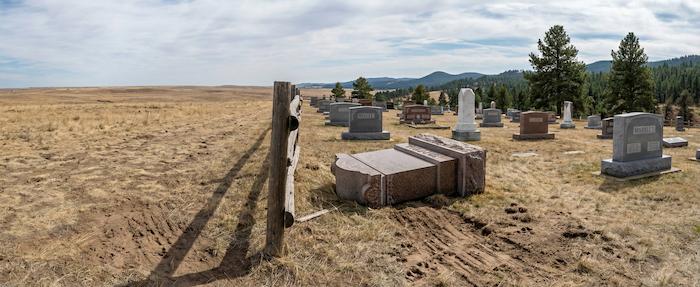
Brookings sits wide open on the prairie. The wind is constant here. It picks up fine dirt from the fields and blasts it against the headstones in Greenwood and First Lutheran. That dirt packs into the dates and names until the engraving is plugged solid. Rain turns that dust into a paste. Once it dries, it's like concrete inside the letters. The name just disappears.
The winters are just as hard on the stones. The ground freezes deep here. That frost moves the earth. It pushes upright monuments out of level and heaves flat markers right out of the ground. Families searching for headstone cleaning services near me call us to dig out that impacted dust and to reset stones that the winter freeze has knocked over.
Impacted Prairie Dust
The dirt here is fine and sticky. The wind drives it into the rough stone of the lettering. It builds up layer by layer until the letters are flush with the face of the stone. The engraving fills up flush with the surface. You lose the shadow, so you lose the name.
A garden hose won't touch this stuff. It is packed too tight. We have to pick it out. We use wooden tools to scrape the hard dirt out of every groove. It is slow work. We have to go letter by letter to get the shadow back so you can read it again.
Frost Heave and Leaning Stones
The frost line in Brookings goes deep. When the wet ground freezes, it expands. It pushes the foundation up. When the mud melts in April, the ground turns to soup. The stone settles back down, but it always ends up crooked. We see monuments leaning dangerously to the side every spring.
We fix this by fixing the base. We dig the stone out. We remove the clay that holds the water. We replace it with deep, angular gravel. This drains the water away. If the ground under the stone is dry, the frost can't push it around.
Tree Sap and Bird Droppings
In the older parts of Greenwood Cemetery, the trees are huge. They drop sap all summer. That sticky pitch lands on the granite and hardens into black spots. It grabs dust and pollen until the stone looks dirty and neglected.
Scraping sap scratches the stone. We use a cleaner that breaks the sap down. We let it soak until the tar softens up, then wipe it clean. It takes the tar off without hurting the polish.
Hard Water Mineral Scale
The sprinklers run all summer to keep the grass green. The water here is hard. It hits the hot stone and dries instantly. The water leaves, but the calcium stays. It creates a rough white layer that covers the lettering.
Soap won't clean this. We use a specific acid cleaner. We brush it on, and you can see the white scale fizzing as it dissolves. We rinse it immediately. If you leave acid on the stone, it burns the finish. We wash it down fast to get the shine back.
Lichen on Rough Granite
Shady spots grow lichen. It loves the rough texture of the older monuments. It grows in crusty green patches. These plants hold moisture against the rock. In the winter, that wet spot freezes and pops chips of stone off the face.
We kill the lichen to remove it. We soak it with a biocide. The plant dies and turns to dust. Then we brush it off. This stops the damage and lets the stone breathe again.
Service Costs in Brookings
Fixing a frost-heaved foundation is heavy labor. We have to move a lot of dirt and haul in gravel. Cleaning impacted dust out of a name is tedious and takes time. We can't give you a fair price over the phone. We need to go to the cemetery and see if the stone is just dirty or if the foundation has failed.
- Detail Cleaning: Hand-picking impacted dust from letters.
- Leveling: Resetting stones shifted by frost.
- Pitch Removal: Dissolving tree sap and tar.
- Scale Removal: Cleaning hard water deposits.


