
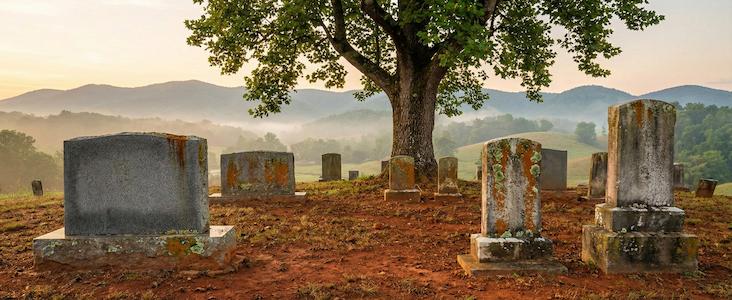
Red Clay Iron Stains
If you live in West or Middle Tennessee, you know about the red clay. It stains everything it touches. Rain splashes this mud onto the bottom of headstones constantly.
This is not regular dirt. The red color comes from iron. When it soaks into porous granite and dries, it leaves a heavy orange band that looks like rust. You cannot wash this off with soap and water. It is bonded to the stone. We see families try to clean this with bleach, but that is a mistake. Bleach oxidizes the iron and turns a removable stain into a permanent one. We use grave site cleaning services with specialty surfactants. We lift the iron particles out of the pores to restore the natural stone color without burning the surface.
Historic Limestone "Sugaring"
Central Tennessee has thousands of pre-Civil War markers made of local limestone. This stone is soft and vulnerable. Decades of acidic rain dissolve the binder that holds the stone together.
The surface starts to feel sandy. We call this "sugaring." If you rub it, grains of stone fall off. If you hit this with a pressure washer, you will erase the name and dates instantly. These stones need delicate handling. Our tombstone repair and restoration process uses soft bristle brushing and stone consolidants. We soak the stone in a hardener that bonds the grains back together to stop the erosion.
Mountain Lichen Growth
In East Tennessee and the Smokies, the air is clean. This allows aggressive crustose lichen to grow on granite markers.
These organisms grow tight against the rock. They look like colorful paint splatters—green, orange, or grey. They dig roots into the stone face to feed on minerals. Scraping them off dry pulls up divots of stone. We use professional headstone cleaning services with biological cleaners. We saturate the growth to kill it down to the root. The lichen releases its grip and washes away safely.
Tulip Poplar Sap
The Tulip Poplar is our state tree. They are huge, they provide great shade, and they make a mess. In the spring, they drop a fine mist of sticky sap.
This sap lands on the markers and acts like glue. It traps pollen, soot, and dust. Over the summer, it turns into a black, tar-like layer. Water runs right off it. Regular cleaners won't cut through the resin. We use alkaline cleaners for cleaning stone gravestones. We break down the chemical bond of the sap so we can rinse the grime away without scrubbing hard.
Winter Spalling
We don't get deep freezes like the North, but we get wet winters with freezing nights. That cycle is dangerous.
Rain soaks into hairline cracks during the day. At night, it freezes and pushes the stone apart. This causes "spalling"—where the face of the granite pops off in sheets. It happens fast. We inspect for these cracks during every visit. We seal them to keep the water out before the damage spreads.
Hillside Settling
Tennessee is hilly. Many older cemeteries are on slopes. The soil here moves.
Heavy rain washes soil out from the downhill side of the foundation. The monument starts to lean forward. If it leans too far, the base snaps or the tablet falls over. We check the level of the stone at every visit. We pack gravel under the low side to stabilize the foundation before it becomes a safety hazard.