
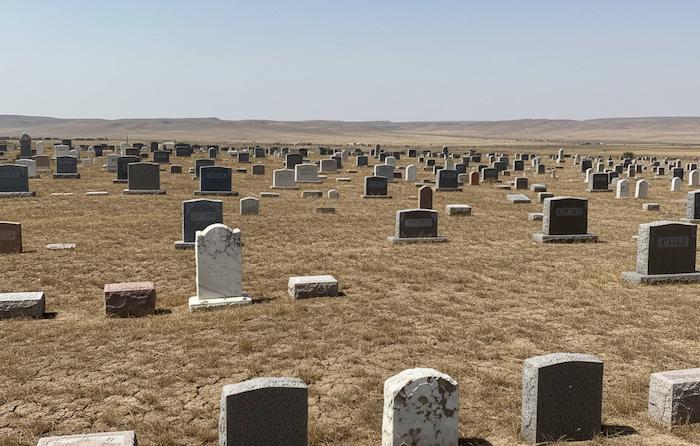
Active Clay Soil
The soil here is heavy clay. It moves all the time.
Rain makes it swell. Drought makes it crack. This snaps concrete footers. Monuments lean or sink. Adding dirt doesn't fix it; the cracks just swallow it. For permanent tombstone repair and restoration, we dig past the moving clay. We install gravel piles. This absorbs the movement so the stone stays level.
Post Oak Tannins
Post Oaks are everywhere. They drop acidic leaves and acorns.
When wet, they bleed acid onto the markers. It leaves dark brown stains. It looks like rust, but it's organic. Bleach burns the stone. We use special pastes. They draw the brown stain out of the rock safely.
Penny & Nickel Stains
Aggies leave coins on headstones. It’s tradition. But metal rusts and turns green.
This oxidation leaves hard green and black spots on the stone. You can't scrub them off. We use chemical packs for cleaning stone gravestones. We lift the metal stain off without damaging the polish or the tradition.
Humidity & Algae
It gets humid here. The stone stays damp in the shade.
Green algae and black mold grow fast. They fill the lettering. Pressure washing is bad; it pushes spores deeper into the rock. We use a biocide soak. It kills the roots so the growth falls off.
Limestone Dust
Campus and city construction is constant. The air is full of white dust.
This dust settles on the markers. It gets wet and sets up hard. Wiping it dry scratches the face. We flood the stone with water to float the grit away. Then we use soft brushes for grave site cleaning services to remove the haze.