
Blackland Gumbo Heave
Mesquite sits on Blackland clay. It is unstable dirt.
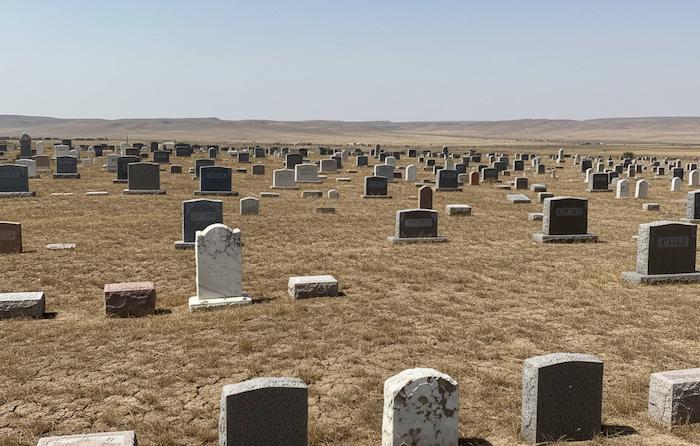
When wet, it swells. When dry, it cracks deep. This movement snaps concrete footers. Monuments lean or sink into the gaps. Adding dirt is a waste; the ground swallows it. For permanent tombstone repair and restoration, we dig past the active clay. We install gravel piles. This absorbs the movement so the stone stays level.
Highway Diesel Soot
We are surrounded by I-635, I-30, and Hwy 80. Truck traffic is heavy.
Diesel exhaust coats the stones. It creates a greasy black film. Water rolls right off it. Scrubbing makes a bigger mess; it smears the oil everywhere. We use heavy degreasers. They cut the oil film so we can rinse the soot away completely.
Mesquite Bean Rot
Mesquite trees drop sugary pods. They land on the markers and rot.
This leaves a sticky, dark stain. It looks like tar. If you leave it, it eats into the polish. We use grave site cleaning services to strip this gunk down to the bare stone.
Rail Yard Iron Dust
The Union Pacific rail yard kicks up metal dust. It settles on the granite.
When it rains, that dust rusts. It leaves tiny orange speckles on the stone. Bleach makes the rust permanent. We use iron removers for cleaning stone gravestones. We lift the metal particles out of the pores.
Hackberry Sap
Hackberry trees get aphids in the fall. They drop sticky sap.
It coats the stone in sugar. Black mold grows on it fast. Wiping it creates a smear. We wash the sap off with hot water and soap to stop the mold from growing.