
Blackland Clay Heave
East of I-35, the ground is Blackland clay. It is aggressive soil.
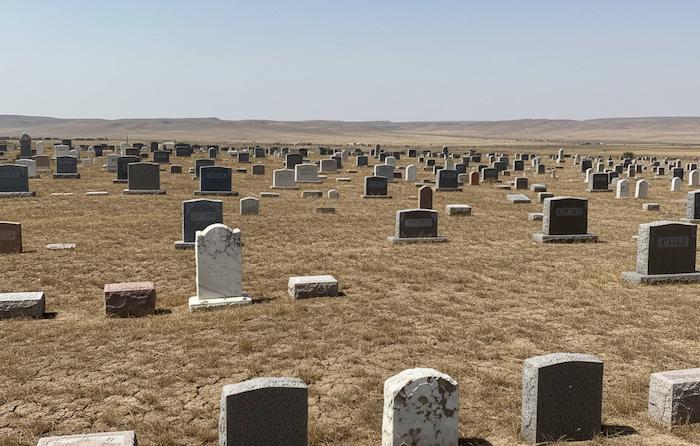
Rain makes it swell. Drought makes it crack deep. This constant motion snaps concrete footers. Monuments tilt or sink. Adding dirt doesn't help; the cracks just open up again. For permanent tombstone repair and restoration, we dig past the moving clay. We install gravel piles. This absorbs the shift so the stone stays level.
Cedar Pollen Paste
Ashe Junipers (Mountain Cedars) surround the area. In winter, they drop yellow pollen.
Morning dew turns this pollen into a thick paste. It bakes onto the stone. If you leave it, it feeds black mold. It stains deep. We use grave site cleaning services to strip this layer before it hardens.
Quarry & Construction Dust
Round Rock is full of limestone quarries and road work. The air is full of white dust.
This dust settles on the markers. It gets wet and hardens like weak cement. It dulls the polish. Wiping it dry scratches the face. We flood the stone with water to float the grit away. Then we wash the surface clean.
Hard Water Scale
Sprinklers run constantly here. The water is full of limestone minerals.
The sun evaporates the water fast. It leaves a white crust on the base. It looks like frost, but it is rock hard. If you scrape it, you ruin the stone. We use chemical descalers for cleaning stone gravestones. They melt the crust so we can hose it off.
Live Oak Tannins
Live Oak trees are everywhere. They drop acidic leaves and acorns.
Rotting leaves leak brown tannin acid. It leaves dark stains on the marker. It looks like rust. Bleach damages the stone. We use alkaline pastes. They neutralize the acid and pull the brown stain out of the pores.