
Red Permian Grit (Sandblasting)
The wind in Wichita Falls is relentless. It carries Red Permian dirt. This isn't soft house dust; it is sharp silica grit.
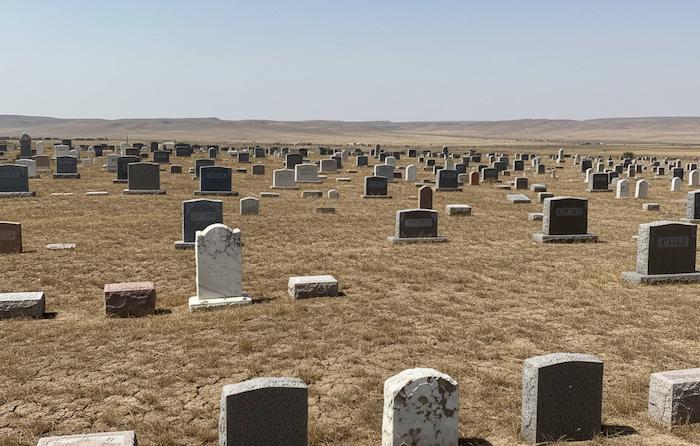
When the wind hits 40 mph, that grit hits the granite. It acts exactly like a sandblaster. It cuts the polish off the stone. We see markers where the lettering is almost gone, worn smooth by the wind. If you wipe this dust with a dry rag, you scratch the face immediately. You destroy the mirror finish.
We don't wipe. We flush. We use high-volume water to float the grit off the surface. We have to get every grain of sand off before we touch the stone with a brush.
The "Active Zone" (Clay Heave)
We sit on expansive clay. The ground moves violently.
Summer heat dries the clay out. It shrinks. Massive cracks open up in the soil. These cracks run deep, right under the concrete footers. The footer loses support and snaps. The monument tips over. When the rain comes back, the clay swells and pushes the broken footer up. It’s a cycle of breaking and lifting.
Shoveling dirt into the cracks is useless. The crack just opens up again next July. For permanent tombstone repair and restoration, we ignore the topsoil. We drill deep friction piles. We anchor the foundation below the "active zone" of the clay so the stone stays level.
Alkali Scale (White Crust)
It’s dry here. Sprinklers run hard. The water is full of alkali salts.
The sun evaporates the water instantly on the hot stone. The salt stays. It builds a hard, white cement crust on the base. It bonds to the granite. You can't scrape it off without chipping the stone. We use a specialized acidic breaker for cleaning stone gravestones. It attacks the salt bond. We melt the crust back into a liquid and rinse it away.
Thermal Shelling
Temperatures here swing wild. A freezing morning turns into a scorching afternoon.
The outer skin of the stone heats up fast. The core stays cold. That tension shears the face of the stone off. We call it "shelling." It starts as hairline cracks. Water gets in. It freezes at night and pops the rock open. We inspect for these fissures during grave site cleaning services. We seal them to keep the water out before the freeze cycle breaks the stone apart.
Acidic Burn (Birds & Insects)
Trees are scarce on the plains. Birds perch on the headstones. We also get swarms of grasshoppers.
Their waste is highly acidic. It lands on the hot stone and cooks. It etches the polish immediately. On marble, it eats a divot into the surface. Standard soap won't fix an etch mark. We use enzyme packs to neutralize the acid. We lift the organic stain out of the pores to stop the chemical burn.