


Alkali Salt Damage
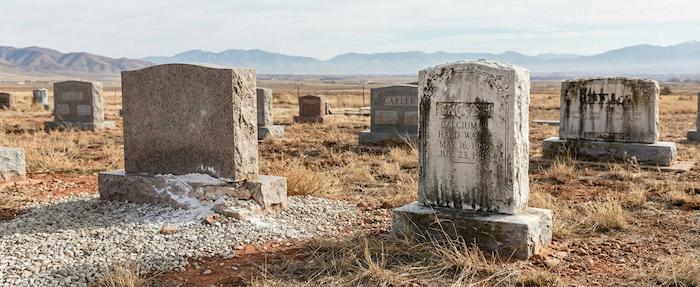
The soil in Utah is full of alkali salt. It is hard on everything, especially stone. When that salty dirt touches the base of a monument, it causes real trouble.
Granite acts like a wick. It pulls that salty water right up from the soil. Then it dries, and the salt pops the stone apart from the inside. We see the bottom edges of monuments crumbling into dust because of this. We dig out that bad dirt around the base during grave site cleaning services. We replace it with clean gravel. It stops the salt from touching the stone.
Irrigation Hard Water Spots
We live in a desert, so cemeteries run sprinklers all the time. The water here is hard. It is loaded with calcium and lime.
The sprinklers soak the stones every day. The water evaporates, but the white lime stays stuck to the rock. It builds up a thick, rough crust over the letters. Scrubbing doesn't work. Using a blade or a rock to chip it off just ruins the polish. We apply a solution that melts the white crust. It wipes away without hurting the granite, and the stone looks clear again.
Inversion Smog Grime
Winter in the valleys means inversion. The dirty air gets trapped down low for weeks. That smog settles on the gravestones.
This isn't normal dust. It is greasy grime from the city air. Rain won't clean it. It just spreads the black sludge around and makes it look worse. Over the years, a gray stone turns nearly black. Our headstone cleaning services near me use a degreaser. We lift that oily layer out of the stone pores. We rinse it off, and the natural color comes back.
Desert Temperature Shock
The temperature here swings hard. It hits 100 degrees in the afternoon, and then drops fast as soon as the sun goes down.
That sudden drop shocks the stone. It works just like pouring cold water on hot glass. The granite eventually snaps under the pressure. We see tiny spiderweb cracks open up. If you ignore them, water gets in, turns to ice, and blows the face of the stone off. We check for these cracks. We fill them with a sealant that matches the stone color. It keeps the moisture out so the ice can't do any damage.
Red Rock Dust
Down south, the wind blows fine red dust everywhere. It gets into everything. It packs deep into the engraved lettering.
Rain turns that dust into a thick clay paste. It packs deep into the letters and dries hard. A garden hose won't touch it. It stains the stone red and makes the name hard to read. We use a hydration method when cleaning stone gravestones. We keep the clay wet until it turns soft again. Then we flush it out gently. It cleans out the deep letters so you can read the names clearly.
Cheatgrass and Weeds
Cheatgrass is a plague in our cemeteries. It takes over fast if you don't watch it.
It shoots up green in April, and by June, it is dead brown and dry as a bone. It fills your socks with stickers if you walk through it. Plus, it is basically kindling waiting for a spark. Pulling it by hand is a pain. During cemetery plot maintenance, we clear this stuff out early. We treat the ground so it doesn't come back. We keep the grave site clean so you can visit without wading through dead weeds.