The Bay Breeze Corrosion
Chula Vista sits right on the bay. The bay breeze is corrosive. It carries heavy salt. This is aggressive on metal. We see hundreds of bronze markers at Glen Abbey that have turned a sickly, chalky green. That is oxidation. The salt air eats through the protective factory coating.
Once that seal is gone, the metal corrodes. You can't fix this with soap. We specialize in cleaning bronze cemetery markers. We strip the dead lacquer, remove the green "bronze disease," and re-seal the plate with a marine-grade clear coat. It brings the rich, dark finish back instantly.
This isn't just tarnish; it is chemical destruction. The chlorides in the marine air dissolve the lacquer meant to protect the bronze. Once the raw metal is exposed, the salt reacts with the copper in the alloy. This creates unstable green chlorides—"bronze disease"—which eats pits directly into the metal surface. Polishing over this rot only seals the damage inside.
Our restoration protocol is a full strip-down. We remove every inch of the failed clear coat. We chemically neutralize the green corrosion to stop the active decay. Then, we apply a high-durability, marine-grade lacquer. This new seal blocks the salt air, preserving the restored finish and keeping the memorial legible for the next generation.
Shifting Clay Soil
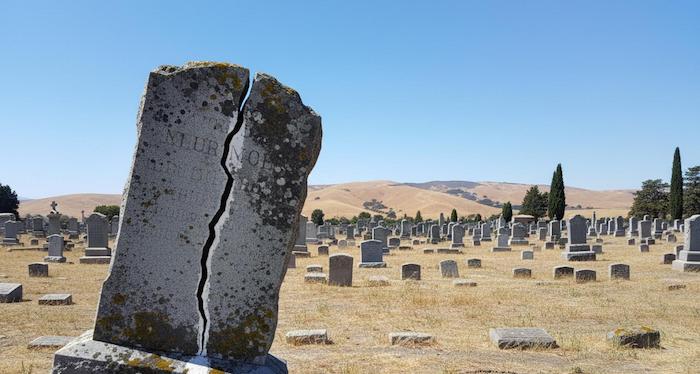
East of the 805, the ground changes. This soil is expansive clay. It pumps up and down with the weather. This ground movement heaves concrete foundations. We constantly see headstones tilting because the earth pushed them out of level.
If you are looking for tombstone repair and restoration because a marker is crooked, it’s the soil. We monitor the grade. We can stabilize the base with gravel to stop the monument from riding the moving earth.
This clay acts like a hydraulic pump. Wet clay expands like a hydraulic jack, cracking concrete borders. Hot clay shrinks, opening voids that leave the foundation floating on nothing. This cycle rocks the monument back and forth until the mortar joints snap and the stone leans dangerously.
We don't just add topsoil, which simply washes away. Our repair team excavates the unstable clay from beneath the marker. We replace it with a ballast of angular, non-expansive gravel. This creates a stable, drainage-friendly pad that isolates the monument from the heaving soil, keeping it level regardless of the weather cycle.
Marine Layer Mold
The "June Gloom" hits hard here. Heavy marine fog sits on the cemeteries all morning. That moisture feeds black algae inside the lettering. It makes the stone look dirty and neglected. If you are searching for headstone cleaning services near me to remove these dark stains, you need a biological cleaner. We kill the spores deep in the granite pores so the stone stays clean longer.
This fog creates a unique incubator. The moisture settles in the porous engraving grooves. When the sun burns through at noon, it creates a warm, wet environment perfect for black algae and lichen. These organisms anchor themselves deep in the stone grain. A quick scrub with a brush might knock off the surface bloom, but the roots remain, and the stain returns in weeks.
Our grave site cleaning services rely on deep-penetrating biocides. We apply a solution that soaks into the stone pores and kills the root system of the algae. We then gently flush the dead organic matter out of the letters. This restores the sharp contrast of the inscription and creates a hostile environment for new spores, keeping the stone bright and readable.