The Foothill Heat Trap
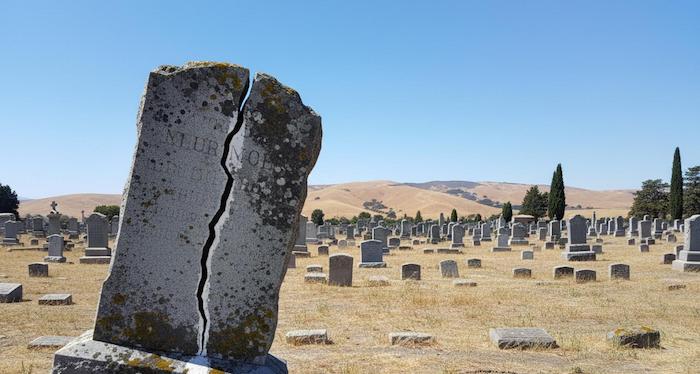
Clovis sits right where the valley floor hits the Sierra foothills. The heat gets trapped here. It stops moving. It cooks the stone. Granite markers absorb heat all day. They get hot enough to burn skin.
This constant baking destroys the stone. It dries out the natural binders in the granite. The surface becomes brittle. If you are searching for headstone cleaning services near me because a marker feels rough or looks "chalky," that is thermal damage. You cannot wash color back into a stone that is physically parched.
The sun acts like a laser on the polish. It expands the crystals on the surface. When the temperature drops at night, those crystals shrink. This cycle happens thousands of times. Eventually, the surface pops off in microscopic flakes. The deep black color turns into a hazy gray.
We don't just clean; we re-condition. We apply deep penetrating oils that soak into the stone matrix. We put moisture back into the material. This stops the flaking and restores the dark, wet look that protects the stone from the valley sun.
Harvest Dust and Oil
Orchards surround the cemeteries. Harvest time kicks up heavy dirt. It settles on the stone. This isn't clean dirt; it is "harvest haze." It contains plant oils, pesticides, and sticky organic residue. It settles on headstones as a heavy film.
When the sprinklers hit this dust, it doesn't wash away. It hardens. It turns into a varnish. You can't just hose it off. It smears like grease. Tending uses grave site cleaning services with heavy-duty surfactants to cut through this organic glue.
This layer seals the stone. It traps the heat inside, accelerating the thermal damage. It also provides food for black mold, which roots into the engraving grooves.
We use an industrial degreaser. It foams up on the vertical surface. It eats through the plant oils and loosens the grip of the dust. We rinse it away with low pressure. We strip the harvest grime without using scrub brushes that would scratch the softened polish.
Hard Water "Armor"
Sprinklers run constantly to fight the heat. The water carries heavy minerals. When it hits the hot stone, it boils instantly.
It leaves a white mineral crust behind. It looks like concrete splatter. This isn't a stain; it is a physical layer of rock fused to the memorial. It covers the name and dates.
Scraping this scale is dangerous. You will scratch the stone. We specialize in cleaning stone gravestones by chemically dissolving this scale. We use a calcium-specific acid. It melts the armor away. It turns the hard crust into a soft paste that rinses clean. We reveal the dark stone underneath without mechanical abrasion.