Root Heave from Old Oaks
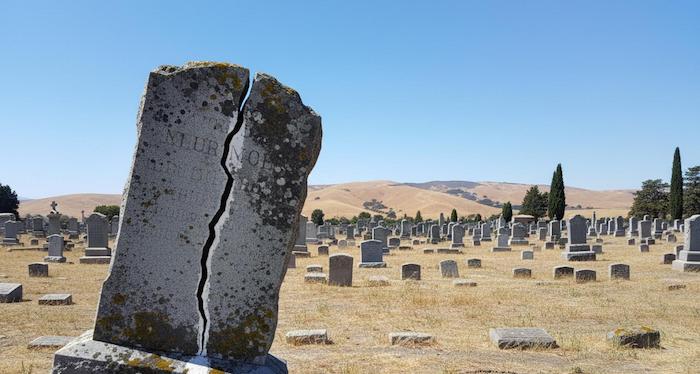
Sacramento earns its "City of Trees" name, but those old oaks destroy foundations. Roots extend 40 feet out. They tunnel under the concrete base and heave it up. We see heavy monuments split down the center because a root exerted thousands of pounds of pressure from below.
Our tombstone repair and restoration service involves checking the grade. We can't stop the tree, but we can re-level the base before the torque snaps the headstone.
The structural damage caused by heritage trees is slow but inevitable. As a tree grows, its root system expands directly under the cool, moisture-retaining mass of the concrete foundation. This growth exerts tensile and lifting pressure, often causing the concrete to shear or crack diagonally. This uneven lifting pushes the entire monument out of true level, compromising the adhesive joint and potentially toppling the marker.
Our tombstone repair and restoration solution is structural and proactive. We monitor the foundation's elevation and identify critical root tunnels. If a stone is shifting, we carefully lift the monument, excavate the area near the root, and install a dense barrier or a gravel flotation base. This stabilized base allows the monument to settle evenly and prevents future root intrusion from lifting the marker, ensuring long-term stability at cemeteries like East Lawn.
Pollen "Varnish"
The valley air is thick with agricultural dust and sticky tree pollen. It settles on the stone as a yellow film. When the summer heat hits, it doesn't just dry; it bakes into a hard varnish. You can't hose it off.
It attracts black mold. If you are searching for grave site cleaning services, you need something that cuts through that organic glue. We use specialized surfactants that lift the pollen layer safely. We reveal the stone underneath without scrubbing away the polish.
This 'pollen varnish' is a compound threat: the organic material (sap, pollen) traps moisture and particulate matter. The Sacramento summer sun then cures this mixture into a rock-hard, impermeable glaze. This glaze seals the stone. It traps moisture and accelerates discoloration. This creates an ideal breeding ground for black mold inside the lettering grooves.
We use industrial-grade surfactants and mild organic solvents. This chemistry instantly breaks the organic glaze's chemical bond. We liquefy the sticky layer and rinse it away with low-pressure flow. This precision method, part of our routine cemetery plot maintenance, ensures the complete removal of the tenacious film without resorting to abrasive tools that would permanently damage the granite's mirror finish.
The Delta Breeze Shock
The temperature drop here is violent. You go from 100 degrees at 5 PM to 60 degrees at 8 PM when the Delta Breeze kicks in. That rapid cooling forces the granite to contract instantly. This shock pops the adhesive seals on upright markers. If you are looking for headstone cleaning services near me because a marker is wobbling, it’s likely a failed joint. We clean the gap and re-set it with flexible epoxy that handles the movement.
This phenomenon—known as thermal shock—is a major structural risk to monuments in the Central Valley. The sudden temperature crash generates immense internal tension within the stone and the adhesive bond. Rigid setting compounds crack under this pressure, leaving the tablet loose on its base (the "wobble"). This failure invites water intrusion, which can lead to freeze-thaw damage in colder months, accelerating structural decay.
Our preventative solution is structural and thermal-resistant. We fully excavate the brittle sealant from the cracked joint. The area is cleaned, and a specialized, high-flexibility epoxy is injected. This compound absorbs the extreme thermal expansion and contraction. It ensures the memorial remains stable and sealed against the elements.