
Leveling Sinking Monuments and Cleaning Gravel Dust in Walnut Township
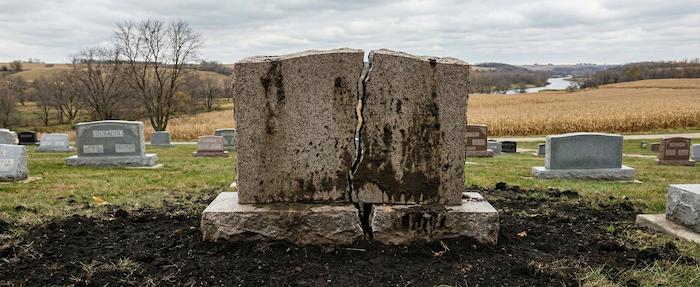
Walnut Township sits on deep, black farm soil. It is great for crops, but it is unstable for heavy stone. The ground here is deep black loam. It absorbs water and loses all its strength. When it gets wet, it cannot support the weight of granite. We see heavy granite monuments in the township cemetery sinking straight down. Flat markers often disappear completely under the turf. Upright stones start to lean as the heavy soil shifts underneath them.
The environment is also dusty. With gravel roads and construction nearby, the air carries a lot of grit. This limestone dust hits the markers and sticks. It packs into the deep engravings of the names and dates. Moisture turns it into a hard grout. It fills the letters flush with the face of the stone. Families searching for headstone cleaning services near me call us to lift their sinking family stones and to pick that hardened road dust out of the inscriptions.
Lifting Sinking Stones
The black dirt here compresses easily. Adding more black dirt under a sinking stone is a mistake. The soil compresses. The stone will drop right back down.
We fix the foundation properly. We hoist the monument. We dig out the soft, organic soil. We replace it with crushed, angular gravel. We pack the gravel until it is solid. This rock pad locks together and drains water. We reset the stone on this stable base. It stays level because rock does not compress like the black loam does.
Cleaning Impacted Road Dust
The dust in the letters is packed tight. Pressure washing usually fails to remove it; the water just bounces off the hard plug.
We clean this by hand. We soften the dirt with water and a surfactant. Then we use wooden tools to scrape the debris out of every letter. We flush it clean. We clear the date and the name character by character. It makes the inscription readable again without chipping the stone.
Killing Lichen on Pioneer Limestone
In historic sections like McDivitt Grove, the old white markers are covered in orange and grey lichen. This growth eats the stone. It digs roots into the soft surface.
We kill it chemically. We apply a biocide that soaks into the lichen. The growth dies and releases its grip. We rinse the dead growth away. The stone comes clean with zero scrubbing. This protects the soft face of the pioneer markers.
Saving Dissolving Markers
The oldest stones in the township are falling apart. The binder in the stone is gone, and the surface is turning to sand.
We stop the decay. We apply a consolidator. This fluid soaks into the dry stone and hardens. It glues the sand grains back together. The stone becomes solid again. This preserves the history before it washes away completely.
Repairing Mower Scuffs
Township mowers are big. They run close to the stones. We see black rubber marks and chipped corners on the granite bases.
We wipe the rubber marks off with a solvent. For the chips, we grind the sharp edge down with diamond files. We create a smooth bevel. It looks finished and stops the mower blade from catching that spot again.
Service Costs in Walnut Township
We don't need to visit the cemetery to give you a price. We have fixed, transparent pricing for all our services, including leveling and biological cleaning. Check our subscription builder to see the exact cost for your plot.
- Leveling: Lifting sinking/leaning monuments.
- Detail Cleaning: Hand-picking impacted dust.
- Lichen Removal: Killing heavy biological growth.
- Consolidation: Stabilizing eroding limestone.


