Farm Fields Plowed Up to the Last Row of Graves
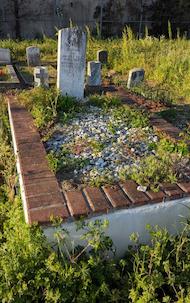
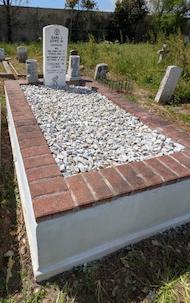
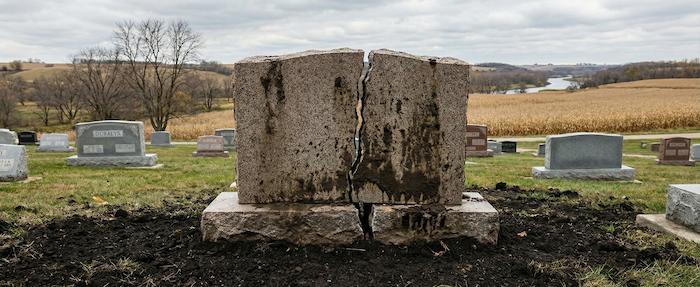
In a small country cemetery surrounded by crops, the outermost stones often tell a story: a corner marker missing, a tablet chipped along its back edge, a low stone tipped toward the field. Polk County organized Des Moines Township in the spring of 1860. The farmland toward Runnells and Pleasant Hill still holds pioneer burial grounds such as Vandalia and Powers-Warren, with Lowman and Rising Sun nearby. Runnells itself took its name from John S. Runnells, private secretary to Governor Samuel Merrill, and was incorporated in 1903. Many of these cemeteries were set aside on a corner of a family farm, often with no fence or only a thin one. As equipment grew larger over the decades, fields crept closer. Tillage and planting passes now run within a few feet of the last row. A disk or a planter wing can clip a stone, drag a small marker out of place or bury a fallen tablet in the furrow. Original corner stones that marked the cemetery's boundary are sometimes plowed out entirely, and with them the clearest record of where graves end. Capable headstone cleaning services near me ought to locate and reset displaced edge stones in a farm cemetery. In headstone repair and restoration for farm grounds, Tending's crew probes along the field edge for buried pieces and rejoins broken tablets on stainless pins. Each stone then goes back on a firm gravel base. Corner markers are reset at their surveyed locations where records allow. Township jobs are insured under Tending's $2,000,000 liability policy, and our ICCFA affiliation links us to the long-standing association for the cemetery field.
Our photos of any field damage go to the township trustees, who can talk with the neighboring landowner about leaving a buffer strip.
Fence Wire Rusting Against Edge Stones
Where a rural cemetery does have a fence, it's usually woven wire or barbed wire on steel posts, and the stones in the outer row stand only inches from it. Over the years the posts lean, and the wire sags against the backs and faces of the nearest markers. Wind works the wire back and forth, wearing fine scratches into the surface. Rain running down rusty wire leaves orange streaks that soak into marble and stain the carved letters. Vines climb the fence and lean on the stones, holding moisture in the inscription. At Powers-Warren and Lowman, families sometimes find a name that reads clearly on one side of the stone and is streaked orange where the fence touched it. On any grave cleaning near me job that includes a fence-line stone, our crew first frees the stone from the wire, with the trustee's permission, and clears the vines. A poultice made for iron stains then pulls the rust out. Using headstone lettering restoration, we bring back the paint in every stained letter, and we suggest moving the fence a step back so it doesn't happen again.
Yellowjackets Nesting Under Flat Bronze
Flat bronze markers in quiet rural grounds sometimes hide an unwelcome tenant. Eastern yellowjackets nest underground, and the small void that forms under a marker as its bed settles is an ideal entrance. By late summer a colony can number in the thousands, and anyone who kneels to clean the plaque or set flowers can be stung repeatedly. The insects also hollow out more of the soil under the bronze, so the marker tilts and rocks. Nest debris and moisture under the plate darken the patina from below. Families visiting township grounds around Pleasant Hill in August and September have left a grave without tending it to avoid the risk. Tending's bronze grave marker restoration schedules this work after the first hard frost, when the colony has died off. We lift the marker, clear the old nest chamber, rebuild a compacted bed and reset the plaque level. Cleaning comes next, followed by toning and wax.
Service Costs in Des Moines Township
Pricing in the township is known ahead of time. Each memorial and plan has a posted base amount at our pricing page; no visit is needed first. Anything extra the technician uncovers, say an edge stone pushed over by field equipment, is shown in pictures with its own price before it starts.
"Judging from the photos received, it looks much better. I plan to go to the cemetery in the next few days. I anticipate the actual work accomplished will be as good as, if not better than the photos. Mom"
— Dee Roach Perazzo, Tending Client

- Edge stone recovery: Displaced stones are found and rejoined before resetting on gravel.
- Fence rust removal: Stones are freed from wire, rust is drawn out, and letters repainted.
- Nest cleanout: After frost, the void is cleared and the bronze reset on a new bed.