
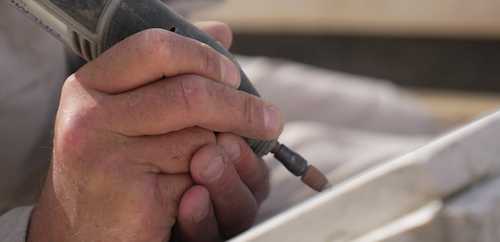
Four separate conditions wear the paint out of an Iowa headstone's carved lettering, and each one needs its own fix. Fine silt off the western Loess Hills packs directly into the carved channel. Statewide summer humidity from corn sweat traps moisture under paint that looks dry on the surface. Airborne fertilizer dust weakens the paint's bond to the stone underneath. Iron-heavy rural well water buries letters under a mineral crust. Tending's lettering crews carry ICCFA membership and $2,000,000 in liability coverage on every one of these jobs, statewide.
Loess Dust Packed Into the Channel
Wind off the exposed bluffs of western Iowa's Loess Hills carries a steady supply of fine, powdery silt into nearby cemetery ground, and that dust settles directly into any carved lettering channel it passes over. A light rain turns the dust into a paste that dries hard once the channel is dry again, and getting it back out takes real scraping, not a rinse. Left in place, that packed dust holds moisture against whatever paint is still bonded underneath and speeds up its failure. Cemeteries set closest to the bluffs themselves tend to collect the thickest buildup, since the dust hasn't had distance to settle out of the air yet.
Corn Sweat Trapping Moisture Statewide
Iowa's cornfields release enormous amounts of water vapor through their leaves during peak growing season, a documented effect known locally as corn sweat that raises humidity and dew points across wide stretches of the state for weeks at a time in July and August. A carved letter with a thin or aging paint coat sits in that damp air for days without a real chance to dry, and dampness held against the underside of the coat is what actually lifts it loose. Cemeteries near large stretches of corn ground feel this most, since the effect scales with how many acres are actively growing nearby. Force-drying the channel completely before repainting is a fixed step regardless of the season, but the extra humidity from corn sweat makes a surface-dry spot easy to mistake for one that's actually dry all the way through.
Fertilizer Dust Weakening the Paint Bond
Fine particulate from fertilizer application drifts off Iowa farmland during spring and fall field work and settles onto cemetery stone the same way it settles onto anything else nearby. That residue works into the microscopic surface of carved lettering paint and interferes with how well fresh enamel bonds to what's underneath it. A letter that looks only lightly faded on the surface can already have failed adhesion underneath. Scraping back to bare stone is the only reliable way to tell how much of the original bond actually survived, which is why Tending's technicians don't judge repaint scope from a visual estimate alone.
Iron Well Water Burying Letters in Crust
Many rural Iowa cemeteries draw their irrigation or rinse water from private wells, and a lot of that groundwater carries enough dissolved iron to leave a mark wherever it's applied. Watering or rinsing a headstone with that water deposits a trace of iron into the carved letters with every application, and over repeated cycles that mineral load hardens into a rust-tinted crust thick enough to bury the inscription within a season or two. A monument in this situation often carries a bronze plaque too, and that metal picks up the same iron water differently, covered under bronze marker restoration. Clearing the crust off the stone calls for a targeted descaling solution, applied carefully enough that any surviving paint underneath stays put.
Headstone Lettering Repair Costs in Iowa
The calculator prices a repaint from two figures: how many characters need new paint and how deep the original carving runs. Photos of the current lettering are typically enough to generate that number, with no site visit needed before the work gets scheduled. Once the repaint is finished, the crew uploads close-up photos through the Tending app, which is usually how a family confirms the work turned out well.
How Our Headstone Lettering Repair Process Works
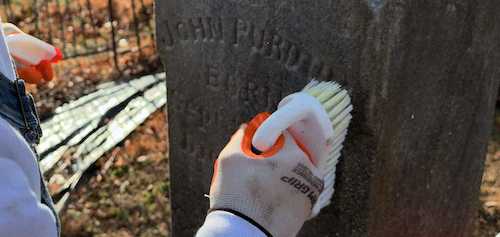
- Picking Dead Paint Out by Hand Failed paint, packed loess dust, or hardened mineral crust gets picked out of each letter individually with a fine hand tool. Anywhere the original enamel is still holding firm is left untouched.
- Rinsing the Groove Down to Stone Whatever's actually clogging the channel, gritty dust paste, fertilizer residue, or iron scale, determines the rinse used to flush the groove back down to bare stone.
- Drying the Channel With Forced Air A forced-air heater removes every trace of moisture from the groove. Skipping this step during a humid summer stretch is the single most common reason a fresh coat fails early.
- Filling the Groove With New Enamel Fresh enamel is packed into the dry channel one thin pass at a time until it fills the groove to the same depth as the original carving.
- Polishing and Uploading the Result Any overspray on the surrounding granite gets buffed away with a pumice block, and the crew photographs the finished lettering through Tending's app to close out the visit.
