
Maintenance in "Tree Town"
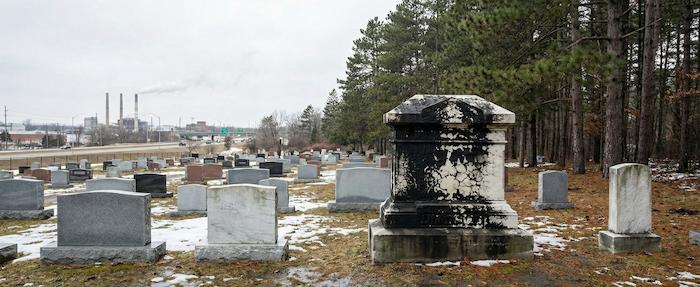
They call Ann Arbor "Tree Town." The canopy in Forest Hill and Fairview is dense. It looks nice, but it wrecks the headstones.
The trees block the sun and drop debris constantly. Stones here stay wet and get covered in sap, bird droppings, and heavy moss. Families searching for headstone cleaning services near me usually aren't dealing with simple dirt. They are fighting biology. We kill the growth, strip the sap, and get the stone clean without hurting the trees or the monument.
Sap and Tannin Stains
Maples and Oaks drip sap. When that sticky mess lands on porous limestone, it soaks in. Dirt sticks to the sap and turns into a black tar spot.
We also deal with tannin stains from rotting leaves. They leave dark brown marks on the base. You can't scrub these out. The pigment is inside the rock pores. We use a chemical poultice. It sits on the stone and sucks the organic pigment out.
The Moss and Lichen Blanket
Because of the shade, the stones never dry out. This breeds moss.
We see monuments wrapped in a green carpet. The moss holds water against the stone. In winter, that water freezes and splits the rock. We don't scrape moss; that scratches the marker. We use a biocide. It soaks in and kills the roots. The moss dies and falls off.
Sliding on the Hills
Ann Arbor isn't flat. Cemeteries like Forest Hill are full of steep slopes. Gravity works against the monuments.
We see stones tipping forward or sliding downhill as the soil washes out. Propping them up doesn't last. For permanent tombstone repair and restoration, we rebuild the foundation. We dig a flat shelf into the hill. We fill it with angular gravel that locks together. This gives the stone a level base that won't slide.
Acidic Bird Droppings
Big trees mean birds. Bird droppings are acidic. If they sit on a polished granite marker, they burn the finish.
We see dull, etched spots on shiny stones. Once that acid burns the polish, the shine is dead. We can't bring it back. But we can wash the acid off so it quits eating the stone.
"Sugaring" of Historic Limestone
The pioneer plots are full of soft limestone markers. They don't hold up well against acid rain.
The surface turns to sand. If you touch it, grains come off. We treat these with extreme care. No brushes. We use a low-pressure rinse and a consolidant. This liquid soaks into the stone and hardens the surface so the inscription stays put.
Huron River Humidity
The river is on the north side of town. It keeps the air damp.
That humidity feeds black mildew on marble statues. The stone turns gray. We use a biological cleaner that targets mildew. It kills the spores inside the rock. We don't bleach it; we clean it. The stone returns to its natural white color.
Service Costs in Ann Arbor
The cost varies. Working on a steep hill takes more effort than a flat plot. Removing deep sap stains takes more materials than a simple wash. We inspect the memorial to give you a fair price.
- Biological Cleaning: Removing heavy moss and lichen.
- Stain Removal: Extracting tree sap and leaf tannins.
- Leveling: Stabilizing monuments on steep hillsides.
- Consolidation: Treating fragile, sugaring limestone.


