
Stone Care in the Shadow of the Rouge
Dearborn is built around industry. The Rouge Complex has been running non-stop for a hundred years. That means jobs, but it also means smoke, soot, and steel dust.
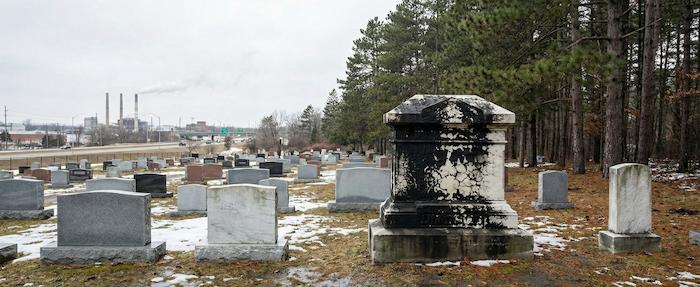
The air here is heavy. Go to Northview or St. Alphonsus. The stones are black. They are covered in a greasy layer of industrial grime. Families searching for headstone cleaning services near me try to wash it off and fail. Water won't touch this stuff. We use industrial-grade cleaners to strip the grime without burning the stone.
Factory Fallout and Oily Soot
The soot in Dearborn comes from the mills and stacks. It is oily and acidic.
It lands on the headstones and hardens. On limestone, it builds a black crust. On granite, it kills the shine. You can scrub with soap all day, but it won't cut this grease. We use a chemical poultice. It is a paste that draws the oil and carbon out of the stone pores. We apply it, let it work, and rinse the sludge away.
Sinking in Heavy Clay
The ground in Dearborn is dense clay. It drains poorly. In the spring, the cemeteries turn into mud pits.
Heavy monuments sink in this soft ground. We see markers that have dropped six inches or more. The grass grows over the names. We fix this by installing a new base. We dig out the mud and put in compacted angular gravel. The gravel drains the water and locks together to hold the weight. The stone stays level, even when the ground gets wet.
Rouge River Dampness
The Rouge River floods the low areas. The ground stays saturated. That constant moisture turns granite green.
Algae grows thick on the north side of the markers. It gets slick and traps water against the stone. In winter, that wet stone freezes and cracks. We kill the algae with a biocide. We don't wire-brush it; that scratches the finish. We kill the roots so the stone stays clean.
Frost Heave on Tilted Stones
That heavy clay soil freezes hard in winter. When it freezes, it expands.
It pushes monuments up and out of line. We call it frost heave. We see tall obelisks tipping dangerously. Pushing them back straight doesn't work; the ground will just move them again next year. We have to replace the clay under the foundation with stone. We build a footer that frost can't grab.
Traffic Film from Michigan Avenue
Michigan Avenue and Ford Road are packed with cars. The exhaust creates a traffic film on the roadside cemeteries.
This film is sticky. Dust and pollen stick to it, building up layers of grime. It makes the stone look flat and dead. We use a degreaser to cut through the road film. We strip it off to reveal the natural color of the granite.
Limestone Decay
The older markers in the historic plots are soft limestone. Decades of sulfur from the factories have attacked the stone.
The surface becomes brittle and sandy. We call it "sugaring." If you brush it, you lose the lettering. We treat these stones with a consolidant. It soaks into the rock and hardens the surface. It stops the disintegration and saves the inscription.
Bronze Restoration
We see many bronze markers in St. Hedwig and other parks. The industrial air oxidizes the copper in the bronze.
The metal turns green and chalky. We restore it by hand. We strip the corrosion and the old lacquer. We clean it down to the bare metal. Then we apply a specialized clear coat. It seals the bronze against the sulfur and keeps the gold color bright.
Service Costs in Dearborn
The cost depends on the damage. Removing heavy industrial fallout takes more work than a standard cleaning. We check the stone to give you an honest price.
- Fallout Removal: Stripping heavy industrial soot and oil.
- Leveling: Raising sunken markers on a gravel base.
- Stabilization: Fixing tilted stones caused by frost heave.
- Bronze Refinishing: restoring oxidized veteran markers.


