
Fighting Black Soot and Ivy in Philadelphia
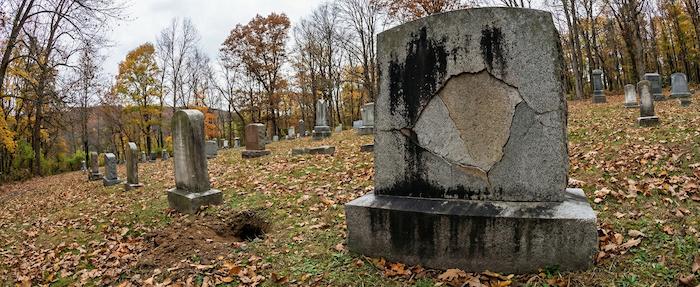
Philadelphia is tough on stone. We have some of the oldest cemeteries in the country, like Mount Moriah, but they are covered in a century of industrial exhaust. The white marble markers here aren't white anymore. A hard black layer covers them completely. You can't read the names or dates.
The weather makes it worse. The humidity in the summers keeps the stone wet, and the English Ivy takes over entire lots. It buries the markers and eats into the mortar. Families searching for headstone cleaning services near me call us to melt off that black carbon buildup and to cut back the vines that are pulling their family plots apart.
The Philadelphia Black Crust
Smoke from factories and car exhaust settles on the monuments. Rain hits it and turns it into a hard, black shell. We see this everywhere in the city. It looks like the stone was dipped in tar.
Scrubbing this does nothing. The crust is harder than the marble underneath. We apply a chemical paste that sits on the stone for a while. It softens the black shell without dissolving the stone. Then we rinse it off. It takes a lot of patience to get down to the original white surface without pitting it.
"Sugaring" Marble Decay
Acid rain destroys the old marble markers common in Philly. The surface loses its bond and turns into sand. When you touch it, white grains come off on your hand. We call this sugaring.
You can't pressure wash this. The water pressure will blow the inscription right off the face of the stone. We use soft brushes and a consolidator to clean it. We work slow. The goal is to get the dirt off while keeping the loose stone grains in place.
Removing English Ivy
Ivy is a disaster for cemeteries here. It climbs up the headstones and sinks little rootlets into the pores. It creates a mat that holds water against the stone and rots it.
We never pull live vines off a marker. That rips the face of the stone off. We cut the main stems at the soil line. We leave them alone until they turn brown and die. Then they peel right off without taking the stone surface with them.
Green Algae and Moss
It gets muggy here in the summer. Shaded stones in West Laurel Hill stay damp for weeks. That wet stone grows a thick layer of green slime and moss.
We don't scrape it dry. That scratches the polish. We soak the growth in a biocide that kills the plant down to the root. The green turns brown and washes away. This keeps the stone clean longer because we aren't just giving it a haircut; we are killing the infestation.
Resetting Leaning Stones
The ground freezes and thaws all winter. That movement pushes stones out of level. Flat markers sink into the mud, and upright monuments start to tilt.
We lift the stone out. We replace the soft mud underneath with gravel. That creates a solid foundation that drains well. A dry base stops the frost from heaving the marker around next winter.
Service Costs in Philadelphia
Cleaning a standard granite marker is one thing. Dealing with a crumbling marble slab or cutting back a wall of ivy is another. We need to see the condition of the plot before we give you a price.
- Crust Removal: Dissolving industrial pollution buildup.
- Marble Care: Cleaning fragile, eroding stone.
- Ivy Removal: Cutting back vines and weeds.
- Leveling: Resetting sunken or leaning markers.