
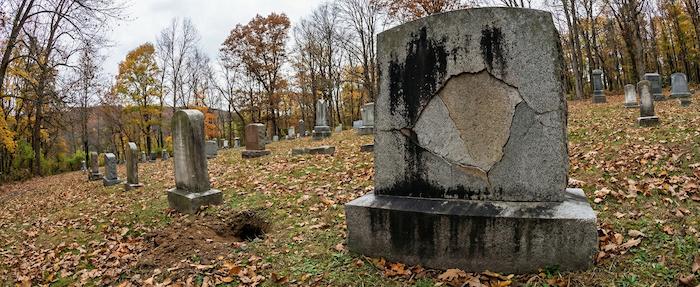
Cleaning Coal Dust and Fixing Leaning Stones in Scranton
Scranton is built on coal, and that history is stamped onto the cemeteries. In older grounds like Cathedral Cemetery or Dunmore, the headstones are covered in a hundred years of anthracite soot. It isn't normal dirt. It is greasy, black carbon that rain won't wash away.
The steep ground is the other problem. The cemeteries here are hilly. When it rains hard, the mud slides, taking the monuments with it. Families searching for headstone cleaning services near me call us to scrub off that stubborn coal grime and to level markers that are sliding down the slopes.
Anthracite Carbon Crust
For decades, the mines and trains kicked up coal dust. It stuck to the rough surfaces of granite and marble. Over time, it hardened into a black shell. You can't read the names on many of the older stones in Washburn Street because they are completely coated.
Scrubbing this with soap just smears it around. We use a heavy-duty chemical paste. We pack it onto the stone and let it sit. It breaks down the oily bond holding the carbon to the rock. We rinse it off, and the grey granite shows through for the first time in years.
Peeling Bluestone Markers
Many local families used Pennsylvania Bluestone for markers. It is a sedimentary stone, meaning it is built in layers. Water gets between those layers. When it freezes, it pops the face of the stone off.
We see slabs peeling like old cardboard. We clean out the debris trapped in the cracks. Then we inject a stone adhesive to bond the layers back together. We put a watertight cap on the top edge. It holds the stone together so the winter doesn't rip another layer off.
Hillside Erosion and Tilting
Scranton cemeteries sit on steep slopes. Storms wash the mud out from under the foundations. We find heavy monuments tipping forward or sliding downhill.
We dig a new, flat shelf into the hill. We use angular gravel that locks together to build a level pad. We set the stone back on this stable base. It stops the marker from creeping downhill when the ground gets soft again.
Sinking Flat Markers
The ground here is soft, especially in the valleys. Heavy flat markers sink straight down. Grass grows over the edges, and eventually, the marker disappears under the turf.
We probe the ground to find the corners. We cut the sod back and lift the stone out. We put a thick layer of gravel underneath it and set the marker back in place. It sits flush with the grass now, but on a solid base that won't sink.
Stubborn Lichen Growth
The shade and humidity in places like Forest Hill encourage biological growth. We see hard, crusty lichen growing on the sandstone and granite. It digs roots into the stone pores.
If you scrape it dry, you pull pieces of the stone off with it. We kill it first. We soak the lichen in a biocide. It turns to mush and releases its grip on the stone. We wash it away gently, leaving the surface intact.
Acid Rain Damage on Marble
The sulfur from the old coal industry mixed with rain to create weak acid. It ate away the surface of white marble statues and crosses. The stone feels rough and sandy, which we call "sugaring."
Pressure washing destroys this soft stone. We use soft bristles and a consolidator fluid. The fluid soaks in and hardens the surface. It binds the loose grains so the details of the carving don't wash away.
Trimmer and Mower Scuffs
Landscaping crews move fast. String trimmers chew up the corners of the base stones. Mower tires leave black rubber streaks on flat markers.
We wipe the rubber marks off with a cleaner. For the chipped corners, we can't replace the stone, but we grind the jagged edges down. It looks cleaner and stops the equipment from catching on the rough spots.
Service Costs in Scranton
Removing deep coal soot takes time and specialized chemicals. Stabilizing a peeling bluestone marker is delicate work. We need to inspect the condition of the stone and the terrain before we give you a price.
- Soot Removal: Dissolving heavy anthracite carbon buildup.
- Leveling: Resetting stones on steep hillsides.
- Bluestone Repair: Bonding delaminating layers.
- Consolidation: Hardening eroding soft stone.