
Erosion and Shade in the Hills
Farmington Hills isn't flat like the rest of the metro area. We have rolling terrain and big, old trees. That combination is tough on cemeteries.
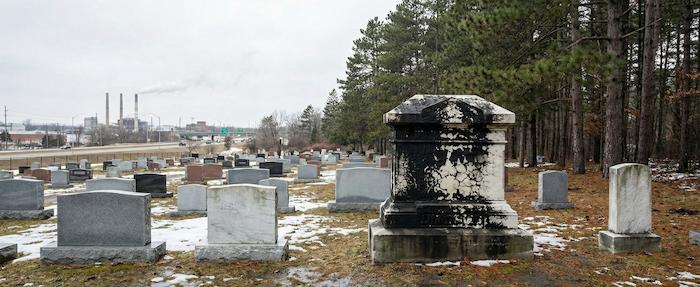
In places like North Farmington or Oakwood, gravity works against the monuments. Rain gouges the dirt out from under the base. The stone slides downhill. The shade keeps the rock wet, and moss takes over. Families searching for headstone cleaning services near me call us to stop the sliding and strip off the green crust.
Hillside Erosion and Sliding
Gravity pulls everything downhill. Rain speeds it up by washing the soil away.
We see bases hanging over empty air where the dirt used to be. The monument tips forward. If we don't fix it, it falls. We don't just prop these up with dirt. We dig a level shelf into the hillside. We install a deep pad of angular gravel. The gravel locks together and drains the water. This keeps the stone flat, even on a steep grade.
Tree Sap and Leaf Stains
The Oak and Maple trees here drop debris all year. In the spring, it's sticky sap. In the fall, it's wet leaves.
Sap attracts dirt and turns into black tar spots. Rotting leaves leave dark brown stains on the limestone. You can't scrub this out; the pigment is deep inside the rock. We use a chemical poultice. It sits on the stain and sucks the color out.
Lichen on Rough Granite
Many of the older markers have rough, "rock pitch" edges. The deep shade here promotes lichen growth.
Lichen anchors itself into the rough stone. If you scrape it, you chip the granite. We kill it first. We soak the growth in a biocide. The plant dies and releases its grip. We wash it away with low pressure, leaving the stone clean without damaging the texture.
Hard Water Scale
The memorial parks here run sprinklers constantly to keep the grass green. The water leaves a mess behind.
When the water evaporates, calcium bonds to the stone. It forms a hard white crust that covers the dates and names. It doesn't wipe off. We use a buffered acid cleaner. It dissolves the calcium but is safe for the granite polish.
Frost Heave in the Valleys
Between the hills, the ground is often heavy clay. Water collects there. In winter, it freezes.
The frost pushes the stones up and twists them. We call it frost heave. We fix this by replacing the wet clay under the monument with stone. We build a foundation that drains the water away so the ice can't grab the marker.
Deer and Wildlife Damage
Farmington Hills has a huge deer population. They move through the cemeteries constantly.
We see stones kicked with mud and covered in droppings. Deer droppings are acidic and can etch polished stone if left too long. We clean and neutralize the surface to stop the acid from dulling the finish.
Restoring Bronze Plaques
In the modern sections, bronze markers are common. Humidity and fertilizer turn them green.
This oxidation makes the text blurry. We strip the failed coating and the green corrosion. We clean the metal down to the base bronze. Then we apply a new clear coat to seal it against the weather.
Service Costs in Farmington Hills
Working on a hillside adds to the labor. We have to be careful not to damage the turf or surrounding stones. We inspect the site to give you a solid price.
- Hillside Stabilization: Leveling stones on slopes.
- Biological Cleaning: Removing lichen and moss safely.
- Stain Removal: Extracting tree sap and leaf tannins.
- Bronze Restoration: Stripping and sealing veteran markers.


