
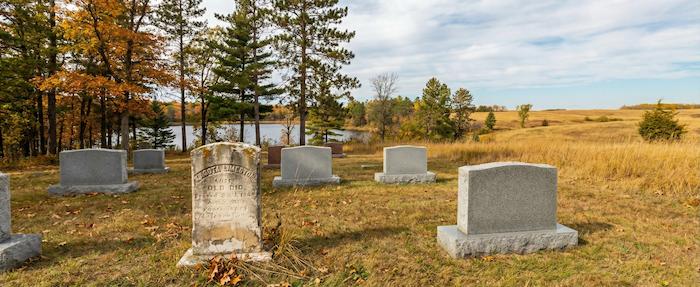
Stone Care on the River Bluffs
Bloomington sits on the north bank of the Minnesota River. The ground here is either dry sand on the bluffs or wet peat in the bottoms. Both are tough on headstones.
In cemeteries like Bloomington Cemetery and Dawn Valley, we see monuments tipping as the sand washes out, and flat markers sinking deep into the soft, swampy ground. We also deal with heavy calcium buildup from suburban irrigation systems. Families searching for headstone cleaning services near me call us to stabilize these shifting foundations and strip off the white mineral haze that hides their loved ones' names.
Sand Washout on the Bluffs
The higher ground in Bloomington is loose, sandy loam. It drains fast, but it moves. Heavy rain cuts channels through the sand and takes the support with it.
We see upright monuments tipping forward as the front corners wash out. We lift the stone. We remove the loose sand and pack the hole with crushed angular rock. This rock locks together tight. It creates a hard pad that water flows through without moving the foundation.
River Fog and Green Algae
The Minnesota River generates heavy fog. The dampness hangs in the air until noon. This moisture feeds thick green algae on the granite.
It grows on the north side of the stones. It holds water against the rock, which leads to frost damage. We apply a biocide that soaks into the stone pores. It kills the biological growth instantly. The green slime turns brown. It dries up and flakes off the stone.
Irrigation Scale (Calcium Deposits)
Bloomington cemeteries run sprinklers constantly. The water here is hard. The sun bakes the water off the hot granite, but the minerals stay behind.
This builds up a hard white layer called scale. It bonds chemically to the polish. You cannot scrape it off without scratching the stone. We use an acidic cleaner that dissolves the calcium bond. We rinse the minerals away to restore the mirror finish.
Sinking in Peat Soil
Near the river bottoms, the soil is dark and organic. It acts like a sponge. Heavy flat markers sink straight down into this soft ground.
We often find markers buried under two inches of sod. We cut the grass back and lift the marker. We dig out the muck. We replace it with a thick layer of compacted gravel. This spreads the weight out. The stone sits on the gravel pad instead of sinking into the peat.
Frost Heave
The frost goes down 42 inches here. If the foundation is shallow, the ice gets underneath it. It jacks the monument up.
This leaves monuments leaning dangerously. We have to dig out the old foundation. We install a new footer that sits below the frost line. By replacing the wet soil with drainage stone, we stop the frost from grabbing the monument.
Bronze Corrosion
Dawn Valley Memorial Park has thousands of bronze markers. Winter snow and road salt attack the protective lacquer.
Once the seal breaks, the bronze oxidizes. It turns green and chalky. We strip the damaged coating. We clean the metal to remove the corrosion and bring back the gold color. Then we apply a clear coat meant for industrial use to seal it against the weather.
Lichen on Rough Rock
On the older, rough-cut monuments, crustose lichen digs in. The clean air on the bluffs helps it grow.
It forms hard circles that eat into the stone surface. Mechanical removal pulls the stone grains out. We use a biological solution to soak the crust. It kills the organism. The dead lichen releases its grip and washes away with the rain.
Service Costs in Bloomington
Fixing a sunken marker in peat requires more material than usual. Removing heavy irrigation scale is a slow chemical process. We inspect the site to understand the soil and stone conditions before giving a quote.
- Bluff Stabilization: Resetting tipping stones in sandy soil.
- Scale Removal: Cleaning hard water deposits.
- Marker Raising: Lifting flat stones out of soft peat.
- Biocide Treatment: Removing river algae and moss.


