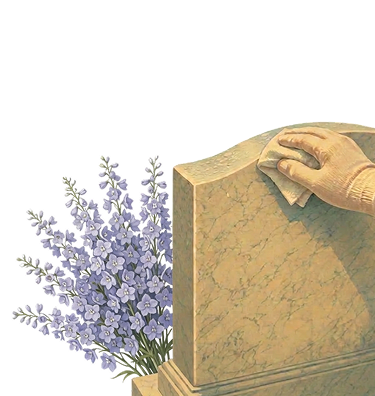
The Cost of a Quick Shine: How Household Methods Destroy Monuments
Popular DIY headstone cleaning methods — pressure washers, household acids, bleach, and abrasive scrubbing — cause permanent damage that can't be undone. Acids etch the stone surface, alkaline cleaners leave chemical residue trapped inside, and mechanical scraping wears away inscriptions and carved detail. The safest approach for non-professionals is plain water, a soft brush, and no chemicals.
As professional grave cleaners at Tending, we see the same story far too often. A family member wants to tidy up a headstone, reaches for household cleaners or a pressure washer, and unintentionally causes permanent damage. What looks like care often ends in destruction.
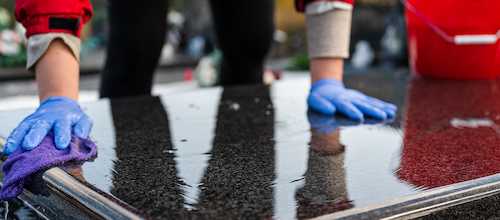
The Urge to Make It “Shine”
Many people simply want the stone to look bright and clean. This often leads to using pressure washers, strong detergents, or abrasive powders. While these tools may provide immediate results, they wash out the stone’s binding material, leaving surfaces weakened. Softer stones like marble or limestone develop scratches that cannot be repaired, and inscriptions or decorative details may start to fade.
Acids and Alkalis: Invisible Destruction
Household acids and alkaline cleaners are particularly dangerous. In professional restoration, acidic or alkaline solutions are used with precise concentrations and tested methods. However, products like muriatic (hydrochloric) or acetic acid can literally eat away at the stone surface. Alkaline cleaners can leave a dense, white film — the dirt may be gone, but there’s chemical damage inside the stone.
Mechanical Damage: Scraping and Abrasion
Improper tools and rough mechanical cleaning can erase years of craftsmanship. Inscriptions may be flattened, carved reliefs may be smoothed out, and natural textures may disappear. The stone’s authenticity is permanently compromised. Even well-intentioned scraping to remove moss or lichen can tear away fragments of the stone itself, especially when used with chlorine-based cleaners like bleach, as the chlorine reacts chemically with the stone.
Why Household Thinking Fails
Treating a headstone like scrubbing bathroom tile is the main problem. Stone is a complex, layered material where water, temperature, and chemicals interact in ways that are easy to misjudge. At Tending, professional cleaning begins with diagnostics: identifying the stone type, evaluating the surface condition, and understanding the kind of stains or biological growth present. Only then are targeted methods applied — whether a gel poultice, gentle steam cleaning, or carefully measured biological treatment. In some cases, the safest approach is minimal intervention, following the principle of “do no harm.” Not every stone should look “new,” and age itself tells an important story.
The Illusion of Fast Results
Aggressive cleaning often gives an instant visual effect: the stone looks brighter. But beneath the surface, protective layers are gone, moisture penetrates more easily, and damage may accelerate. Biological growth can return faster, and cracks may expand. Even Tending's professional restoration can only limit further damage; it cannot fully reverse mistakes caused by household methods.
Three Simple Rules for Families
- Avoid chasing quick visual results.
- Never use harsh chemicals or abrasive tools.
- Treat each headstone as a delicate, layered object.
True gravestone maintenance is preventive, gentle, and ongoing. Short-term gains from DIY cleaning often create long-term loss.
Frequently asked questions
Can I use muriatic acid to clean a headstone?
No — muriatic (hydrochloric) or acetic acid can literally eat away at the stone surface. Even diluted, acidic cleaners cause damage that isn't reversible.
Why does bleach damage headstones when removing moss or lichen?
Chlorine reacts chemically with the stone itself, and scraping growth away while using a chlorine-based cleaner like bleach can tear away fragments of the stone along with the moss.
Is it safe to pressure wash a headstone to make it look clean quickly?
No. Pressure washing gives an instant visual result but washes out the stone's binding material, weakening the surface — softer stones like marble or limestone can develop scratches and fading that can't be repaired.
What does a white film on a headstone after cleaning mean?
It usually indicates alkaline cleaner residue trapped inside the stone — the visible dirt may be gone, but there's chemical damage beneath the surface that a rinse won't fix.
Is it safe to make my own gravestone cleaning solution?
Most homemade solutions — vinegar, baking soda paste, dish soap mixed with bleach — either react chemically with the stone or leave behind a film that traps dirt and moisture. Even ingredients that seem mild individually can cause damage when combined or used repeatedly over time.