How to Choose a Grave Care Service You Can Trust
Handing the care of a loved one's grave to a stranger requires trust — and that trust is hard to judge when you can't check the work yourself. Sometimes that's because the grave is states away. Sometimes it's because the visit that used to be manageable no longer is, or because keeping up with it alone has become more than one person can carry. This guide lays out what to look for, what to ask, and the warning signs that should give you pause — so you can choose a service with confidence rather than hope.
Who takes care of a cemetery, and what is your responsibility?
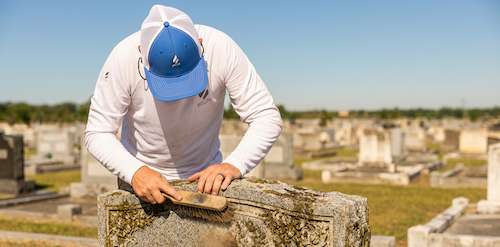
It's a common assumption: the cemetery handles it. In practice, cemetery maintenance fees usually cover the grounds — mowing, general upkeep, keeping the paths clear. The caretaker of a cemetery is responsible for the property as a whole, not for cleaning or restoring an individual headstone. That part is left to the family, which is exactly why grave care services exist — to take on a job the cemetery was never actually doing.
Why this decision deserves care
Grave care is unusual among services because the work is hard to verify and the material is unforgiving. A bad haircut grows back; a headstone cleaned with the wrong method can be damaged permanently. Many of the worst outcomes families encounter don't come from scammers — they come from well-meaning but unqualified people using aggressive techniques on fragile stone. That's why vetting matters here more than in most everyday transactions: the cost of choosing wrong isn't just money, it's irreversible harm to the monument.
Figure out what your grave actually needs
Not every grave needs the same thing, and knowing the difference helps you ask the right questions. Professional headstone cleaning covers what most graves need: removing moss, lichen, biological growth, and built-up grime from the stone. Cleaning grave markers and headstones safely means using methods matched to the material — granite, marble, limestone, and bronze all respond differently, and the same technique can be safe for one and damaging to another.
Some monuments need more than cleaning. If there are cracks, chips, a leaning stone, or badly faded lettering, look for a provider that offers monument restoration services, not just a basic cleaning crew. Worth asking upfront: is restoration priced and scoped separately from routine cleaning? Many services handle the two differently, and it's better to know that before you order than after.

Ask about their methods
A few direct questions reveal a lot. How to properly clean a headstone depends entirely on the stone — so ask what method they'll use on this specific monument, and why. Are they insured, and for how much? Will you receive before-and-after photographs? Do they coordinate with the cemetery, including any permissions required? Is this a one-time visit or can it be ongoing? You're not looking for a perfect script — you're looking for clear, specific answers. Vague or evasive ones tell you something too.
Red flags worth taking seriously
Be wary of anyone who promises to make an old stone look "brand new." Quality restoration returns a stone's natural appearance and stops further damage; it doesn't erase age, and a promise to do so often means aggressive methods that harm the surface. Mentions of power tools, wire brushes, pressure washers, bleach, or household acids on older or softer stone are a sign to look elsewhere — these are among the most common causes of permanent damage to monuments, regardless of how confident the person sounds. The same goes for pressure tactics, prices far below everyone else's, reluctance to explain methods, or any unwillingness to provide proof of insurance or photo documentation.
Understand what you're paying for
Grave care services prices vary, and that's normal — what matters is whether you can see the breakdown before you commit. Clear, upfront pricing means understanding what's included — routine cleaning, for instance — and what falls outside it, like structural repairs or resetting a leaning stone, before the work begins. A provider that can't give you a straight answer on cost, or one that surprises you with an added bill afterward, isn't one you can trust with something this irreversible.
Solve the distance problem: remote grave care
Not being able to visit isn't only about geography. Some families live states away. Others live nearby but can no longer manage the drive, the standing, or the physical work involved — and some are simply carrying this responsibility alone and are ready for some support. Whatever the reason, the same two problems come up.
The first is finding the grave itself — plenty of people searching for how to find a gravesite in a cemetery only have a name and a rough date to go on. A good remote grave care service will help locate the exact plot using just that information, rather than asking you to already know the section and row number.
The second problem is that you can't be there to check the work. If you've looked for grave care services near me and only found local, cemetery-based providers, that's often because most grave care isn't set up to be coordinated remotely. This is where the checklist matters most: insurance, transparent pricing, and photo documentation aren't optional extras for a remote service — they're the only way you can trust the result. Hold a remote provider to the same standard as a local one, and don't accept less proof simply because the arrangement is convenient.

The bottom line
Choosing a grave care service comes down to a simple principle: trust the ones that are transparent, insured, and willing to prove their work, and be cautious of the ones that aren't. Ask direct questions, expect clear answers, and treat any promise that sounds too good — or any method that sounds too harsh — as a reason to look elsewhere. The right service will make it easy to feel confident, even from far away.