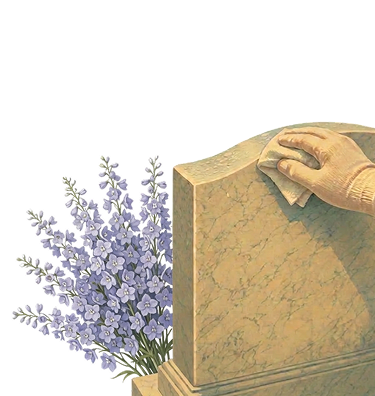
Why Headstone Material Matters More Than Design
Granite is the most durable headstone material for U.S. climates — it resists frost, acid rain, and temperature swings with minimal maintenance. Marble ages more delicately, developing surface "sugaring" and darkening from acidic exposure over decades, while bronze develops a natural patina and lasts indefinitely when properly mounted. The right choice depends on whether a family prioritizes low maintenance or a classic aesthetic.
When a family chooses a headstone, the first thing they almost always focus on is appearance: the shape, the color, the words carved into the stone. This is natural — a memorial should look dignified and reflect the memory of a loved one. But in practice, we see the same pattern again and again: ten, twenty, or thirty years later, what truly matters is not the design, but the material.
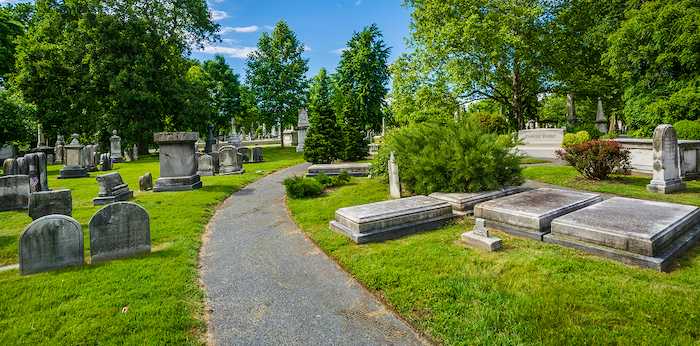
It is the material that determines how a monument will age, how much care it will require, and whether the inscription will remain readable for future generations. Over years of restoring memorials across the United States, Tending's specialists have repeatedly encountered the long-term consequences of decisions made decades earlier.

Granite — the most reliable and predictable choice
Today, granite is the most common material used for headstones in the United States. It is chosen not because of trends, but because of its stability.
Granite absorbs very little moisture and handles frost, heat, sharp temperature changes, and acid rain well — all of which are common in many U.S. regions. Inscriptions remain clear for decades, often longer, without the need for restoration.
From a maintenance perspective, granite is simple: occasional washing with water or a mild neutral cleaner. No complex procedures are required. From an installation standpoint, granite is heavy and stable, works well with concrete foundations used in most American cemeteries, and rarely causes problems in the future.
For families seeking minimal maintenance and maximum longevity, granite is almost always the calmest and most practical solution.

Marble — beautiful, but requires conscious care and does not always tolerate harsh climates
Marble is often chosen for its light color and classic, “historic” appearance. It is associated with 19th-century monuments and old cemeteries, and this aesthetic has a timeless appeal.
However, it is important to understand what marble is: a metamorphic stone — limestone transformed by heat and pressure — made largely of calcite. Calcite reacts with acidic rain and household cleaners, and this chemistry is what wears marble down over time. Inscriptions lose sharpness, the surface darkens, moss or biological growth appears, and the stone can begin to feel rough — a process restorers call "sugaring".
This does not mean marble is a bad material. It means it ages in its own way. Marble requires regular, careful maintenance and a very level, stable foundation during installation. For families willing to care for the monument and accept natural aging, marble remains a dignified and noble choice.

Bronze — a material that develops a patina over time
Bronze is rarely used as a standalone monument, but very often appears in plaques, reliefs, and decorative elements. Over time, bronze darkens and develops a patina. For some families, this is part of its character and sense of time; for others, it is a reason for periodic polishing.
When properly mounted to stone, concrete, or granite bases, bronze elements last for a very long time. That is why they are commonly used in memorial and military sections of cemeteries across the country. It is a respected and time-tested material.
What about other materials?
Sometimes limestone, sandstone, or modern designer solutions made of glass and metal are considered. Historically, these materials have significance, but in the U.S. climate they are used less often.
Softer stones deteriorate faster, may delaminate, and lose form. Modern materials can look striking, but require specialized maintenance and do not always meet cemetery regulations. In practice, the choice most often comes down to granite, marble, or a combination of stone and bronze.

A few important care guidelines
If you care for a family burial, the main principle professional restorers follow is simple: “Do no harm.”
Do not use hard metal brushes, especially on marble — they destroy the surface. Avoid household cleaners such as bleach or acidic products, as they can damage the stone from within. Water, a soft brush, and neutral cleaners are best. Moss and lichen should not be scraped off dry — this often causes chipping and accelerates deterioration. Finally, never paint the stone: this almost always worsens its condition over time.

A few illustrative examples
A good historical example is the tomb of Napoleon Bonaparte at Les Invalides in Paris. His sarcophagus is often described as “porphyry,” but in fact it is made of a quartz-rich stone — red quartzite quarried in Russia. Structurally, it is closer to granite than to classic marble.
Why does this matter? Because the presence of quartz makes the stone significantly more resistant to moisture and time. Nearly two centuries later, the surface retains density, sharp form, and deep color. This example shows clearly that the name of a stone tells you little — its composition and structure matter far more.
At the same time, the classic marble elements surrounding the tomb have aged more softly over the years, losing some polish and requiring regular care. This is not a flaw, but a clear demonstration of how materials with similar appearances behave very differently over time.

Why granite performs so well in climates like New York’s
Looking at the United States, especially the Northeast, it becomes clear why granite became a standard choice. In New York, granite has been used for decades in outdoor sculptures, memorials, and headstones — for good reason.
The city faces a harsh environment: freezing winters, hot summers, road salt, acid precipitation, high humidity, and heavy traffic. Here, granite’s performance can be seen in real conditions, not theory. Many granite monuments and sculptures installed in the early and mid-20th century still retain sharp lines, readable inscriptions, and stable form without major restoration.
The same applies to cemeteries. Granite headstones in New York and neighboring states often look well-preserved even after 50–70 years, while softer stones nearby visibly lose form and detail. This real-world experience shaped the American approach: it is better to choose a durable material once than to constantly deal with the consequences.
What these examples mean for families today
Napoleon’s tomb shows that stone composition matters more than first impressions, while New York’s experience proves that granite is not a compromise, but a climate-conscious choice.
When families in the U.S. choose granite, they are following the same logic as architects of the past: selecting a material that can endure decades with minimal intervention. Marble and quartz-rich stones remain an option for those who value aesthetics and accept more delicate aging.
Conclusion
There is no absolutely “bad” or “good” material. Some materials are more durable and low-maintenance; others are beautiful but require attention. The right choice is the one that aligns with a family’s expectations not only today, but many years into the future.
The better you understand the nature of the stone or metal you choose, the longer the inscription will remain clear and the monument will keep its dignity — for decades, and for the generations who will read it.
Frequently asked questions
Is granite or marble better for a headstone?
Granite is generally more durable — it absorbs very little moisture and handles frost, heat, and acid rain well, keeping inscriptions clear for decades with minimal upkeep. Marble is classic and elegant but reacts chemically with acidic rain over time, causing darkening, moss growth, and surface "sugaring."
What is "sugaring" on a marble headstone?
It's a process where the marble's calcite reacts with acidic exposure over years, causing the surface to lose its polish and take on a rough, granular texture similar to sugar — a sign that the stone's surface is gradually breaking down.
How long does a bronze memorial plaque last?
When properly mounted to a stone, concrete, or granite base, bronze elements last for a very long time. Over the years bronze naturally develops a patina, which some families see as part of its character while others prefer periodic polishing.
Should I ever paint a headstone to improve its appearance?
No — painting a stone almost always worsens its condition over time. The safer approach is water, a soft brush, and neutral, non-acidic cleaners, following the general "do no harm" principle professional restorers use.