Valley Moisture Trap
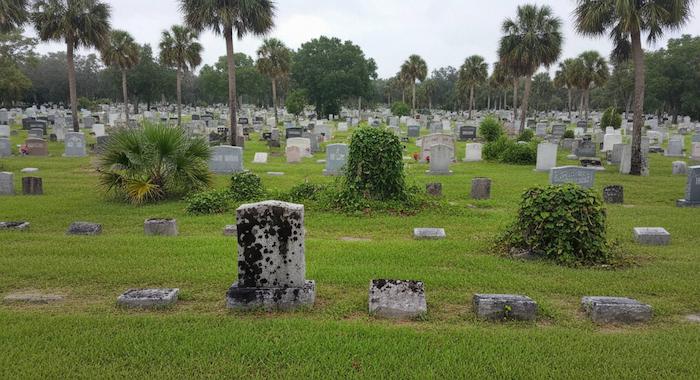
Clermont sits in a low basin surrounded by lakes. Moisture evaporates but cannot escape the valleys. It hangs in the air. Granite markers soak up this humidity. They stay wet for hours.
This creates a wet environment for Gloeocapsa magma (black algae). You see a thick, black skin. It traps heat. It hides the name.
Searching for headstone cleaning services near me often points to pressure washing. Bad idea. High pressure drives water deeper into the saturated stone. It feeds the roots. We use specialized grave site cleaning services. We use a biological soaking agent. It penetrates the rock safely. It kills the algae cells chemically. The black crust lifts off.
Hillside Slope Failure
Clermont has steep hills. Gravity pulls rainwater downhill fast. The water cuts channels in the soil. It rushes under concrete foundations. It scours the support away from the downhill side.
The monument tips forward. Adding dirt fails; it washes right out. For lasting tombstone repair and restoration, we stabilize the sub-base. We excavate the loose sand. We install angular gravel. The rocks lock together. They create a friction pile. This supports the weight, even on a slope.
Red Clay Iron Stains
The subsoil here is Red Kaolin Clay. It is full of iron oxide. Rain splashes this mud onto the base of the marker. The sun bakes it into the pores. It creates a stubborn orange stain.
Soap won't clean this. It is a chemical bond. We use professional cleaning stone gravestones chemistry. We apply a chelating paste. It breaks the iron bond safely. We rinse it away. The natural stone color returns.
Inland Thermal Shock
Inland Florida is hotter than the coast. Granite absorbs heat. If you hit hot stone with cold pressure washer water, it expands and contracts too fast. This causes micro-cracks (thermal shock).
We never use high pressure. We use low-pressure rinsing and chemical cleaning. This protects the stone's structural integrity.