Great South Bay Salt Crystallization
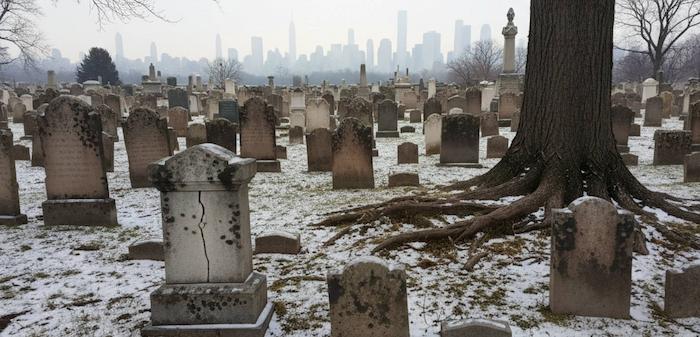
Wind direction is vector-consistent from the Great South Bay. The air mass carries sodium chloride aerosols. Salt load accumulates on the porous granite of Babylon Rural Cemetery.
Evaporation leaves solid crystals inside the pore structure. Crystal volume increases. This generates hydraulic pressure ("Sub-florescence"). The internal stress exceeds the stone's tensile limit. The matrix crumbles. Scrubbing is ineffective. The failure mechanism is internal. We use specialized grave site cleaning services. We apply desalination poultices. These extract the chloride ions. We flush with distilled water.
"Resort Era" Coal Carbonation
Babylon served as a rail terminus and resort hub (The Argyle). Coal consumption for transit and heating was high. Carbon/sulfur particulate density was significant.
Sulfur dioxide reacts with calcium carbonate markers. The reaction product is a black gypsum crust. This scab traps moisture. Decay accelerates. Mechanical removal damages the stone skin. We use ammonium carbonate poultices. These pastes dissolve the chemical bond. We lift the carbon staining without abrasion.
Glacial Outwash Kinetic Shift
Geology defines the structural risk. The "Glacial Outwash Plain" consists of deep silica sand. Grain cohesion is zero. Drainage is instant.
Vibration from Montauk Highway and rail lines causes grain settlement. Foundations lose static friction. They sink or tilt. Adding topsoil is cosmetic. For permanent tombstone repair and restoration, we stabilize the sub-grade. We excavate. We install a friction pile of angular gravel. This interlocks with the loose sand. It prevents vertical movement.
Maritime Copper & Lead Fallout
Regional industry centered on hull maintenance. The primary pollutant was anti-fouling paint. Composition included high percentages of copper and lead. Maintenance sanding created airborne dust plumes.
Copper oxidation occurs on the stone surface. The result is green staining (Verdigris). Lead particulate creates grey/black streaks. This is chemical contamination, not biological. We use chelating agents. These chemicals sequester the metal ions. They extract the stain from the pores. The stone surface remains intact.
Estuarine Fog Spalling
The bay functions as a thermal reservoir. Winter temperature differentials create dense estuarine fog. Stone saturation levels peak in January.
Ambient temperature drops to freezing. Pore water undergoes phase change. Ice volume expands 9%. Internal pressure reaches 2,500 PSI. The face shears off (Spalling). Searching for headstone cleaning services near me often leads to pressure washing ads. This increases water saturation. We use hydrophobic sealers. They coat the capillaries. Liquid entry stops.