
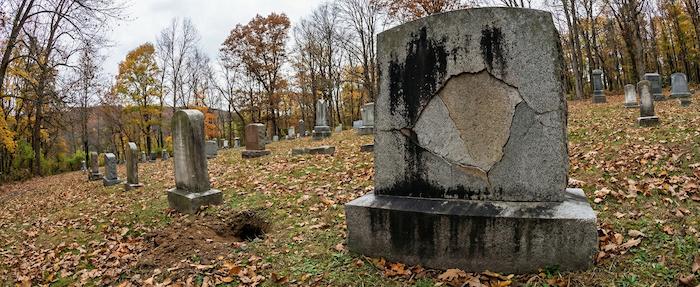
People searching for headstone cleaning services near me in Bethel Park usually have one of two problems: a stone that's gone dark and streaked, or a monument that's started to lean. Both trace back to what's under the grass here. Clay-rich shale from the Casselman and Glenshaw formations runs under most of the borough, and it swells when the ground is wet and shrinks once it dries out again. Add in a handful of shaded, low-lying creek valleys, and you get a mix of ground movement and biological growth that most cleaning products never really solve. We treat both. A clean surface on a base that keeps moving underneath doesn't hold for long.
"I needed three tombstones cleaned and restored, so I did some research and found Nationwide Grave Care & Headstone Cleaning. I emailed them to ask about their services and costs, and they quickly replied and even called to discuss the details. Two of the stones were 19 years old, and the third was at least 30 years old, all in need of cleaning and restoration. After reviewing the different options, I chose the one that best fit my budget and timeline. I was very impressed with their workmanship and how quickly the job was done. The stones looked like new, with all the stains and grime gone, and they even sent me before and after photos. I felt it was a great value for the work done and wouldn’t hesitate to use their service again."
— Douglas Fink, Chester Springs, Pennsylvania

Casselman Clay Heave Headstone Restoration
The clay under most Bethel Park cemeteries holds water like a sponge after a storm. Once it's saturated, it expands. A granite base that sat level for decades can tip a few degrees in a single wet season. Concrete footings crack along the same fault lines the clay moves on. Older upright markers, set without a modern footing, are the ones we see leaning hardest by spring. Family plots near the borough's southern edge tend to show it first, since the clay layer runs closer to the surface there.
We dig out the base, check the footing for cracks, and pack in a layer of drainage stone before resetting the monument. This gives future rainwater somewhere to go besides straight into the clay. A releveled base holds for years under normal conditions. It's the same headstone restoration approach we use across the South Hills, adjusted for how deep the clay runs at each site and how much the stone has already shifted.
Piney Fork Shade Grows Moss Fast
Piney Fork and Alsip Run cut through wooded, low-lying ground on the borough's south side. Stones set near either creek stay damp long after a rain has passed elsewhere. That dampness is exactly what moss and algae need. A stone can go from clean to fully green in a single growing season under enough shade. Within a year or two, a gravestone cleaner near me search often turns into a request to strip a stone back to its original color.
We apply a D/2 biological solution that kills the growth without scrubbing the surface raw. Bronze plaques set near these same shaded plots pick up a similar greenish film from the humidity. We clean those the same visit with a bronze grave marker cleaning process built specifically for metal surfaces, since the chemistry that works on granite can actually damage a bronze finish.
Old Coal Seam Runoff Stains Marble
Thin coal layers run through the sandstone and shale under parts of Bethel Park, left over from old Redstone and Waynesburg seams. Where groundwater passes through them, it picks up acidity and iron. That runoff leaves a rust-brown stain on marble and limestone markers, usually starting at the base and working upward over several years. Lettering carved into these softer stones is often the first detail to lose its edge.
A chelating agent lifts the iron stain without eating into the marble underneath. On stones where the same acidic runoff has softened the carved lettering, we handle that separately through gravestone lettering repair and headstone repair, matched to the letter depth that's still legible. Most family names and dates can be brought back to a readable depth without recutting the whole inscription.
Service Costs in Bethel Park
Every Tending plan in Bethel Park is priced through our online calculator once you pick the monument type and care plan you want. There's no visit from a technician before you pay, and no guessing at a quote over the phone. See pricing for your cemetery before you book, and the same page walks you through scheduling the first cleaning and setting up a recurring visit if the family wants one. Most Bethel Park families start with a single deep cleaning and decide on ongoing care after seeing the result.
- Monument releveling: excavate the base, inspect the footing, and repack with drainage gravel so clay heave doesn't pull the stone off level again.
- Biological growth removal: D/2 solution treatment for moss and algae on shaded, creek-side monuments and bronze markers.
- Iron stain and lettering treatment: chelating agents lift rust-brown coal runoff stains, with separate gravestone lettering repair where letters have softened.