
Why Fall Is the Best Time to Clean a Headstone
Fall is the best time to clean a headstone because winter freeze-thaw cycles force water trapped in dirt, moss, and hairline cracks to expand and push the stone apart. A headstone cleaned before the ground freezes goes into winter dry and stable; one left dirty carries months of trapped moisture through repeated freezing before anyone can address it again.
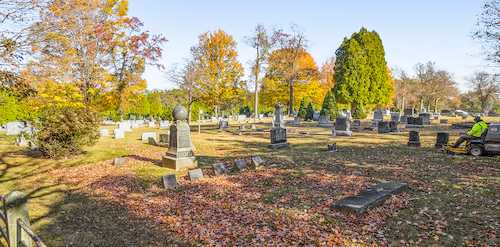
What Winter Actually Does to Stone
The mechanics behind winter headstone damage are straightforward. Water sits in the small pores and hairline cracks that most headstones develop over time. When the temperature drops below freezing, that water expands as it turns to ice, exerting pressure inside the stone. Repeated freeze-thaw cycles, not one hard freeze but many small ones over a winter, widen existing cracks and can cause the surface to chip or flake (spalling).
Biological growth adds to the problem rather than just sitting on top of it. Lichen, algae, and moss hold moisture against the stone's surface, which means a headstone with active growth going into winter stays wetter, for longer, right as freezing temperatures set in. That combination, trapped water plus repeated freezing, is the same mechanism behind most of the cracking and surface loss families notice on older monuments each spring.
Dirt and staining behave differently in the cold, too. Grime that would rinse off easily in October tends to set once the surface has gone through a freeze, and by spring it often needs more aggressive cleaning to remove; the kind of cleaning that carries more risk for the stone.
Why Fall Is the Window
The practical cutoff isn't a date on a calendar so much as the ground itself. Once the soil freezes, most cleaning and stabilization work becomes difficult or unsafe to do properly, and the average first frost lands anywhere from late August to late November depending on the state. If you're wondering how to protect a monument in winter, the honest answer is that most of the useful work has to happen before winter starts, not during it. A headstone that gets attention before that point goes into winter with a clean surface and no standing moisture; one that doesn't carries whatever condition it's in through several months of freeze-thaw cycles before anyone can address it again.
This isn't a reason to panic about a headstone that hasn't been touched in years. It's simply a reason that fall, rather than spring, is the more useful time to act, since it's the last point where cleaning and care happen before the stone spends the winter dealing with the cold on its own.

What a Fall Visit Actually Involves
A visit doesn't require anyone to travel to the cemetery. Tending handles the process end to end: a personal care manager coordinates access with the cemetery, a local specialist carries out gentle cleaning, lettering restoration, or plot maintenance as needed, and the whole visit is documented.
- Gentle, conservation-appropriate cleaning: matched to the stone's material and condition, not a one-size-fits-all wash
- Lettering restoration: refilling faded inscriptions where the carving is intact
- Plot maintenance: clearing debris and overgrowth around the marker
- A dedicated care manager: one point of contact who arranges cemetery access
- A photo and condition report: sent after the visit, so you know exactly what was done
For anyone who can't make the trip, whether that's a matter of distance or of not being able to travel the way you used to, none of this requires being there in person.
What to Expect and How to Check the Work
Every job is backed by a $2,000,000 liability policy, and the visit is documented with a before-and-after photo report, so the result doesn't depend on taking anyone's word for it. Tending's approach has also been externally recognized: in 2026, the Tending app received the ICCFA Keeping It Personal Award for Innovative Personalized Product from the International Cemetery, Cremation and Funeral Association, and the company has completed more than 20,000 restorations nationwide. On Trustpilot, Tending is currently rated 4.8 out of 5 (Excellent) from 66 reviews.
It's also common to arrange more than one marker at once. About one in five paying customers cares for more than one monument, and in 75% of those cases, the additional stones are added on the same day as the first order. If a fall visit is already being arranged for one grave, it's often practical to cover a family plot or a second relative's marker in the same trip.
Frequently asked questions
Does cold weather actually damage a headstone, or is that overstated?
It's a documented mechanism, not an exaggeration. Water that gets into a stone's pores or small cracks expands when it freezes, and repeated freeze-thaw cycles over a winter widen those cracks and can chip the surface. Denser stone like granite is more resistant than marble or limestone, but the underlying physics applies to all of it.
Is it too late in the fall to have a headstone cleaned?
It depends on your region. The average first frost lands anywhere from late August in the coldest northern states to late November in the mildest ones. As a general rule, if the ground hasn't frozen yet, a visit can still happen. Once it has, some work, particularly anything involving the base or foundation, becomes harder to do safely until spring.
Do I need to be there for the visit?
No. Ordering happens online, a care manager coordinates everything with the cemetery, and a local specialist carries out the work. You receive a photo and condition report afterward, so you can see what was done without needing to travel.
What if I've never arranged professional grave care before?
That's the normal starting point for most people who book a fall visit. There's nothing you need to have set up in advance, and no existing plan is required, you can simply arrange a one-time visit or set up recurring care going forward.
How often should a headstone be professionally cleaned?
National Park Service preservation guidance favors regular, cyclic maintenance: light visits to clear debris, check the stone's condition, and rinse can happen as often as a care plan calls for. Deep biological cleaning of older marble is the part to pace, no more than about once a year on historic stone, though shaded or damp sites may need it more often. Tending's care plans run from one visit a year up to 12, and a fall visit fits naturally into a once-a-year plan.