Do No Harm: A Practical Guide to Safe DIY Headstone Care
Tending's short answer: safe DIY headstone care is limited to clearing debris, rinsing with clean water, and gentle wiping with a soft cloth — never household chemicals, pressure washers, metal brushes, or scraping off moss and lichen. If a stone shows cracking, flaking, a white salt-like film, or hasn't had professional attention in 10-15 years, stop and get a professional assessment rather than attempting to clean it further.
Caring for a gravesite is a natural impulse. People visit cemeteries to put things in order, clear away debris, and show respect. Problems usually begin when simple care turns into an attempt to “fix,” “refresh,” or noticeably change the monument.
From the very beginning, it helps to separate two ideas that are often confused: care and restoration.
Care means keeping the site tidy and watching for changes over time. Restoration means professional work on the stone itself. Understanding this difference is essential if a monument is meant to last for decades.
What You Can Safely Do Yourself
DIY care is appropriate as long as it does not interfere with the stone’s structure or surface. In stone conservation, this is often summarized by one rule: do no harm.
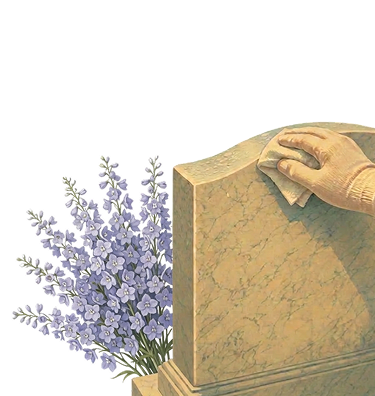
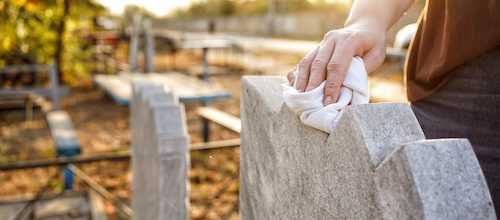
Most people can safely handle light headstone cleaning tasks that focus on cleanliness rather than appearance. These include gently clearing debris, rinsing dust away, and keeping the surrounding area neat. Using clean water, soft materials, and minimal pressure helps reduce risk.
Safe actions include:
- Removing leaves, branches, and loose dirt with a soft brush or broom
- Rinsing the stone with clean water, without pressure
- Wiping gently with a soft cloth or sponge
- Weeding and leveling soil around the grave
- Visually inspecting the monument for cracks, tilting, or surface changes
This kind of routine gravestone maintenance keeps the site orderly while leaving the stone itself undisturbed.
What You Should Never Do
Many common cleaning tips — especially those shared online or passed down informally — can cause serious damage to stone. The harm is not always immediate, which is why these methods remain popular despite their risks.
You should never use household chemicals or tools intended for bathrooms, kitchens, or patios. Acids, alkalis, and abrasive products break down the stone’s surface even when diluted. Pressure washers and metal tools remove material that cannot be replaced.
Avoid at all costs:
- Household cleaners, mold removers, acids, or alkaline solutions
- Abrasive powders, pastes, or scrubbing pads
- Pressure washers or high-pressure hoses
- Metal brushes, knives, scrapers, or sandpaper
Equally harmful are attempts to mechanically “improve” the monument. Grinding, polishing, deep scrubbing, or retracing inscriptions may produce short-term visual changes but permanently alter the stone. Moss and lichen should never be scraped off or treated with bleach, as both methods tear away surface material.
Best homemade headstone cleaner (and what to never use)
Short answer: there isn't a safe homemade recipe worth using. Plain water with a soft-bristle brush is the only combination that reliably cleans a headstone without risking the stone, every common kitchen substitute, baking soda, vinegar, bleach, dish soap, either reacts chemically with the stone or leaves a residue that attracts more dirt over time.
This isn't only Tending's view. The Alabama Historical Commission's cemetery preservation guide says not to use acids, bleach, household detergents, or pressure washers on grave markers, and the Florida Division of Historical Resources warns against household bleach, muriatic acid, commercial stone cleaners, and wire-bristled brushes. Both recommend the same starting point: clean water and a soft-bristled brush.

Why Aggressive Cleaning Causes Long-Term Damage
Natural stone slowly loses density as it ages. Moisture, frost, and temperature changes create microscopic cracks that cannot be seen. Over time, dirt and water settle into these spaces and weaken the structure from within.
Aggressive cleaning accelerates this process. The stone may appear brighter, but the surface layer is compromised. In many cases, damage becomes visible only months or years later, when inscriptions begin to blur or the surface starts to flake.
This is why visual improvement and preservation are not the same thing. A monument can look “better” while actively deteriorating.
When DIY Care Becomes Risky
There are clear signs that DIY care may no longer be safe. If you notice any of the following, it is time to stop and seek professional advice:
- Crumbling, flaking, or layered stone
- Cracks or surface separation
- A white film or salt-like residue
- Rapid darkening or discoloration
- Fading or softening of inscriptions
- Deep moss or lichen growth
- A monument more than 10–15 years old with no prior professional care
At this stage, even gentle cleaning can worsen the problem. This is where headstone restoration may be necessary to stabilize the material rather than improve the appearance.
How Professional Work Is Different
Professional grave care does not start with cleaning. It starts with diagnosis. At Tending, specialists assess the stone type, the kind of soiling present, and the level of deterioration before choosing a method.
The goal of professional headstone cleaning is not to make the stone look new, but to slow decay and preserve what remains. Techniques and products are selected to treat the contamination without damaging the stone itself.
This difference between household cleaning and expert evaluation is what protects monuments from irreversible loss.
The Guiding Principle
When caring for a memorial, restraint matters more than effort.
If you are unsure whether an action is safe, it is better to leave the stone untouched than to risk damage. Simple care helps. Restoration requires expertise. Respecting that boundary is the most reliable way to preserve a monument for future generations.
Frequently asked questions
Is it safe to scrub moss or lichen off a headstone myself?
No — scraping or treating moss and lichen with bleach tears away surface material along with the growth. Tending's specialists recommend leaving biological growth to a professional evaluation, since the safe removal method depends on the stone type and how deep the growth has taken hold.
Can I use a pressure washer on a headstone?
No. Pressure washers and metal tools remove material from the stone's surface that cannot be replaced, and the damage often isn't visible until months or years later.
How do I know when DIY cleaning is no longer safe?
Watch for crumbling or flaking stone, cracks, a white film or salt-like residue, rapid darkening, softening inscriptions, or deep moss and lichen growth. A monument older than 10-15 years with no prior professional care is also a signal to stop and get an assessment.
What household products are safe to use on a headstone?
None, really — even diluted household cleaners, acids, and alkaline solutions break down stone surfaces over time. The only safe DIY approach is clean water, a soft cloth or brush, and no pressure.
What's a good homemade headstone cleaner?
There isn't a safe homemade recipe worth using — dish soap, baking soda, vinegar, and other common DIY mixes are either too acidic or leave a residue that attracts more dirt over time. Plain water and a soft brush is the only combination that reliably won't damage the stone.
Can I use baking soda to clean a headstone?
Not recommended. Baking soda is mildly abrasive and alkaline, and its effect varies unpredictably by stone type, some guides describe it as gentler than vinegar, but it still isn't a reliable, stone-safe choice. Plain water and a soft brush clean just as effectively without that risk.
Is vinegar safe for cleaning a gravestone?
No. Vinegar is acidic and reacts with the calcium carbonate in marble and limestone, etching the surface, and it can dull even a polished granite finish. This is one of the most consistent warnings across professional stone care guidance.
Can you clean a headstone with bleach?
No. Bleach reacts with the stone's minerals, can leave permanent white streaks or discoloration, and keeps reacting with residue left behind long after you rinse. It's also harmful to any grass or plants around the grave.
Is dish soap okay to use on a headstone?
Not recommended, even though it's one of the milder household options. Dish soap formulas vary, and many contain degreasers, dyes, or fragrance additives not meant for porous stone; residue left behind can attract more dirt over time. Plain water remains the safer default.
Can I use Windex, Simple Green, or another all-purpose spray on a headstone?
No. Glass cleaners, all-purpose sprays, and degreasers are household detergents, and state preservation guidance, including the Alabama Historical Commission's, specifically says not to use household detergents on grave markers. They are made for sealed kitchen and glass surfaces, not porous stone, and residue left in the pores attracts more dirt. Clean water and a soft brush do the job without that risk.
Can WD-40 clean a headstone or remove rust stains?
No. WD-40 is an oil-based, multi-purpose spray designed for lubricating and displacing water, not for cleaning stone. Porous stone can absorb the oil, leaving dark stains or a residue that attracts more dirt, and those marks can be hard to remove. On bronze plaques, WD-40 can also strip the factory lacquer unevenly, which exposes the bare metal and makes it oxidize faster. Rust stains on stone and corrosion on bronze each need a method matched to the material, and that is a job for a professional.
Is muriatic acid safe for cleaning a gravestone?
No. Muriatic acid is a strong acid, and preservation guidance from the Florida Division of Historical Resources lists it among the materials not to use on grave markers. Acids dissolve the calcite in marble and limestone and can damage even granite's polished finish. The damage is permanent.