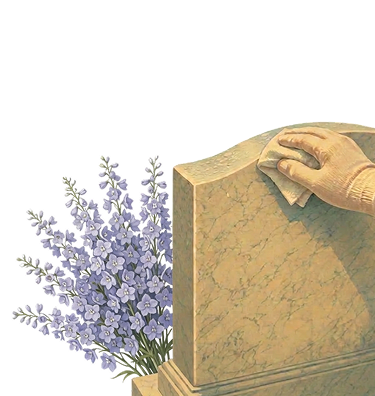
How to Remove Lichen and Moss From a Headstone Safely
Lichen and moss should never be scraped or pried off a headstone — both grip into the stone's surface, and forcing them off pulls away grains of stone along with them. The safe method, the one Tending's specialists use in the field, is to kill the growth first with a gentle, pH-neutral biocide, let it die and loosen on its own over one to two weeks, then rinse it away with plain water and a soft brush.
Moss and lichen are the two most common things growing on an older headstone, and from a few feet away they can look like the same problem. They aren't. One comes off with water and patience; the other is bonded into the stone itself and punishes any attempt to rush it. Knowing which one you're looking at, and treating it the right way, is most of what safe removal actually comes down to.
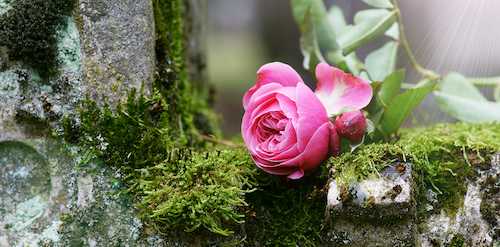
Moss vs. Lichen: Why the Difference Matters
Moss is a plant. It sits on the surface of the stone, holding moisture against it, but it doesn't chemically bond to what's underneath. A soft brush and plain water are usually enough to lift it once it's been soaked.
Lichen is not a plant at all. It's a composite organism, part fungus and part algae, and it anchors itself using root-like structures called rhizines that work their way into the stone's own pores. That's the whole difference in practice: moss sits on top of the stone, lichen grows into it. Established lichen can also hold moisture against the surface for long stretches and, on some materials, contributes to the same slow surface erosion that biological growth in general causes over time.
This is why the two need different amounts of patience. Moss usually responds to the first cleaning. Lichen almost never does, and treating it like moss, scrubbing harder because it isn't lifting, is exactly how people damage a stone they were trying to clean.
The Safe Removal Process
The method is the same one professional cemetery conservators use — and the one Tending's specialists follow on every visit — and it doesn't change much whether you're dealing with moss or lichen; only the patience required does.
- Soak the stone first, using distilled water where possible. Tap water carries dissolved minerals that can leave stains or faint white deposits behind as it dries, especially on marble, limestone, and sandstone, so distilled water avoids trading one cosmetic problem for another.
- Let the water sit for several minutes. Growth that's been thoroughly wetted loosens on its own; growth that's still dry resists and tears rather than lifting cleanly.
- Lift softened material with a wooden or plastic tool, a craft stick or a plastic scraper, never metal. Metal edges scratch the surface and can gouge into lettering or carved detail.
- Work a soft, natural-bristle or nylon brush in gentle circular motions, starting at the bottom of the stone and moving up, so dirty runoff doesn't streak back over a section you've already cleaned.
- Rinse thoroughly with clean water at the end. Any cleaner or loosened residue left on the stone keeps working on the surface long after you've finished.
What to Never Use
A short list of products and tools shows up again and again in damaged-headstone stories, and all of them are common household items that seem reasonable until you know what they actually do to stone.
- Bleach and household disinfectants react with the stone's minerals, leave residue behind, and can permanently discolor or etch marble and limestone.
- Vinegar and other acids are the wrong tool entirely; they dissolve the calcite in marble and limestone rather than cleaning it.
- Wire brushes and metal scrapers scratch the surface and can pull away the fine detail of lettering or carving along with the growth.
Pressure washers apply enough force to etch and pit stone outright, and no conservation body recommends them for any cemetery monument, regardless of material.
When Lichen Won't Come Off Easily
Well-established lichen is often not a one-visit job, and that's fine. The right response to lichen that resists gentle cleaning isn't more force, it's more patience.
A biological cleaner made for stone (D/2 Biological Solution is the product most consistently recommended by conservators) is applied to the dry, affected area and left to dwell rather than scrubbed in right away; depending on the product and the growth, that can mean anywhere from a day to several weeks before the lichen visibly weakens and starts to lift or weather away on its own. That timeline is normal, not a sign the treatment failed.
The one thing to actively avoid is forcing a stubborn patch off before it's ready. Because lichen's rhizines have worked into the stone's pores, tearing it away before it's loosened risks pulling away small flecks of the stone's own surface along with it, doing more visible damage than the lichen itself. If a patch isn't lifting after reasonable treatment, re-treat and wait again rather than escalating to more force or a harsher product.
This kind of gradual treatment works best when someone can check on it and retreat it as needed over several weeks, which is exactly the part that's hard to manage if you don't live near the cemetery.

When to Call a Professional
A few situations are worth handing to someone with conservation experience rather than working through alone: lichen that hasn't responded to gentle treatment and biocide over several weeks, a historic or notably soft marker (older marble or limestone in particular), any point where removing growth risks taking stone with it, a memorial where you're simply not sure what the surface can tolerate, or a case where you can't realistically check back on a slow biocide treatment over several weeks yourself. A professional can assess condition first and choose a method matched to the stone, rather than finding out the hard way that it couldn't handle what was tried.
Frequently asked questions
What is the safest method to remove lichen and moss from a tombstone?
Soak the stone thoroughly, ideally with distilled water, let it sit for several minutes, then lift softened growth with a wooden or plastic tool and a soft-bristle brush, working gently from the bottom up. For lichen that doesn't lift easily, a stone-safe biological cleaner applied and left to dwell for days to weeks is the standard next step, not more scrubbing.
Will removing lichen damage the headstone?
Done the right way, no. Done by force, often yes. Lichen anchors into the stone's pores with root-like rhizines, so scraping or pulling it off before it's loosened can take small pieces of the stone's surface with it. This is why Tending's specialists always soak first and use a biological cleaner for stubborn patches — it avoids that risk entirely.
Is bleach or vinegar safe for removing lichen from a gravestone?
No. Bleach reacts with the stone's minerals and can permanently discolor it, and vinegar is an acid that dissolves the calcite in marble and limestone rather than cleaning it. Neither is a substitute for water, a soft brush, and patience, or a proper biological cleaner for growth that won't come off easily.
How often should lichen be cleaned off a headstone?
There's no fixed schedule to follow. Check the stone a few times a year, more often if it sits in a shaded or damp spot where growth spreads faster, and treat it when lichen or moss is actually present rather than cleaning on a routine regardless of condition. Repeated, unnecessary cleaning wears on a stone just as much as neglect does.