The Refinery Wind Drift
Concord sits directly downwind from the Martinez refineries. The Delta breeze acts like a conveyor belt for industrial exhaust. It carries sulfur, petroleum coke dust, and catalytic fines right into the city.
This isn't normal dust. It is chemical fallout. It lands on the cemeteries as a fine, yellow-gray powder. When the morning dew hits this soot, it triggers a reaction. It turns into a weak sulfuric acid paste. It eats the stone.
On white marble, this causes "yellowing." It looks like a nicotine stain, but it is chemical burning. You can't just wipe it off; it has bonded to the calcium in the stone. Tending uses specialized grave site cleaning services with alkaline neutralizers. We use a clay paste. It sucks the acid out of the stone pores. The yellow stain disappears. We stop the burning.
Expansive Soil "Heave"
The ground here is active adobe clay. It breathes. In winter, it drinks the rain and swells. Wet clay swells. It lifts the concrete right out of the ground. It throws the monument off balance. We call this "soil heave."
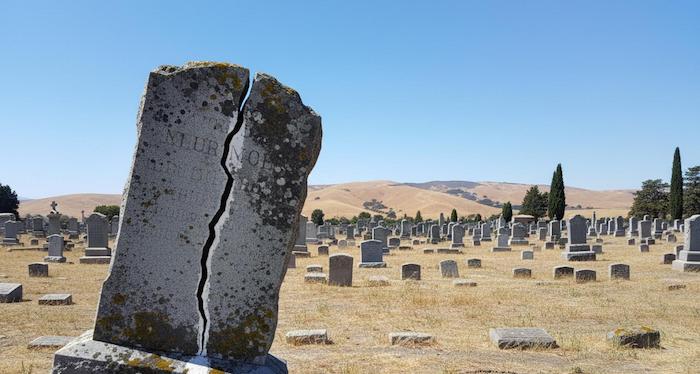
It lifts the monument out of level. Then summer hits. The clay bakes dry and shrinks. It cracks open . This leaves deep voids under the base. The stone is left floating on air. Gravity takes over, and the monument tilts into the hole.
If you are searching for tombstone repair and restoration because a marker is crooked, it is the ground moving beneath it. We don't just push it back. We excavate the reactive clay. We replace it with angular gravel. Gravel doesn't swell. It locks together to form a stable, drainage-friendly platform that keeps the memorial level, even when the clay is moving around it.
Heat-Cracked Joints
Concord summers are brutal. The heat is dry and intense. Dark granite absorbs this energy. A black headstone can reach 140 degrees in the afternoon. It expands. At night, the Delta breeze cools it down rapidly, and it shrinks.
This cycle creates "thermal shear." The stone moves, but the rigid cement in the joint does not. Snap. The adhesive seal breaks.
A loose tablet is dangerous. It can slide off the base. We check for these failed joints on every visit. We remove the old, brittle mortar. We re-seal the base with high-flexibility industrial epoxy. This rubberized compound stretches with the heat. It absorbs the movement without breaking the seal, keeping the monument safe.
Hard Water Scale
To keep the grass alive in the Contra Costa heat, cemeteries irrigate heavily. Hard water hits the hot stone. It turns to steam. It leaves a layer of white rock behind.
It leaves a hard, white mineral crust behind. It bonds to the granite like cement. It creates a cloudy "cataract" over the inscription. If you are searching for headstone cleaning services near me because the polish looks foggy, that is calcium buildup.
We use a chemical descaler. We melt the mineral bond safely. We wash away the white haze to reveal the deep, polished stone underneath without using abrasives that would scratch the finish.