
Decades of Auto-Plant Grime on Older Stone
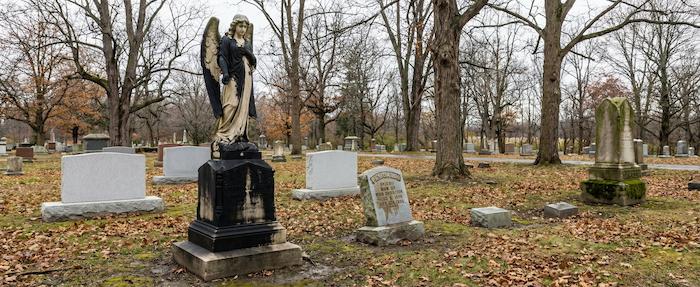
For most of the twentieth century, Anderson ran on General Motors — Delco Remy, Guide Lamp, and a handful of other plants that once employed something like 25,000 people at the peak of the industry here. The last of it closed in 2007, but decades of industrial exhaust don't just disappear once a plant shuts its doors and the gates finally lock for good. A gray film settled into stone near the old manufacturing corridor over those years, and a lot of it is still there, thicker on markers close to where the plants used to run than anywhere else in Madison County, even decades after the last shift ended.

That kind of legacy grime needs a cleaner built specifically for old industrial residue — a standard wash barely touches it after all this many years baked onto the surface. We work it loose gradually, since aggressive scrubbing can dull granite that's already been through decades of exposure. Most of the headstone repair and restoration work near Anderson's old plant district starts with this kind of cleanup.
White River Damp Feeds Lichen on Older Stone
Older granite in Madison County's low, shaded sections near the White River carries a thick, crusty lichen by the time most families notice it, and more often than not they've already tried scrubbing it off themselves with no luck. That ground simply doesn't dry out the way higher plots do, and lichen takes advantage of every extra damp week it gets.
Its roots dig straight into the stone, so hand-scraping tears the surface right along with the growth. Our biological cleaner kills it at that root layer first, and the crust lifts clean on the rinse that follows, without any scraping involved at all. Calls about headstone cleaning services near me in Anderson from the river side of town almost always trace back to this exact problem.

White River Clay and Tilting Footings
Mostly flat glacial till covers Madison County, and the clay in it swells and shrinks with the seasons the way clay does across a lot of Indiana. Low ground near the White River holds that moisture longest, and a footing set in ground that moves that much doesn't hold level for long. What starts as a barely noticeable tilt gets more obvious after a few wet springs.
Rebuilding one of these means digging past the clay entirely and packing the hole with gravel that won't swell the way native soil does. Reset level, log the depth, check it again at the next visit. This is a lot of what foundation repair looks like across Madison County, and it often turns up worn or faded lettering on the same older stones worth pairing with headstone lettering repair.
Decades-Old Bronze Tarnish
Bronze markers near the old industrial corridor picked up the same decades of airborne exposure as the stone around them, and that kind of long-term tarnish runs deeper than anything a quick polish can fix. The coating underneath has usually failed completely by the time someone calls about it.
"Tending not only restores headstones, they clean up graveyards. They do a wonderful job and I can’t recommend them highly enough!"
— Beatle, Tending Client
We take it back to bare metal, dry it fully and completely, and put on a fresh seal built to outlast whatever's still in the air nearby, wet season or dry. Ask about bronze marker restoration if an old family plaque near the plant district has gone dark; most of them need a full strip at this point. A surface clean alone won't touch tarnish this old, and trying it usually just spreads the discoloration around without lifting any of it.
Service Costs in Anderson
Our online calculator prices it out before anyone visits — monument type, plan, number. Same process anywhere in Madison County.
- Biological Cleaning: Removing lichen from shaded stone near the river.
- Foundation Repair: Rebuilding footings unsettled by clay movement.
- Bronze Restoration: Stripping and resealing legacy tarnish.
- lettering repair: Rebuilding grime-worn or faded names.