
Bulging Retaining Walls on Madison's Hillside Family Lots
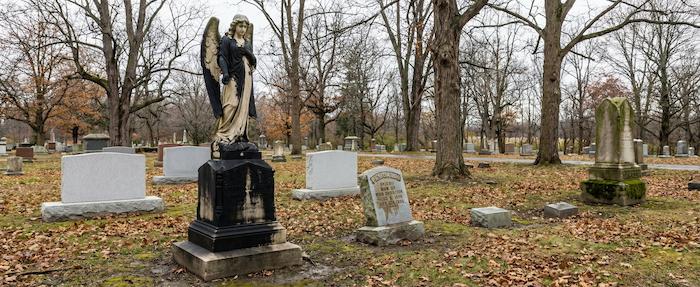
A family lot cut into a slope, held up on its low side by a stone wall that now leans outward, with a short flight of stone steps tilting toward the grass, is a familiar sight above the Ohio River. Madison was platted in 1810, and John Paul sold the first lots the next year. The town grew into the largest river city between Louisville and Cincinnati. Its downtown, 133 blocks of early 19th-century buildings, became a National Historic Landmark district in 2006. Behind the river flats the land climbs steeply toward the hilltop, and the Michigan Road started its long run north from here. Many burial grounds along that climb were laid out on hillsides, and families leveled their lots by building retaining walls of local limestone, often dry-laid or set in soft lime mortar. Over a century or more, water soaks the soil behind those walls with nowhere to drain. Freezing pushes the stones outward, roots work into the joints, and the steps settle unevenly. Eventually a section bows and drops, and the graves above begin to slide with it. Hillside owners comparing headstone cleaning services near me should confirm that wall work is part of the offer. Under headstone repair and restoration, our masons take the bowed section down stone by stone, numbering each piece. We lay a gravel drainage bed and perforated pipe behind it, and the wall goes back up in its original order. Loose steps are reset on a compacted base. A $2,000,000 liability policy covers Tending's work in Madison, and Tending's name is on the ICCFA roster, the national trade body for cemeteries and funeral providers.
"Tending is a company that you can TRUST. They have exceeded our expectations with picture perfect restorations that reflect our love for our departed."
— Anthony Greenwood, Tending Client
Wall rebuilds can involve neighboring lots, so we plan them with the cemetery and photograph each course before it comes down.
Willow-and-Urn Stones From Madison's River Trade Years
Madison's oldest headstones often carry a carving of a weeping willow drooping over a funeral urn, a favorite motif of the 1820s to the 1850s when the river trade made the town prosperous. These early stones are usually thin slabs of marble or local limestone, and the inscription below the carving was cut in a delicate, shallow hand. The relief carving shelters the top of the stone, but the lettering underneath takes the full force of rain running off the willow. After nearly two centuries in the humid Ohio Valley, black crust and lichen fill the shallow letters while the willow above still shows its shape. Descendants and history buffs exploring the bluff-top grounds, from Springdale to Fairmount and St. Joseph's, often find they can make out the urn but not the name. Once a relative arranges grave cleaning near me for such an early stone, our crew softens the crust with D/2 and lifts it with soft brushes and wooden picks, taking care around the thin edges of the relief. The carving stays unpainted. With headstone lettering restoration, only the inscription beneath is repainted, so the name and dates read clearly under the willow.
Bronze Transcription Plaques Bolted to Old Marble
When an early marble headstone became too worn to read, some families had the inscription recast on a small bronze plaque and fastened to the face of the stone. It was a sensible fix in its day. The problem is how they were attached. Holes drilled into soft marble, plain steel bolts and a plaque pressed tight against the stone let water collect behind the bronze. The bolts rust and swell, cracking the marble around them, while copper runoff draws a green streak down the stone beneath. Some plaques now hang by a single bolt. Our bronze grave marker restoration takes the plaque off, cleans it by hand and tones it evenly. Rusted bolts are drilled out and the holes are patched. The plaque goes back on stainless fasteners with small spacers, so air and water can move behind it, and the green streak is lifted from the marble with a gentle poultice before wax seals the bronze.
Service Costs in Madison
In Madison, you know the cost before booking. Pick a memorial and plan, and the base amount shows at the pricing page with no inspection required. Wall rebuilding or other added work is quoted separately with photos, and it starts once you approve.

- Retaining wall rebuild: Bowed sections are relaid over new drainage, and steps are reset.
- Early stone lettering: Crust is cleared around the carving, and the inscription is repainted.
- Plaque remounting: Bronze is cleaned and rehung on stainless fasteners with spacers.


