
Porous Murrysville Sandstone Cycles Ground Through Wet and Dry
Murrysville gave its name to the Murrysville sandstone, the same porous rock formation the historic Haymaker gas well tapped into back in 1878, becoming the site of one of the world's first commercial natural gas wells. That same porosity that made the rock such a productive gas reservoir also makes it drain water unusually fast at the surface. Storms soak straight through the sandstone. They don't pool on top of it the way they would on denser rock, and any pockets of clay mixed within the formation swell during that brief soaking, then dry out and shrink again almost as quickly once the water has moved on.
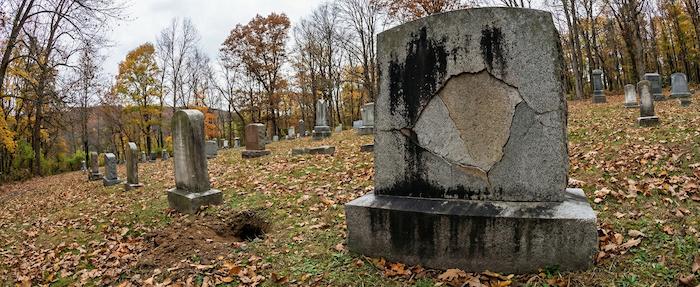
A headstone base set into ground with this kind of fast-cycling clay goes through more wet-dry swings in a season than it would over denser, less permeable rock, and each cycle nudges the stone a little further out of level. The movement is subtle enough on any given visit that it's easy to miss until several seasons have compounded into something noticeable. Headstone cleaning services near me searches from Murrysville families sometimes come after noticing a marker that's drifted noticeably even in a fairly short stretch of years. Tending resets affected bases on a footing built to handle this faster cycling, anchored deeper than a standard installation would need to go on more stable ground. Larger structural repairs are covered under headstone repair and restoration. Every technician working in Murrysville operates under Tending's $2,000,000 liability policy and follows care standards set by the ICCFA, the trade association that certifies cemetery and funeral professionals.

Historic Gas Seepage Areas Leave Faint Dark Staining
Long before the Haymaker well was ever drilled, natural gas seeped up through the ground along Turtle Creek on its own, visibly enough that a neighboring farmer was using it to boil down maple syrup years before anyone thought to drill for it. Soil in these old natural seepage areas can carry trace organic residue left over from decades of that seepage, and where a headstone sits close to one of these historic spots, that residue can leave a faint dark, oily-looking discoloration low on the stone that behaves differently than ordinary dirt or biological growth.
Bronze veterans' plaques in these same areas can pick up a similar dark tint at the base of the plaque. Tending treats this kind of staining with a solvent-based approach suited to organic residue. Mineral deposits call for a different method entirely. The same visit covers cleaning and restoring bronze grave markers affected by the same historic seepage areas.
"I had three cemeteries reviewed and memorials restored and/or cleaned. Service was fast and efficient. Memorials quickly located. I look forward to a visit shortly and quarterly update. Thanks, this has been on my mind for some time."
— Edward Drosdick, Pennsylvania
Westmoreland County Winters Wear Down Older Lettering
Westmoreland County's hilly terrain sees the same repeated freezing and thawing common across western Pennsylvania, and older monuments bear the brunt of it year after year. Murrysville's higher elevation than the nearby Pittsburgh basin means local cemeteries log more of these cycles each winter. Water finds its way into any crack that's already started on a stone's surface, and each freeze pushes that opening a little wider than it was before. Engraved lettering on older marble and sandstone markers tends to soften and flatten well ahead of comparable granite pieces from the same era, since neither material resists moisture the way granite does.
Once an inscription has thinned to this point, Tending's crews turn to headstone lettering repair, recutting each flattened character to its original depth and repainting it to match, calibrated for the mix of local sandstone, marble, and granite found across Murrysville's older cemeteries.

Service Costs in Murrysville
Pricing runs through Tending's online calculator once the monument type and care plan are selected, with no in-person visit required to assess the damage first. A maintenance plan can be added for markers affected by fast-cycling clay, historic seepage staining, or freeze-thaw wear, since each of these tends to recur across multiple seasons.
- Base resetting and stabilization: correcting lean from rapid wet-dry cycling in porous sandstone.
- Organic residue and bronze treatment: solvent-based cleaning for historic gas seepage areas.
- lettering repair: recutting engraving worn by regional freeze-thaw cycles.