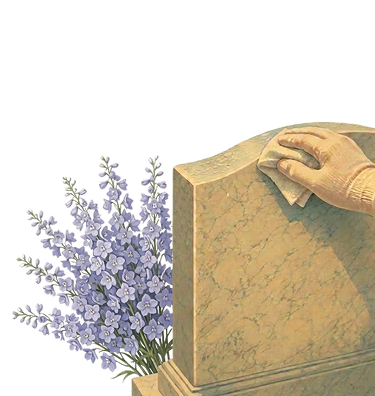
Headstone, Gravestone, Tombstone, Monument or Grave Marker: What's the Difference?
Tending's short answer: in everyday use, headstone, gravestone and tombstone mean the same thing, a memorial stone that marks a grave. Cemeteries and monument makers use the words more precisely: a grave marker is often a flat memorial set level with the ground, and a monument is generally a larger, more prominent memorial. When you read cemetery rules or order care, use the term your cemetery uses.
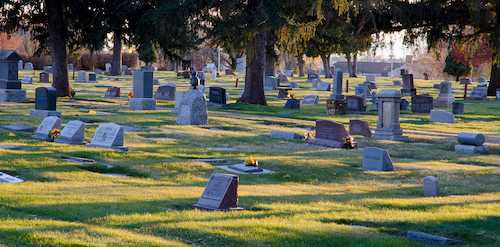
Headstone, Gravestone, Tombstone: Is There a Difference?
In everyday use, no. Most people use all three words for the memorial stone at a grave, and dictionaries list them as synonyms. The differences are mostly historical, and where sources describe them, they often disagree. The table shows how the words are commonly used.
| Term | In everyday use | More specific use |
|---|---|---|
| Headstone | The memorial at a grave, usually upright | Traditionally the stone at the head of the grave |
| Gravestone | Any memorial stone on a grave | Sources differ: some describe a stone laid over the grave, others a stone at its head |
| Tombstone | The same as a headstone | Per Etymonline, originally a flat stone on a grave or a coffin lid; now a common word for a headstone |
| Grave marker | Any permanent memorial that identifies a grave | Often a flat marker set level with the ground |
| Bevel / slant marker | A low headstone with a sloped face | A bevel marker sits near the ground with its back slightly raised; a slant marker is taller, with the face cut at an angle |
| Monument | A large memorial | Generally a larger, more prominent vertical memorial; the word also describes the memorial trade |
| Ledger | A slab | A large stone slab that covers the grave area, sometimes paired with an upright |
Where the Words Come From
Etymonline traces the three words to different starting points. Headstone first meant “cornerstone” around 1400, and only in 1775 did it come to mean the upright stone at the head of a grave. Tombstone is a 1560s compound of tomb and stone, first used for a flat stone on a grave or a stone coffin lid, and its meaning “gravestone, headstone” is recorded from 1711. The tomb in it comes from the Greek tymbos, “burial mound,” through Latin and French. Gravestone, from grave and stone, is recorded in the late 1300s as a “stone over a grave” and earlier, around 1200, as a stone coffin.
Because the words drifted toward the same meaning, the original differences rarely matter today.
What Is a Grave Marker?
A grave marker is the broad category: any permanent memorial that identifies a grave. In cemetery use it often means a flat memorial set level with the ground, and some cemeteries prefer the term for flush memorials. Flat markers can be granite or bronze, often a bronze plaque on a granite base, and they are common in memorial parks and lawn cemetery sections. Cemeteries tend to like them because mowing and groundskeeping are easier around them.
What Makes a Memorial a Monument?
“Monument” is commonly used for larger, multi-piece, or more elaborate memorials, such as one with a base, several panels, or family names across a wider plot. In some cemetery terminology the word signals a vertical, prominent structure rather than a simple marker. It can also describe the trade itself, since monument makers build memorials for a living. Care providers also use “monument” more loosely for any memorial they work on, including upright headstones. If your monument carries carved symbols, our guide to the meaning behind headstone symbols can help you read them.
Whatever you call it, Tending cleans and restores headstones, markers, and monuments in all 50 states.
Ledger Stones and Other Specialty Memorials
A ledger is a large stone slab that covers the grave area, sometimes paired with an upright stone. A footstone is a stone placed at the foot of a grave, a word Merriam-Webster dates to 1701. Other specialty memorials, such as benches or sculptural elements, are usually limited to specific cemetery sections and may involve extra fees.
Why the Terms Matter When You Read Cemetery Rules
Cemeteries may use precise terms such as marker, monument, tablet, or ledger, and those choices affect size limits, materials, and placement. A cemetery may regulate overall dimensions, material, finish, engraving, and whether vases, photos, or decorations are allowed. Upright stones often face more restrictions than flat ones, partly because a tall stone may need a deeper foundation. A section may also allow only certain memorial types, such as flat markers.
Ask the cemetery for its written rules and which term it uses for your memorial. For more on permits and who can work on a grave, see our guide to cemetery rules and regulations.
Frequently asked questions
What is the difference between a headstone and a gravestone?
In everyday use, none: both words mean a memorial stone that marks a grave. A headstone is traditionally the stone at the head of the grave, and sources differ on what a gravestone originally was. Cemeteries and monument makers often use more specific words for flat and upright memorials.
Is a tombstone the same as a headstone?
Usually yes. Etymonline records tombstone from the 1560s for a flat stone on a grave or a stone coffin lid, and from 1711 for a gravestone or headstone. Today people use it for the same kind of memorial.
What is a grave marker?
A grave marker is a broad term for a permanent memorial that identifies a grave. It often means a flat marker set level with the ground.
What is the difference between a headstone and a monument?
A headstone is the memorial at a grave. A monument is generally a larger, more prominent, vertical memorial, and the word also describes the memorial trade.
What is a ledger stone?
A ledger is a large stone slab that covers the grave area, sometimes paired with an upright memorial.
Why do the terms matter?
Cemeteries may set size, material, and placement rules by memorial type, such as a flat marker or an upright monument. Ask the cemetery for its written rules and which term it uses.
Do headstones, markers, and monuments need different care?
The right method depends on the material, such as granite, marble, or bronze, and on the stone's condition, not on the word used. Tending cleans and restores headstones, markers, and monuments in all 50 states.
What is the difference between a gravestone and a tombstone?
Today, none in everyday use. Etymonline records gravestone from the late 1300s as a stone over a grave, and tombstone from the 1560s as a flat stone on a grave or a stone coffin lid.