
What to Do When a Headstone Falls Over: A Guide to Resetting and Leveling
Tending's short answer: a leaning or fallen headstone is almost always a foundation problem, not a stone problem — soil erosion, frost heave, or a failed base pushed it out of alignment. Never force it upright with a pry bar while soil or roots are still holding it; contact the cemetery first, then have the ground assessed and rebuilt before the stone is reset and leveled.
A headstone that has started leaning — or has already fallen — usually has a problem below the surface. The stone itself may still be in good condition. But the soil or foundation supporting it may have shifted, settled, or washed away. That is why simply pushing a monument upright or adding soil around one side rarely solves the problem. Proper headstone resetting starts by finding out why the monument moved and rebuilding stable support underneath it. If you live far from the cemetery or cannot manage the repair yourself, the first step is simpler than it may seem: document the condition, contact the cemetery, and arrange an assessment.
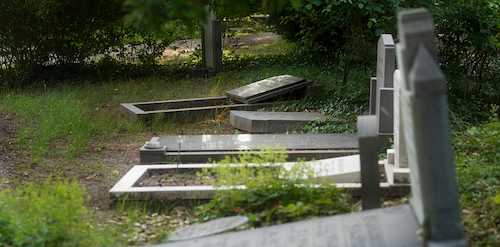
Why Do Cemetery Monuments Lean and Topple?
Headstones are heavy, but the ground beneath them is constantly changing. Water moves through soil. Temperatures change. Burial areas settle over time. Roots grow. Drainage patterns shift.
The National Park Service lists flooding, poor drainage, shifting soil, freeze-thaw cycles, burrowing animals, vandalism, and other ground changes among the reasons upright grave markers can move out of position.
The exact cause matters because leaning gravestone repair is not only about making the stone look straight again. The support below it has to be stable enough to keep it that way.
Soil Erosion and Washed-Out Sand Bases
Heavy rain can gradually remove supporting material from beneath a monument. This is particularly relevant in areas with sandy soil, high water tables, poor drainage, or repeated heavy rainfall. One side of the base may lose support first. As the weight of the monument shifts, the stone begins to lean. Flooding and high water tables are documented causes of sinking and leaning markers.
Adding loose dirt to the low side may make the monument look straighter for a short time. But loose fill can settle or wash away again.
A lasting repair usually requires access to the area beneath the stone so the failed support can be corrected.
Frost Heave and Seasonal Ground Shifting
In colder states, the ground can move through repeated freeze-thaw cycles. Water in the soil freezes and expands. The ground shifts upward. When temperatures rise again, the soil thaws and settles. The movement is rarely perfectly even. Over multiple seasons, one side of a marker or foundation can rise or settle more than another.
Freeze-thaw movement is one of the conditions NPS identifies as a cause of shifting upright headstones. A monument may therefore look level for many years before gradually developing a visible lean.
Other problems can contribute as well. Roots can disturb the soil or an existing footing. Flooding can undermine support. Physical disturbance around an already unstable monument can make the problem worse.
The Dangers of DIY Headstone Leveling
If a headstone is only slightly tilted, the natural reaction is often to try to straighten it. That can cause more damage.
A common DIY approach is to place a pry bar or another metal tool beside the stone, push it upright, and fill the resulting space with soil. The problem is that the force is being applied to the monument before the pressure around its buried section or foundation has been released.
A shovel or metal tool can chip the stone. Forcing a leaning marker against packed soil or roots can cause it to break. NPS specifically recommends excavating around a leaning ground-supported marker before moving it and warns against forcing the stone into alignment while soil or roots are still holding it in place.
There is also a basic safety issue.
Even relatively simple cemetery markers can be very heavy. Larger upright monuments may consist of several substantial stone sections. Moving them requires control, not just strength.
For some ground-supported markers, trained crews or experienced volunteers can perform resetting without heavy machinery. For larger or more complex monuments, lifting equipment such as a gantry and chain hoist may be necessary. NPS guidance emphasizes both personal safety and protecting the stone during lifting.
Before doing anything, contact the cemetery office. Cemeteries have their own rules about outside contractors, foundations, equipment, and monument work. NPS guidance also recommends obtaining permission before beginning work on a cemetery monument.
If the monument is significantly leaning, already fallen, cracked, loose at a joint, or mounted on a failed base, professional assessment is the safer next step.

How Professionals Reset and Level a Fallen Headstone
There is no single resetting method that is correct for every monument. A ground-supported military marker is different from an upright granite monument mounted on a separate base. A flat marker requires a different approach again. The condition of the soil and the cemetery's installation rules also affect the repair.
In general, professional fallen headstone repair follows four stages.
On-Site Assessment
The first step is to inspect both the monument and the ground supporting it. The specialist checks for visible cracks, chips, loose joints, previous repairs, movement in the base, and changes in the surrounding soil. This is important because a monument that appears to need only monument leveling may have another structural issue. The cemetery's requirements should also be confirmed before lifting or excavation begins.
Tending's current restoration process follows the same assessment-first principle. If a visit identifies a leaning stone or another repair outside routine care, the additional work and cost are confirmed before it proceeds.
Safe Lifting
If the monument must be removed or lifted, the method depends on its size, design, material, and condition. A professional crew may use a gantry, mechanical hoist, lifting straps, or other appropriate equipment to keep the stone controlled while it is moved.
NPS demonstrates the use of an aluminum gantry, chain hoist, and nylon lifting strap when resetting heavy ground-supported markers. The stone is raised slowly so that the lifting equipment does not strike or scar the surface.
The objective is simple: remove pressure from the monument without introducing new damage.
Base Reconstruction
Once the monument is safely moved, the failed support underneath can be examined. Soft or unstable material may need to be removed. The soil may need to be compacted. Where drainage is poor, an angular gravel layer can help create a more stable, free-draining base. For ground-supported headstones, NPS describes tamping the soil and adding compacted small, sharp gravel when drainage conditions require it.
Other monument designs may require a different foundation system, including an appropriate concrete footing where permitted. Concrete is not appropriate for every headstone. Government-issued ground-supported veteran headstones, for example, should not be reset in concrete according to NPS guidance.
The foundation should therefore be selected for the monument type, site conditions, and cemetery requirements rather than treated as a one-size-fits-all repair.
Setting and Leveling
The monument is then returned to position and checked for level and plumb. Precision matters here. Professionals use levels while gradually securing and compacting the material around the stone or resetting the monument onto its proper base.
For ground-supported markers, NPS recommends checking alignment repeatedly while fill is compacted around the stone.
For monuments made from multiple pieces, joints and setting materials are handled according to the monument's construction and condition.
The finished repair should correct the support problem rather than simply hide the visible lean.
How Much Does It Cost to Reset a Headstone?
There is no useful national flat price for headstone resetting. A small ground-supported marker and a large multi-piece granite monument involve very different work.
A cost estimate for hiring a service to reset a fallen headstone normally depends on factors such as:
- the monument's size and configuration;
- whether lifting equipment is required;
- the condition of the existing base or foundation;
- soil and drainage conditions;
- cracks or loose joints discovered during inspection;
- cemetery access and permit requirements;
- the type of new support required.
That is why a reliable cost estimate to repair a leaning gravestone usually starts with photographs or an on-site assessment.
With Tending, larger repairs discovered during an assessment are quoted separately before additional work begins.
What to Do When a Cemetery Monument Topples
If you discover that a family headstone has fallen, you do not need to diagnose the foundation yourself.
Start with three practical steps.
- First, take clear photographs if you are at the cemetery. Do not attempt to lift or roll a heavy monument simply to get a better picture.
- Second, contact the cemetery office. Confirm their rules for monument repair and whether they require approval before an outside company begins work.
- Third, arrange an assessment with an insured monument care or restoration provider.
The assessment can determine whether the problem is simple leveling, failed ground support, a damaged foundation, or a loose or broken monument component.
For families who cannot visit personally, Tending can coordinate cemetery access through a care manager, assess the monument, and document completed care with before-and-after photo reports. Structural work such as resetting is handled according to the monument's condition and cemetery requirements. Every job is backed by Tending's $2,000,000 liability policy.


Frequently asked questions
How much does it cost to reset a headstone?
The cost depends on the monument's size and construction, the condition of its foundation, site access, and whether specialized lifting equipment is required. An inspection is usually needed before a reliable estimate can be given. Larger structural repairs with Tending are quoted separately before the work proceeds.
Can I safely repair a headstone that fell over myself?
Do not try to force a heavy, cracked, unstable, or base-mounted monument upright with a pry bar or improvised lifting method. Some smaller ground-supported markers can be reset using established conservation procedures, but cemetery permission, proper excavation, sufficient help, and safe lifting practices are essential. If there is any doubt about the stone's weight or stability, use a professional service.
How can I safely repair a headstone that fell over?
Start by contacting the cemetery and identifying the type of monument. The ground around a leaning marker may need to be carefully excavated before the stone is moved. Do not force a stone upright while packed soil or roots are still holding it in place. Large or unstable monuments should be handled with suitable lifting equipment.
What should I do when a cemetery monument topples?
Inform the cemetery office first. Avoid moving the monument unless the site presents an immediate safety issue and cemetery staff instruct you to do so. Arrange for an assessment of the stone, soil, and foundation so the underlying cause can be corrected before the monument is reset.
Who should I contact for professional headstone resetting in the U.S.?
Look for a provider that performs monument assessment and restoration, follows cemetery requirements, carries liability insurance, and documents the work. Ask specifically whether the provider handles leveling or resetting for your type of monument, since structural work varies by stone and cemetery.