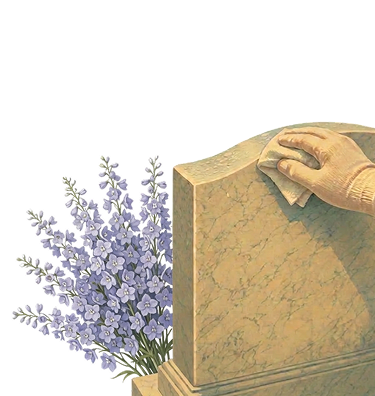
Weather, Pollution, and Time: How Different Environments Affect Headstones
Tending's short answer: weather and pollution damage headstones in two different ways — physical erosion from rain, freeze-thaw, and wind, and chemical breakdown from acid rain, which dissolves marble and limestone but leaves granite far more resistant. The material a monument is made of, more than any single climate event, determines how long its inscription stays legible.
Headstones are made to preserve memory for generations. Yet even the most durable materials are vulnerable to their surroundings. Weather, long-term exposure to pollution, and the natural process of aging all gradually change both the appearance and the structural integrity of a monument. Understanding how these forces work helps families and cemetery managers take preventive steps and protect a memorial for decades.
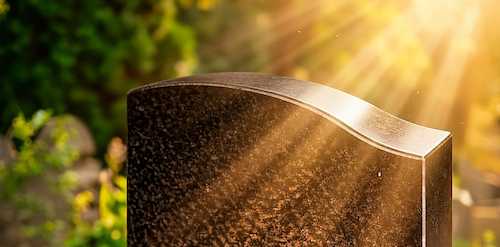
How weather wears a headstone down
Climate plays a central role in how quickly a headstone deteriorates. Temperature swings, moisture, wind, and sunlight all affect both the surface and the structure.
In regions with strong seasonal change, freeze-thaw cycles are among the most common causes of damage. When water seeps into microscopic cracks and then freezes, it expands. That expansion creates internal pressure, widening the cracks and leading to surface flaking, chipping, and eventually deeper fractures. Granite resists this far better than marble or limestone, but even granite can suffer gradually under repeated freezing and thawing.
Heavy rainfall contributes to long-term erosion. Constant moisture weakens softer stones like marble and limestone, and over time inscriptions blur and decorative carvings lose their definition. Near the coast, airborne salt accelerates this: it works into the pores of the stone and crystallizes there, breaking the surface apart from within.
Sunlight matters too. Ultraviolet light fades painted lettering and decorative elements, and bronze plaques oxidize more quickly in hot, humid climates, which shifts their color.

What acid rain does to stone
Where rain and moisture wear stone down physically, pollution attacks it chemically — and marble and limestone are the most exposed. Acid rain forms when sulfur dioxide and nitrogen oxides in the atmosphere react with water vapor. When that acidic moisture settles on stone, it dissolves calcium carbonate, the main component of both marble and limestone. The stone doesn't just erode; it is chemically broken down. Even granite, far more chemically stable, can develop surface roughness or staining after long exposure.
Cemeteries near highways or industrial areas are especially exposed. One common sign is a dark crust that forms when airborne particles bond with moisture on the stone. It is not just a cosmetic problem — the crust holds moisture against the surface and accelerates the decay underneath.

Cold climates and the ground beneath the stone
Cold regions carry a particular set of risks, and they affect not only the headstone but the foundation beneath it. Repeated freezing and thawing makes the ground expand and contract, which can destabilize the base and leave a monument tilted or out of alignment. Where drainage around the grave is poor, standing water raises the chance of internal cracking, and in severe cases sections of stone can separate or split.
Most of this is preventable. Proper site grading, working drainage, and periodic inspection of joints and seals go a long way, and sealing small cracks early significantly reduces the long-term structural risk.

Pollution in cities
Everything above happens faster in a city. The same processes — acidic moisture, dark crust, biological growth — are simply more concentrated where traffic and industry are dense, so urban monuments tend to need attention sooner and more often than rural ones. The bigger long-term threat in these conditions is biological: in humid, polluted air, algae, moss, and microorganisms take hold in the pores of the stone, and once they're established they accelerate decay from within rather than just staining the surface. That's the point where cleaning stops being cosmetic and starts being structural.
The role of time and material choice
Time alone is a powerful force. Even without harsh conditions, natural weathering slowly reshapes a stone's surface. Which is why the choice of material matters so much for how a monument ages:
Granite is highly resistant to weathering and performs well in both cold and polluted environments. Marble is refined and beautiful but highly vulnerable to acid rain. Limestone is softer and more porous, which makes it sensitive to both pollution and moisture. Bronze develops a patina over time, which can protect the surface but also changes its appearance.
Choosing a material suited to the local climate and pollution levels is one of the most important decisions for long-term preservation.
Preventive care and professional maintenance
Environmental exposure can't be eliminated, but its impact can be managed. The key difference Tending's professional care makes is in the cleaning itself: pollutants, crust, and biological growth can be removed without harming the surface — something household tools and harsh chemicals routinely get wrong. Lettering can be carefully restored to stay legible, and in areas with heavy pollution, more frequent cleaning is simply part of keeping the stone sound.


Conclusion
No monument is immune to its environment, but how fast it ages is not left entirely to chance. The material it's made of, the climate it stands in, and the care it receives all shape how long an inscription stays legible. With the right material and steady, careful maintenance, a memorial can hold its form and its dignity for generations — which is, in the end, the whole point of marking a life in stone.