
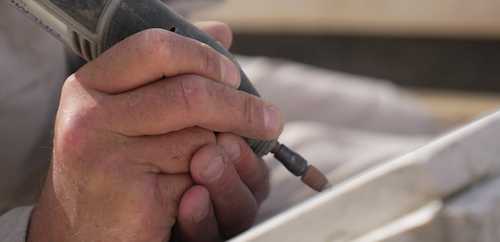
Arizona's climate runs from high-elevation snow country to some of the hottest low desert in the continental U.S., and headstone lettering repair works differently depending on where a monument sits in that range. Tending handles the work statewide, from the pine country around Flagstaff down through the Sonoran basin to the Colorado River valley near Yuma. Every job runs through the same fixed-price process no matter the region. Tending carries $2,000,000 in liability insurance and belongs to the ICCFA, so cemetery staff can confirm the crew's standing before any work starts.
High-Country Freeze-Thaw Around Flagstaff
Freeze-thaw doesn't look like sun damage, and cemeteries around Flagstaff prove that every winter. The region sits near 7,000 feet, with a genuine freeze window that runs from October into May and close to 100 inches of snow in a heavy year. Snowmelt collects inside carved letter grooves and refreezes overnight through that whole stretch. Ice expanding inside a narrow channel pries enamel loose at the edges instead of just wearing it down the way sun-baked paint does. A monument that looked fine the previous fall can lose lettering over a single hard winter. The same freeze-thaw cycle also works on mortar joints and footings nearby. A monument that's heaving as well as fading usually needs separate attention — see headstone repair and restoration for that side of the work. Crews clear the loosened enamel down to bare stone and reseal the groove edges before repainting, so new lettering isn't sitting on material that's already lifting.
Sun and Haboob Wind in the Sonoran Basin
Tending sees the fastest fade-to-blank turnaround in the low desert around Phoenix and Tucson. Direct sun bakes the binder out of enamel paint within a few years there, well before any single extreme afternoon does the damage on its own. A summer haboob usually finishes the job. Wind-driven silica sand blasts that brittle paint straight out of the grooves, and letters can go from faded to visibly empty in one storm season. Cemeteries running on deep-well irrigation add a second problem in the same channels. Hard well water carries heavy calcium, and spray that lands on hot stone evaporates fast, leaving mineral scale packed into the grooves that used to hold pigment. That white crust is mineral scale, not paint. Families who scrub at it with a plastic brush are working the wrong problem — calcium doesn't respond to the same solvents as old enamel. The crew dissolves the mineral scale separately from stripping dead paint, then repaints once both are cleared out.
Cumulative UV Along the Lower Colorado River
Yuma logs about 4,055 hours of sunshine a year, roughly 91 percent of the possible daylight and among the highest cumulative UV totals anywhere in the country. Standard enamel wasn't formulated for that much cumulative UV. The pigment binder fails here in a few short years, well ahead of schedule. Rainfall is only about 3 inches a year, so there's little moisture around to wash the failing pigment off the stone. Instead it chalks and fades in place until the letters are unreadable, without ever visibly peeling first. A monument that still looks intact from a few feet away can already need a full headstone lettering restoration by the time anyone reads the inscription up close. The fixed price for the fix doesn't change here either — a Yuma order costs the same as one from anywhere else in the state.
Headstone Lettering Repair Costs in Arizona
Headstone lettering repair is priced by two measurable factors: the number of characters being repainted and how deep the original grooves were cut, not by the size or condition of the stone itself. That mechanic differs from bronze plaque restoration, where plaque size and metal condition set the number instead. Enter those details into the calculator at /pricing/, and a fixed price comes back before any crew is scheduled. The number stays the same in the Flagstaff high country, the Sonoran basin, and the Yuma desert alike. Once the enamel is cured, the crew uploads before-and-after photos through the Tending app. Families can confirm the repainted letters read clearly without a cemetery visit of their own.
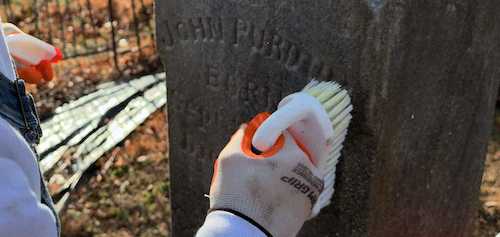
How Our Headstone Lettering Repair Process Works
- Chipping Out the Old Paint Crews scrape old, cracked enamel and packed dirt out of each letter groove down to bare stone, using picks fine enough to follow the original carved lines without widening them.
- Cleaning the Groove Walls A solvent pass dissolves leftover residue and mineral film clinging to the groove walls, so the new enamel bonds to clean stone instead of old buildup.
- Letting the Stone Dry The groove is force-dried before any paint goes in. A trace of moisture left under fresh enamel is the most common reason repainted lettering fails early, so this stage isn't skipped or rushed.
- Setting the New Enamel Industrial monument enamel goes into the cleared, dry groove and is worked level with the stone face so the letters read cleanly from any angle.
- Final Buff & Photo Upload A final polish clears excess paint off the surrounding stone, and the crew photographs the finished lettering for the report posted to the Tending app.
