DeKalb Quarry Fill Loosens Headstones
DeKalb County built much of its early economy on granite quarrying, and Stone Mountain nearby remains the largest exposed mass of granite in North America. Quarrying operations across the county generated enormous volumes of grus, the coarse, sandy debris left over when granite breaks down, and this waste rock was commonly used to grade low or uneven ground around Decatur as the city expanded. Natural soil in this part of DeKalb County settled into place over thousands of years. Grus fill never got that time. It keeps compacting gradually for decades after it's placed, as the loose granite fragments continue shifting into a tighter arrangement under weight. Old plat records from the quarrying era rarely tracked exactly where this fill was placed, which is part of why the settling can seem to come out of nowhere today.
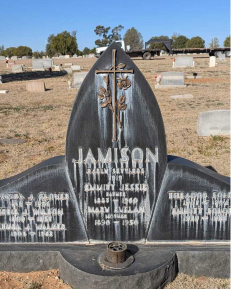
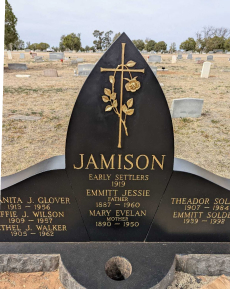
A headstone base set into ground graded with old quarry waste can settle at its own pace, sometimes long after the surrounding natural soil has stopped moving entirely. Two markers placed the same year just a few feet apart can end up at noticeably different heights, depending on exactly how much grus fill sits beneath each one. Headstone cleaning services near me searches from Decatur families sometimes come after a stone has dropped noticeably with no clear explanation on the surface. Tending checks a plot's fill history before resetting an affected base, since grus fill needs a different footing depth than undisturbed Piedmont soil. Anything beyond a routine reset goes through headstone repair and restoration. Coverage on every Decatur visit runs through Tending's $2,000,000 liability policy, and the company's seat in ICCFA ties its work to standards set outside the business itself.
Historic Mill Soil Streaks Headstones
Scottdale Mills operated as a working cotton mill for generations along one of Decatur's creeks, and textile processing of that era involved dyes and chemical treatments that soaked into the surrounding ground over decades of operation. Soil near this kind of historic industrial site can carry trace residue from that processing, and where a headstone sits close to the old mill grounds, that residue can leave a faint, uneven discoloration different from ordinary dirt or mineral staining. The pattern tends to be patchy, not uniform, since the concentration of old residue varies significantly across the site.
"Great service. Cleaned my great grandfathers memorial that was in sad shape. Couldn’t be happier with the work."
— Michael Arnold, Georgia
Bronze veterans' plaques near the same historic mill area can develop a similarly uneven tint. Tending treats this kind of historic-residue staining with a solvent-based approach suited to textile-era chemical deposits, and cleans and restores bronze grave markers affected by the same historic grounds on the same visit. Most stones respond well to a single thorough treatment.
Wet-Dry Seasons Flatten Monument Lettering
Marble softens faster than granite everywhere in Georgia, and Decatur's older monuments show it plainly. Summer humidity swells the stone slightly; the dry stretch that follows pulls that moisture back out. Neither half of the cycle does much damage alone. Repeated over a century, the swelling and shrinking opens hairline cracks that run straight through engraved letters, and a name cut deep in the 1920s can read as a shadow today.
Tending recuts marble lettering worn soft by that cycle, matching the original letterform and depth before repainting it to headstone lettering restoration standards. Granite pieces set the same year in the same DeKalb County cemetery typically still read clean, since granite barely absorbs water at all.

Service Costs in Decatur
Pricing runs through Tending's online calculator once the monument type and care plan are selected, with no in-person visit required to assess the damage first. A maintenance plan can be added for markers affected by grus fill settling, historic mill-site staining, or seasonal wet-dry wear, since each of these tends to develop gradually and persist across many years.

- Base resetting and stabilization: correcting settlement from decomposed granite fill.
- Historic residue removal and bronze treatment: solvent-based cleaning for mill-adjacent staining.
- Lettering restoration: recutting engraving worn by seasonal wet-dry cycling.