
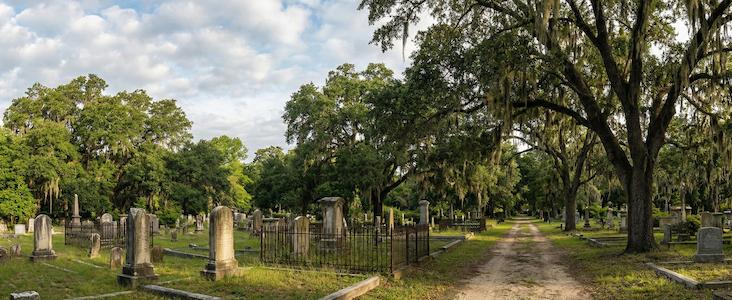
A McDonough family searching for headstone cleaning services near me usually runs into one of two things: a monument with vine roots working into its base, or a stone that's tilted the way Georgia clay so often tilts things. Henry County lies at the edge of the Piedmont, where cotton once drove the local economy, and the same warm, wet climate that made this good farmland also makes it prime territory for kudzu, a fast-growing vine first introduced to the South as erosion control before it spread far beyond anyone's intentions. The invasive vine can overtake an untended plot within a single growing season, sometimes swallowing a small stone entirely by late summer. Both problems trace back to the same warm, wet climate that shapes so much of life in this county.
Kudzu Vines Pry Into Old Monuments
Kudzu can grow up to a foot a day during a warm Georgia summer, and an older cemetery bordering woods or an overgrown fence line is exactly the kind of ground it spreads across fastest, since the vine needs almost nothing but sunlight and a surface to climb. Vine tendrils work into hairline cracks around a monument's base as they climb, and the pressure from a thickening vine can widen a small crack considerably over a season or two if nobody clears it back, especially on stones set close to a wooded fence line.

We clear vine growth away from the stone by hand. Pulling it loose with a sharp yank can crack a stressed base further, undoing the very protection a family was hoping for. Once the monument is clear, we check the crack it left behind and seal it right away, since a returning vine finds an already-weakened crack faster than a fresh one.
Piedmont Red Clay Tilts Bases
Henry County's old cotton fields sit over the reddish clay that colors so much of the Piedmont, and that soil doesn't stay the same size year-round — it puffs up when it's wet and pulls back in when it dries out. A footing poured decades ago, before builders accounted for that movement, gets pushed unevenly from below until the whole monument starts to lean, sometimes within just a handful of unusually wet or dry seasons. Newer bases with a properly poured footing hold their position far better.
"Great service. Cleaned my great grandfathers memorial that was in sad shape. Couldn’t be happier with the work."
— Michael Arnold, Georgia
We excavate the footing, repack with stone that actually drains, and relevel the monument as part of a full headstone restoration and tombstone repair and restoration where the lean has gone on for long enough to really matter. We check the surrounding soil first, so the same clay movement doesn't pull the base back out of level within a year or two. Bronze markers on the same clay-shifted bases get their own separate cleaning pass entirely, since the products differ for each surface.
Georgia Summer Humidity Grows Moss
Beyond the kudzu and the clay, Henry County's humid subtropical summers keep shaded cemetery plots damp long after open ground has dried out. A granite marker under mature trees can turn visibly green within a single season if the growth isn't cleared, especially in the county's older rural cemeteries, where trees have had decades to mature.
A D/2 biological solution clears moss and algae without the scrubbing that dulls a polished surface. Where the same humidity has softened carved lettering, we handle that separately through gravestone lettering repair and headstone repair, restoring only the depth the original inscription supports, letter by letter until the name reads clearly again.

Service Costs in McDonough
Every Tending plan in McDonough is priced through our online calculator once you choose the monument type and care plan you want. There's no technician visit before you pay and no quote to negotiate by phone. See pricing for your cemetery, then schedule the first cleaning or set up a recurring plan for the year ahead. Many families near older, wooded cemeteries start with a single vine-clearing visit before deciding whether ongoing care makes sense for the plot.
- Vine clearing and crack sealing: hand removal of kudzu growth, with crack repair for vine-widened stress points.
- Base releveling: footing inspection and drainage repacking for monuments tilted by red-clay heave.
- Biological growth and lettering care: D/2 treatment for shaded-plot moss, with gravestone lettering repair for softened inscriptions.