
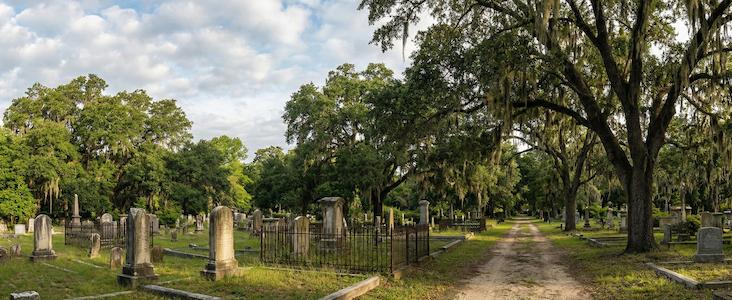
Tivola Limestone Voids Sink Headstones
Perry gave its name to the Perry Sand, a Middle Eocene formation mapped in the layers beneath the city, and that sand sits directly over the Tivola Limestone, a fossil-rich marine rock running 26 to 42 feet thick through this part of Houston County. Crystalline granite and schist make up most of Georgia's Piedmont to the north, rock that barely dissolves at all. This coastal plain limestone is different: it dissolves slowly wherever acidic groundwater finds a crack, and that dissolution can hollow out small voids beneath the sandy cover above it.
"Great service. Cleaned my great grandfathers memorial that was in sad shape. Couldn’t be happier with the work."
— Michael Arnold, Georgia
Where one of these voids has formed close enough to the surface, the sand above it eventually settles into the gap, sometimes gradually and sometimes in a single noticeable drop. A headstone base sitting above this kind of hidden dissolution can shift with no warning, even in a plot that's shown no movement for generations. Since the dissolution happens well below the surface, there's rarely any advance sign of trouble before the settling itself occurs. Headstone cleaning services near me searches from Perry families sometimes come after a stone has dropped or tilted with nothing visible on the surface to explain it. Tending checks for signs of limestone dissolution before resetting an affected base, since ground with a void beneath it needs a different footing approach than solid coastal plain sand. Structural fixes past a routine reset are covered under headstone repair and restoration. Tending holds a $2,000,000 liability policy across every Perry visit, and the company's ICCFA membership means its restoration methods get reviewed against standards it didn't write itself.
Limestone Groundwater Crusts Headstones
The Tivola Limestone formed from ancient marine sediment packed with shell fragments and other fossil material, and groundwater moving through this fossil-rich rock picks up dissolved calcium along the way. Where that mineral-heavy water reaches a nearby headstone, it evaporates into a pale, chalky crust distinct from the reddish clay staining more common in Georgia's Piedmont cities to the north, since this mineral comes from ancient sea life. Iron-rich granite has nothing to do with it here. The crust tends to build up slowly enough that families often mistake it for ordinary dirt at first.

Bronze veterans' plaques near the same limestone-influenced groundwater can develop a similar light film over the metal's usual patina. Tending removes this fossiliferous limestone crust with a chelating treatment suited to calcium buildup, and cleans and restores bronze grave markers affected by the same groundwater on the same visit. Most stones only need this specific treatment repeated every several years.
Rain-Heat Cycles Wear Grave Marker Text
Central Georgia's rain-then-heat pattern works differently on marble than it does on granite, and Perry's cemeteries show both sides of that difference side by side. Sandy soil here drains fast, but the stone itself still absorbs and releases moisture with every swing between a wet spring and a dry summer. On marble, that cycle eventually flattens engraved letters into a shadow of their original depth. Granite from the same decade rarely shows the same wear.
Tending recuts flattened marble lettering and repaints it to headstone lettering restoration standards suited to the mix of marble and granite common across Perry's older cemeteries. Middle Georgia's Tivola Limestone runs beneath much of Houston County, and quarry records from the area go back well over a century, long before anyone mapped exactly where the old voids sit.
Service Costs in Perry
Pricing runs through Tending's online calculator once the monument type and care plan are selected, with no in-person visit required to assess the damage first. A maintenance plan can be added for markers affected by limestone dissolution settling, fossiliferous mineral crust, or seasonal wet-dry wear, since each of these tends to develop gradually over many years.

- Base resetting and stabilization: correcting settlement from limestone dissolution voids.
- Mineral crust removal and bronze treatment: chelating cleaning for fossiliferous groundwater.
- Lettering restoration: recutting engraving worn by seasonal wet-dry cycling.