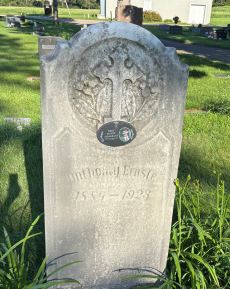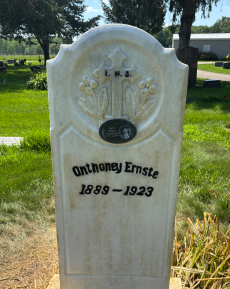
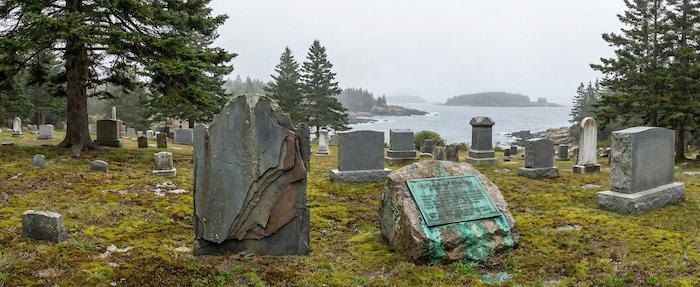
Two problems usually bring a Belfast family to search for headstone cleaning services near me: a bronze marker gone dull near the harbor, or a granite surface carrying an odd, brownish tint. The Passagassawakeag River meets Penobscot Bay right at Belfast, a spot that spent decades as the poultry-processing capital of the Northeast before the plants closed in the 1980s. Both the salt air off the bay and that industrial history still show up on local stone, though the two problems call for entirely different treatments and neither responds well to a plain rinse.
Penobscot Bay Salt Dulls Bronze Fast
Belfast's harbor opens directly onto Penobscot Bay, and the salt content in the coastal air here runs higher than it does even a few miles inland. That salt speeds up the chemical reaction that tarnishes bronze, turning a bright veteran's marker chalky and pale well ahead of when the same plaque would age in a drier part of Waldo County. A marker facing directly out toward open water often needs its first real cleaning well before a family would expect one, sometimes inside a decade of the stone going in.
We treat bronze with a salt-neutralizing cleaner and follow it with a protective seal. A simple polish works fine away from the coast, but not on this stretch of Penobscot Bay. Most families see a noticeable difference within a single visit, especially on plaques that haven't been cleaned in years. Granite ages differently in this same air, so we always confirm the material before choosing a product, since guessing wrong on either one means redoing the work.
Old Poultry Plant Runoff Stains Stone
Through the 1940s and into the 1970s, Belfast's poultry plants processed up to 250,000 birds a day, and organic waste from that operation worked its way into the ground near the river for decades. Two of the largest processors, Maplewood and Penobscot Poultry, both sat within a few hundred yards of downtown. That old contamination never fully left the soil — wells and groundwater near the former plant sites still show traces of it, and where that water reaches a cemetery, granite picks up a faint brownish cast that no amount of rinsing clears, especially on bases closest to where the old plants once stood.
A chelating treatment lifts this old staining without damaging the granite's finish. Where the same discoloration has worked into carved lettering, we handle that separately through gravestone lettering repair and headstone repair, clearing it out letter by letter — the carved grooves hold onto this kind of stain far longer than the flat stone around them does.
"My Angela's headstone had not been cleaned in fifty years. I moved to Florida many years ago and I do visit San Diego, but never was able to get her headstone cleaned. My Angela is in the children's mausoleum chapel. I miss her every day. She was 5 years old when she passed. Well, im telling you after you guys cleaned up her headstone I didn't even remember what it had originally looked like. What a fabulous job! Everyone should use your company. It is truly beautiful. I can't wait for the rest of my family to see it. Thank you so much. Margaret "
— Roberta Silfen, Bangor, Maine
Bay Humidity Grows Moss on Shade
Belfast's climate is classified as humid continental, and the bay keeps that humidity higher here than inland Waldo County towns see. Shaded cemetery plots near the water hold onto moisture long after a rain has passed, and moss spreads across granite and marble alike within a season or two of neglect. Flat markers set low to the ground tend to hold that moisture the longest of all, sometimes staying damp for days after the rest of the cemetery has dried.
A gentle D/2 wash lifts the growth without the abrasive scrubbing that shortens a polished finish's life, part of the same headstone cleaning and restoration visit families schedule for the season. Shaded rows closest to the Passagassawakeag need this treatment on a noticeably shorter cycle than plots set back from the water.
Service Costs in Belfast
Every Tending plan in Belfast is priced through our online calculator once you choose the monument type and care plan you want. There's no technician visit before you pay and no quote to negotiate by phone. See pricing for your cemetery, then schedule the first cleaning or set up a recurring plan for the year ahead. Families with older veterans' markers near the harbor often find the bronze needs attention well before the surrounding granite does. We check both surfaces on every visit, since assuming one is fine because the other looks clean is a common mistake.

- Bronze corrosion treatment: salt-neutralizing cleaner and protective seal for harbor-air tarnishing.
- Legacy stain removal: chelating treatment for old poultry-industry residue, with gravestone lettering repair for affected carvings.
- Biological growth removal: D/2 treatment for bay-humidity moss on shaded granite and marble monuments.