Shipyard Creosote and Estuarine Detritus Subsidence
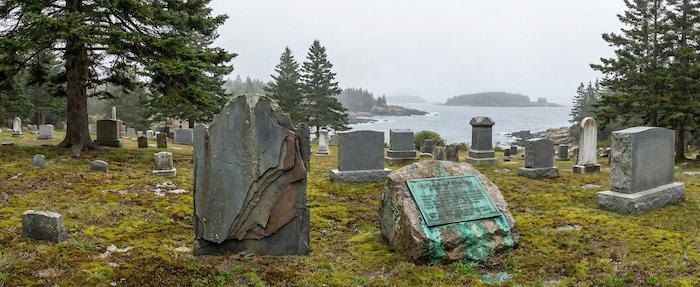
Yarmouth burial grids border the Royal River and Cousins River estuaries. Historic 19th-century shipbuilding infrastructure exposed these tracts to vaporized timber creosote. Estuarine detritus dominates the sub-grade. Residents seeking headstone cleaning services near me find monuments encased in black shipyard tar or sinking severely into the tidal mud. Tending operates strictly as a commercial headstone restoration company. Field units deploy terpene-based emulsions to melt historic resins and construct high-density polyethylene (HDPE) geocell rafts to cure foundation failure.
"My Angela's headstone had not been cleaned in fifty years. I moved to Florida many years ago and I do visit San Diego, but never was able to get her headstone cleaned. My Angela is in the children's mausoleum chapel. I miss her every day. She was 5 years old when she passed. Well, im telling you after you guys cleaned up her headstone I didn't even remember what it had originally looked like. What a fabulous job! Everyone should use your company. It is truly beautiful. I can't wait for the rest of my family to see it. Thank you so much. Margaret "
— Roberta Silfen, Bangor, Maine
Shipyard Creosote Polymerization
Local shipwrights boiled massive quantities of timber creosote. Prevailing winds carried the vaporized tar across the town center. The particulate bonded to the granite and marble faces. Decades of ultraviolet solar exposure polymerized the resin. A rigid black casing obscures the masonry completely. Abrasive tools permanently scar the underlying quartz.

Crews utilize heated terpene emulsions. The organic solvent attacks the polymerized hydrocarbon chains. The black casing destabilizes. The rigid tar melts into a liquid slurry. Technicians flush the surface utilizing continuous low-pressure water. The factory finish emerges unblemished.
Estuarine Detritus Subsidence and HDPE Rafts
The regional soil profile consists of estuarine detritus. This organic mud lacks dense mineral aggregates. Autumn flooding supersaturates the stratum. Granite bases frequently exceed 1,500 pounds. The heavy footprint shears the wet mud. The monument plunges downward. Traditional crushed stone simply sinks alongside the granite in this environment.
Permanent leaning headstone repair requires structural load distribution. Workers extract the submerged base completely. We excavate the detritus past the frost line. Technicians deploy high-density polyethylene (HDPE) geocells. We fill the honeycomb grid using 3/4-inch crushed ballast. The grid restricts lateral rock movement. The aggregate distributes the vertical load across a massive footprint. Subsidence ceases immediately.
Diatomaceous Bio-Slime
The Royal River tidal marsh generates continuous ambient humidity. This microclimate feeds diatomaceous biological colonies. Diatoms utilize silica to build cell walls. The colonies cluster across the shaded granite panels. The resulting biofilm manifests as a dark, highly slippery slime. The bio-slime traps acidic moisture directly against the rock.
Standard cleaners cannot penetrate the silica walls. We apply quaternary ammonium surfactants. The low-surface-tension liquid wicks into the biological matrix. The chemical degrades the lipid membranes of the diatoms. The cellular structures collapse. The colony dies. Ambient rainfall clears the deactivated organic matter from the stone.
Hydrogen Sulfide Bronze Corrosion
Anaerobic bacteria dominate the nearby salt marshes. These organisms emit hydrogen sulfide gas. The airborne sulfur interacts with flat bronze veteran markers. The gas penetrates microscopic flaws in the factory clear coat. The bare copper alloy reacts aggressively. A heavy black copper sulfide tarnish forms.
Field units execute technical bronze marker restoration. Workers mill the sulfide tarnish off utilizing rigid brass abrasive pads. We saturate the bare metal with benzotriazole (BTA) inhibitors. The BTA molecules complex directly with the copper ions. A microscopic chemical barrier forms. Technicians spray ultraviolet-cured acrylic sealants over the plate. The metal repels future sulfide attacks.
River Ice Shearing and Mortar Fracture
Winter tides push heavy river ice against the lower cemetery terraces. The ice chunks strike the horizontal joints of multi-tier monuments. The mechanical impact shatters the historic lime mortar. Upper granite tiers slide backward. The unstable blocks pose severe crushing risks.
Crews hoist the displaced granite tiers utilizing heavy steel gantries. We evacuate the pulverized mortar debris. Technicians drill vertical boreholes into the mating surfaces. We insert fluted stainless steel alignment pins. Workers inject high-modulus structural epoxy onto the base block. The upper die descends onto the pins. The joint fuses permanently.
Lithichrome Contraction
Sub-zero coastal temperatures force factory lithichrome paint to contract violently. The paint loses adhesion inside the engraved text channels. The rigid flakes fall out of the cuts. The inscription vanishes. We execute precise headstone lettering repair.
Technicians excavate the loose pigment remnants using sharp steel picks. We eliminate residual moisture from the granite utilizing thermal hot air. Crews inject high-density aliphatic urethane dye into the dry channels. A flat rubber block wipes the exterior face clean. Sharp visual contrast returns.
Digital Task Commissioning
We eliminated mandatory site inspections and variable pricing. Restoration costs rely strictly upon physical dimensional parameters. Clients calculate exact pricing via our online configurator. The digital portal locks the flat rate and dispatches our field units directly to the Yarmouth coordinates. Field technicians capture high-resolution photographic evidence upon task completion. The images route immediately to the client dashboard.
- Creosote Dissolution: Deploying heated terpene emulsions to melt historic shipyard tar.
- HDPE Geocell Installation: Constructing cellular confinement rafts to stabilize estuarine mud.
- Diatom Eradication: Applying quaternary ammonium surfactants to destroy silica-based bio-slime.
- Benzotriazole Treatment: Milling black copper sulfide and inhibiting future bronze corrosion.