Industrial Fallout and River Moisture
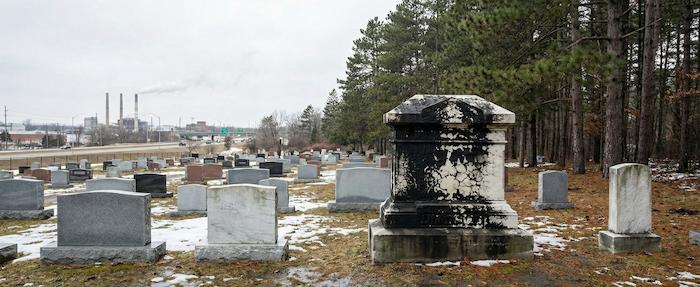
Flint built the auto industry. That manufacturing history left a heavy mark on the local cemeteries. The old plants pumped out smoke and iron dust for decades. The Flint River keeps the city humid. At yards like Glenwood and Sunset Hills, families looking for headstone cleaning services near mefind monuments buried under black soot and thick green mildew. We address the physical ground shifting first. Then we use commercial chemistry to pull the industrial grime out of the rock.
Extracting Auto Plant Carbon
Decades of heavy manufacturing created a massive carbon footprint. Airborne soot dropped onto the limestone and marble markers across Genesee County. It cured into a rock-hard black crust. You cannot wash it off. Scrubbing it just drives the grease deeper into the stone.
As a professional headstone restoration company, we apply a thick chemical poultice. The paste sits directly on the crust. It dissolves the petroleum bond and pulls the carbon straight out of the pores. We wipe the heavy black sludge away, exposing the original white stone.
Flint River Mildew on Marble
The river valley traps damp air. The constant humidity feeds biological growth. Older marble statues and monuments turn completely black from heavy mildew. The spores root deep into the soft rock.

We refuse to use wire brushes on old marble. The bristles destroy the fragile surface. We saturate the stone with a commercial biocide. The chemicals kill the mold down to the root. We rinse the dead gray sludge away with low water pressure, keeping the soft stone completely intact.
Winter Spalling on Concrete Bases
Mid-Michigan winters destroy old masonry. The porous concrete foundations absorb heavy autumn rain. When the temperature plummets, the trapped water freezes solid. The expanding ice shears the front face of the concrete right off. We call this spalling.
You cannot reattach the broken concrete. We clear the loose debris away. We trowel a thick layer of breathable mortar over the raw, exposed face. This seals the foundation. It blocks new water from getting inside and splitting the rest of the block apart.
Clearing Aggressive Overgrowth
Many historic plots in Flint suffer from heavy overgrowth. Thick ivy and aggressive vines swallow the markers. The roots dig directly into the mortar joints.
You cannot just rip a thick vine off an old monument. The roots will pull chunks of the stone out with them. We cut the root systems at the dirt line. We apply targeted root killers. The plant dies and releases its grip naturally. We drag the dead brush out so you can access the plot.
Resetting Sunken Monuments
The spring thaw turns the local dirt into deep mud. Heavy upright granite blocks sink fast. They lose their footing and tilt sideways.
Pushing a heavy block upright does nothing. For proper leaning headstone repair, we extract the granite base entirely. We dig the wet mud out of the hole. We build a deep trench packed with crushed angular gravel. The gravel drains the water and locks together. We reset the monument level on the dry pad.
"Tending is an excellent headstone and cemetery restoration company. David and Madison are extremely kind and professional and literally saved a family cemetery."
— Beatle, Tending Client
Restoring Oxidized Bronze Plaques
Industrial smog and acid rain destroy flat bronze markers. The factory clear coat burns off. The copper alloy turns into a chalky green crust. The veteran's details disappear.
We perform complete bronze marker restoration right at the grave. We strip the dead lacquer. We scrub the green rot down to bare metal. We shoot a dark background tint, sand the raised letters bright, and spray a heavy UV clear coat to lock out the harsh air.
Service Logistics and Pricing
We do not waste time with on-site estimates or hidden upcharges. We run a flat-rate subscription model for all cemetery monument maintenance. The price is based strictly on the size and type of the marker. You check your exact cost instantly using our online configurator. You book the work, and our field crew heads to the cemetery.
- Carbon Extraction: Using poultice to pull factory soot out of porous stone.
- Base Resetting: Digging out wet mud and packing gravel under leaning monuments.
- Foundation Repair: Patching spalled concrete bases with breathable mortar.
- Bronze Restoration: Stripping and resealing oxidized veteran markers.