Soft Jordan Sandstone Bedrock Shifts Under Older Foundations
Mankato takes its name from a Dakota word for blue earth, a reference to pockets of distinctive blue-green clay once visible along the riverbanks here and still found today tucked inside the area's soft Jordan Sandstone bedrock. That sandstone sits close to the surface in several parts of the city, and it doesn't hold up the way harder rock does — water works into it steadily, and the clay pockets embedded within it shift and compress at a different rate than the surrounding stone. A headstone foundation resting on this kind of ground doesn't get uniform support the way it would over solid, consistent bedrock. In some sections of older cemeteries, the sandstone lies just a few feet below the topsoil, so a foundation poured without checking for buried clay first ends up resting on ground that behaves inconsistently from one corner of the base to the next.
"Judging from the photos received, it looks much better. I plan to go to the cemetery in the next few days. I anticipate the actual work accomplished will be as good as, if not better than the photos. Mom"
— Dee Roach Perazzo, Tending Client
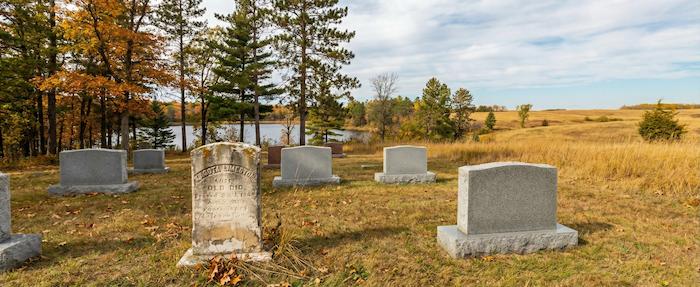
Where one of these clay pockets sits directly under part of a base, that section settles lower than the rest. The stone tips gradually over years, not all at once. Two markers set the same season on the same row can end up leaning in completely different directions depending on where a hidden clay pocket happened to sit. Families searching for headstone cleaning services near me in Mankato often start that search after noticing a lean that seemed to appear out of nowhere, with no cracking or obvious cause visible on the surface. Tending checks for shallow bedrock and clay pockets before resetting an affected base, since a standard footing over this kind of ground won't hold evenly for long. Larger structural repairs are covered under headstone repair and restoration.
Locally Quarried Kasota Stone Traps Moisture in Natural Pockets
Builders across the region have long favored Kasota stone, a dolomitic limestone quarried just outside Mankato and known for the small natural voids, or vugs, scattered through its buff-colored surface. Older monuments cut from this same regional stone carry those same pockets, and each one holds a tiny reservoir of water long after the surrounding surface has dried out. That trapped moisture accelerates staining and surface breakdown right at each vug, giving the stone a mottled, uneven weathering pattern that a uniform granite marker never develops. Two vugs sitting just an inch apart can end up looking decades different in weathering, since each one traps and releases moisture on its own schedule. Because Kasota stone was quarried in massive slabs and shipped across the Midwest for building facades as well as monuments, the same porosity that gives it a warm, honey-toned finish also means older grave markers cut from it absorb water at a rate granite simply doesn't. That difference is part of why a cleaning approach suited to dense granite can leave this porous stone looking patchier, not cleaner.
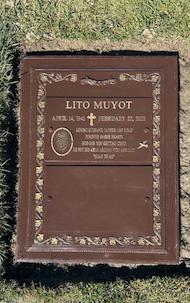
Bronze veterans' plaques set into the same locally quarried stone can pick up a similar patchy discoloration where moisture wicks out of nearby vugs onto the metal. Tending addresses vug-related staining with a technique suited to porous, locally quarried stone, and on that same visit brings bronze grave markers affected by the identical moisture back into proper condition.

River Valley Humidity Accelerates Freeze-Thaw Damage
Sitting where the Blue Earth and Minnesota Rivers meet, Mankato holds onto more humidity through its winters than drier parts of the state, and that extra moisture in the air and soil means more water is available to freeze and expand inside a stone's pores each cold snap. Older markers pick up damage from this cycle faster than they would in a drier climate, since there's simply more moisture on hand to do the damage every single winter. Engraved lettering on older marble and limestone pieces tends to flatten out well before comparable granite markers show their age. The river valley setting also means fog and low-lying mist linger longer over cemetery grounds near the water than they would on higher ground farther from the confluence, keeping stone surfaces damp for extra hours after a freeze and extending the window each day when trapped moisture can refreeze and widen existing cracks.
Tending recuts and repaints lettering worn down by this humidity-driven freeze-thaw pattern, following headstone lettering repair standards adjusted for the added moisture typical of Mankato's river valley location.
Service Costs in Mankato
Selecting the monument type and care plan inside Tending's online calculator generates a fixed price on the spot, with nobody needing to schedule a visit just to look at the damage beforehand. Families dealing with shallow bedrock, porous local stone, or river valley humidity can layer a maintenance plan onto that quote, since each of those three conditions develops slowly and keeps resurfacing season after season, well beyond what a single treatment can permanently fix.
- Base resetting and stabilization: correcting lean from shallow sandstone and clay pockets.
- Vug staining and bronze treatment: cleaning for porous, locally quarried stone.
- lettering repair: recutting engraving worn by humidity-driven freeze-thaw cycles.