
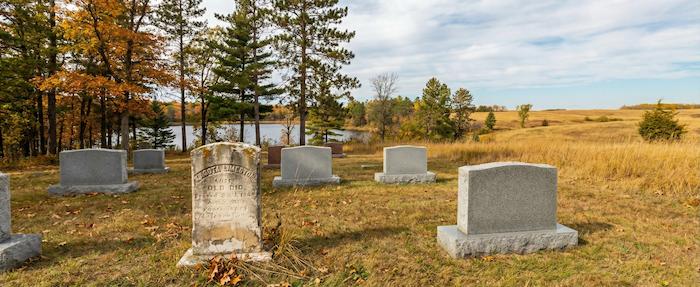
Old Abandoned Wells Disturb Groundwater Near Headstones
Maplewood's water table sits beneath a stack of separate underground aquifers, each one normally kept apart from the others by a confining layer of dolomite bedrock, and city records document at least one case where an old abandoned well drilled decades ago broke straight through that layer, connecting three aquifers that were never meant to mix. Wells like this were common across the area during its early industrial years, often hand-dug or shallow-drilled with a steel casing that corrodes through after enough decades underground, and many were simply left unused and uncapped once the property changed hands. Proper sealing wasn't always the priority it is today, and a casing that rusts open partway down its length can let water move freely between aquifers that used to stay separate. Where one of these old, unsealed wells sits near a cemetery, it can quietly redirect groundwater pressure in ways that show up as unexpected saturation nearby, sometimes tracking along old drainage swales that aren't visible from the surface.
Ground fed by this kind of disturbed groundwater flow doesn't dry out the way the surrounding soil does, and a headstone base set into that unexpectedly damp pocket settles differently than markers just a short distance away on normally drained ground. The saturated soil compresses more readily under the weight of a monument, and that gradual compression can continue for years after the original disturbance, sometimes advancing so slowly that a family only notices the lean once it's already pronounced. Families searching for headstone cleaning services near me in Maplewood often reach out only after a stone has shifted with no storm, no visible erosion, and no obvious explanation nearby. Tending checks for signs of disturbed groundwater flow before resetting an affected base, since a standard footing over ground fed by an old well won't hold the way it would elsewhere. Larger structural repairs are covered under headstone repair and restoration.
Maplewood's Kettle Lakes and Wetlands Deepen Shade and Algae
The hills and wetlands that define Maplewood's landscape today formed as the last glacier melted roughly 10,000 years ago, leaving behind small kettle lakes like Wakefield Lake scattered throughout the city alongside low, poorly drained pockets of wetland. Cemetery plots tucked near this kind of terrain stay damp for days longer after a storm than plots on higher, better-drained ground, and that persistent moisture gives algae a foothold it wouldn't get elsewhere in the same cemetery. Mature oak and maple canopy along many of these wetland edges adds a second layer of shade on top of the standing moisture, keeping stone surfaces below the tree line wet well after open areas of the same cemetery have dried out. A marker set just a few feet from one of these wet, shaded pockets can develop noticeably heavier growth than a comparable stone standing in full sun only a short walk away.
Bronze veterans' plaques set in these same low, wet-adjacent plots develop a heavier green corrosion for the same reason, since the extended dampness speeds up the natural patina process well beyond what drier sections of the cemetery see. Tending addresses both problems on a single visit, treating shaded, wetland-adjacent stone with a soft-wash biocide suited to the conditions and bringing bronze marker cleaning and restoration to any nearby plaques affected by that same persistent moisture.
"Tending not only restores headstones, they clean up graveyards. They do a wonderful job and I can’t recommend them highly enough!"
— Beatle, Tending Client

Layered Freeze Cycles Wear Down Older Engraving
Minnesota winters put real demands on older monuments, and the way that stress builds up matters as much as how cold it actually gets. A block of stone doesn't freeze all at once — the outer surface locks up first while moisture deeper inside is still working its way toward the same fate, and that mismatch creates internal stress that eventually shows up as flaking or shallow lettering on the surface. Marble and limestone absorb enough moisture to feel this effect strongly, while granite's tighter structure mostly shrugs it off. Over enough winters, that difference becomes obvious just by comparing two neighboring markers of different materials. Older Maplewood markers cut before the mid-20th century often carry lead-filled or hand-painted lettering, not the epoxy fills used today, and that older fill material bonds less tightly to the stone, so it is usually the first thing to loosen once freeze-thaw cycling works into the letter grooves. Once the fill lifts or crumbles, moisture gets straight into the incised letter and speeds up the same flaking process across the rest of the stone.
Tending recuts and repaints lettering that's gone shallow from this layered freezing pattern, matching old lead-fill or paint-fill styles where a family wants historical accuracy preserved, and following headstone lettering repair standards suited to Maplewood's older marble and limestone monuments specifically.
Service Costs in Maplewood
Tending's online calculator turns the monument type and chosen care plan into a fixed price without needing anyone to visit the plot first to evaluate the damage in person. Families dealing with markers near old well sites, wetland-adjacent shade, or older stone that needs ongoing lettering care can add a maintenance plan on top of that base price to stay ahead of the same recurring issues.

- Base resetting and stabilization: correcting settlement from disturbed groundwater flow.
- Algae removal and bronze cleaning: soft-wash treatment for shaded, wetland-adjacent plots.
- lettering repair: recutting engraving worn by layered winter freeze cycles.